Aug to Oct - 2026
Wyperfeld National Park Victoria
Hello Again,
This is a small collection of images captured from three recent trips to one of my favorite locations, Wyperfeld National Park - Victortia
Located in the flat, semi-arid north-western corner of Victoria, Wyperfeld is one of Australia's most fascinating national parks.
The central feature of this huge park is a chain of lake beds connected by Outlet Creek, the northern extension of the Wimmera River. The lakes only fill when the Wimmera River over-supplies Lake Hindmarsh to the south of Lake Albacutya. When it rains the semi-arid landscape is transformed by tiny desert plants that sprout from long-dormant seeds, carpeting the ground with clusters of flowers.
Was so sad that the Park was very badly burnt in the recent fires earlier this year and a massive shout-out to all the CFS crews and volontier crews who put in so much effort that would have no doubt saved so much more damage and protect what is left, please see article bellow on the fire
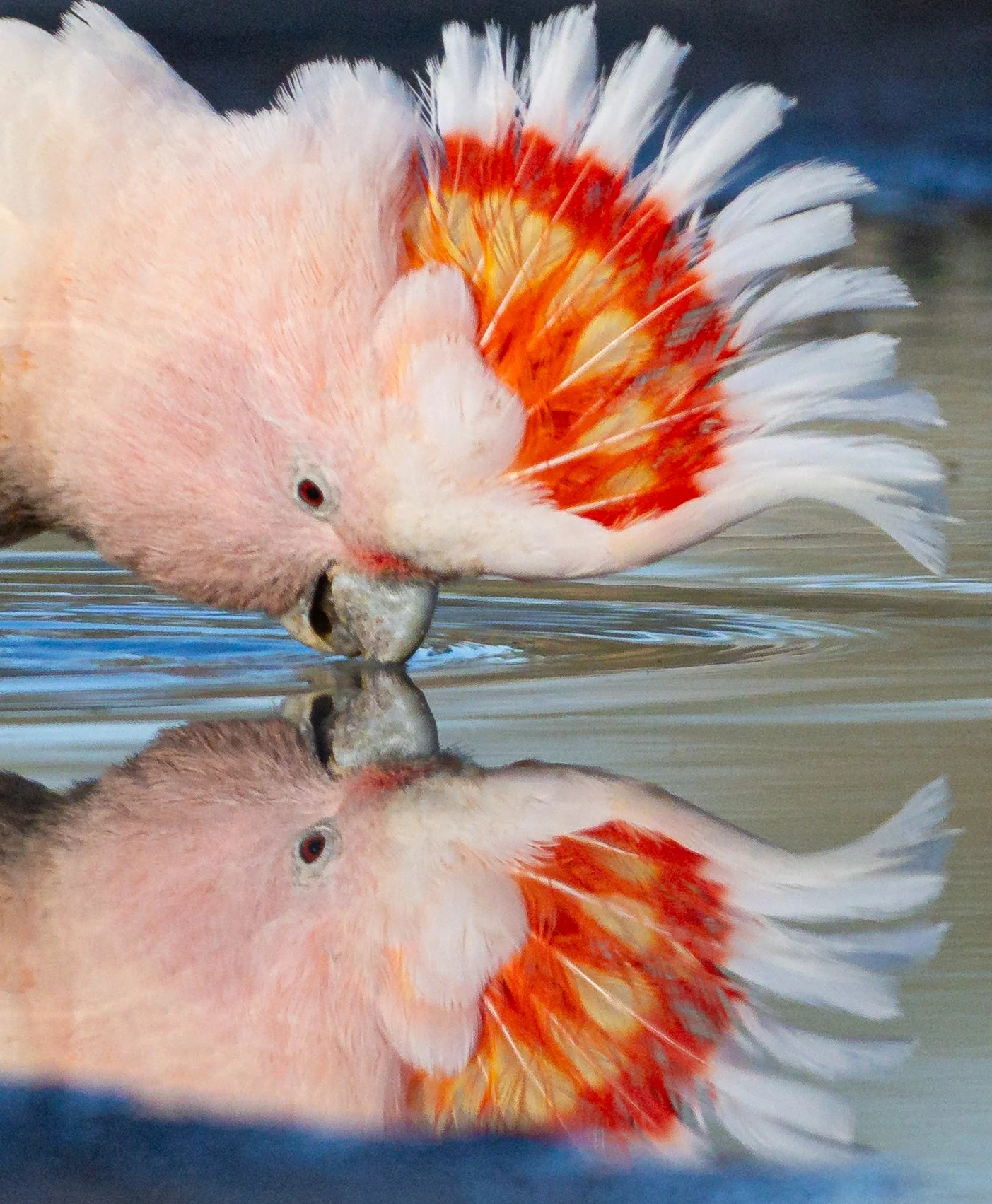
The pink cockatoo, also known as Major Mitchell's cockatoo or Leadbeater's cockatoo, is a medium-sized cockatoo that inhabits arid and semi-arid inland areas across Australia, with the exception of the north east
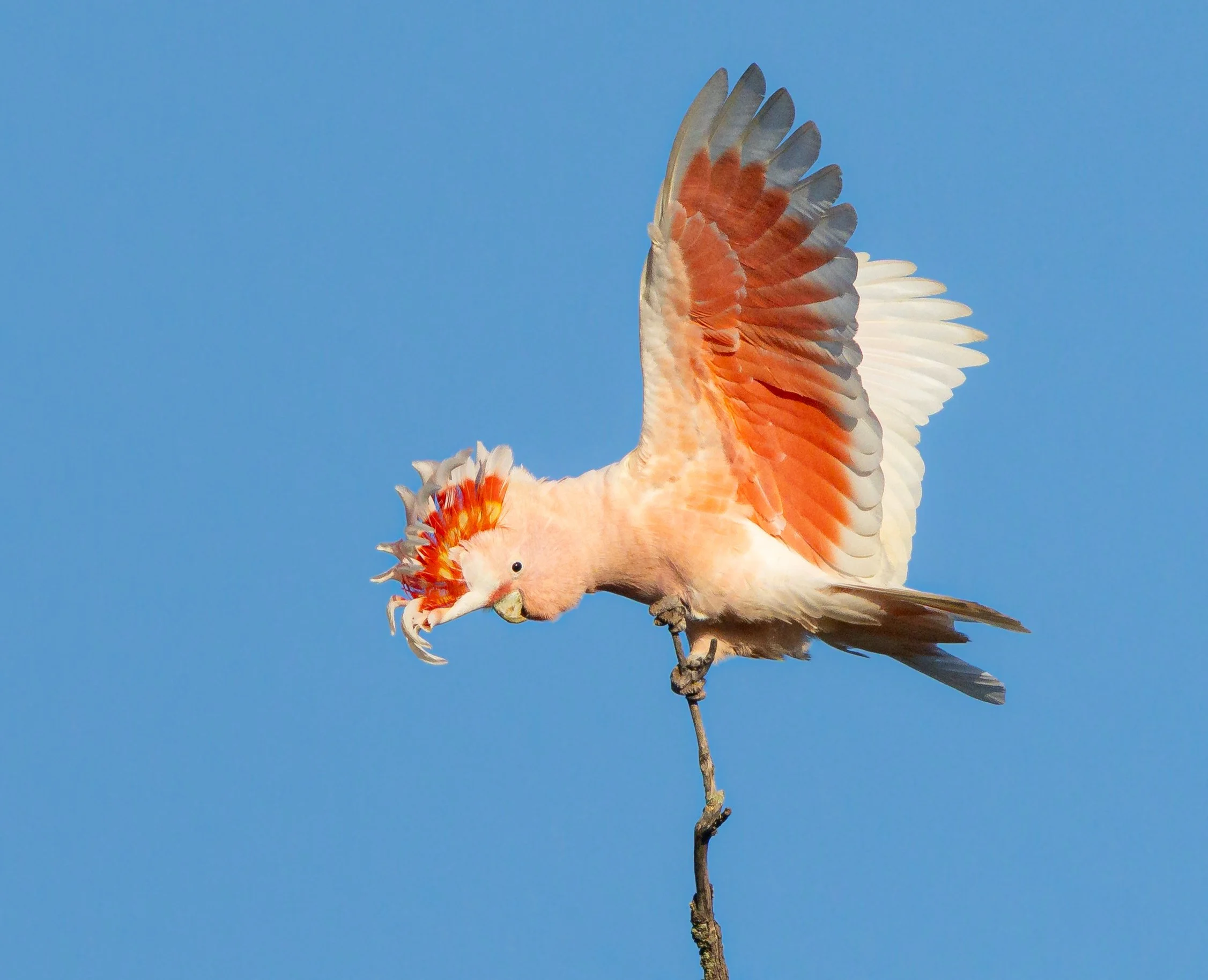
Pink Cockatoo
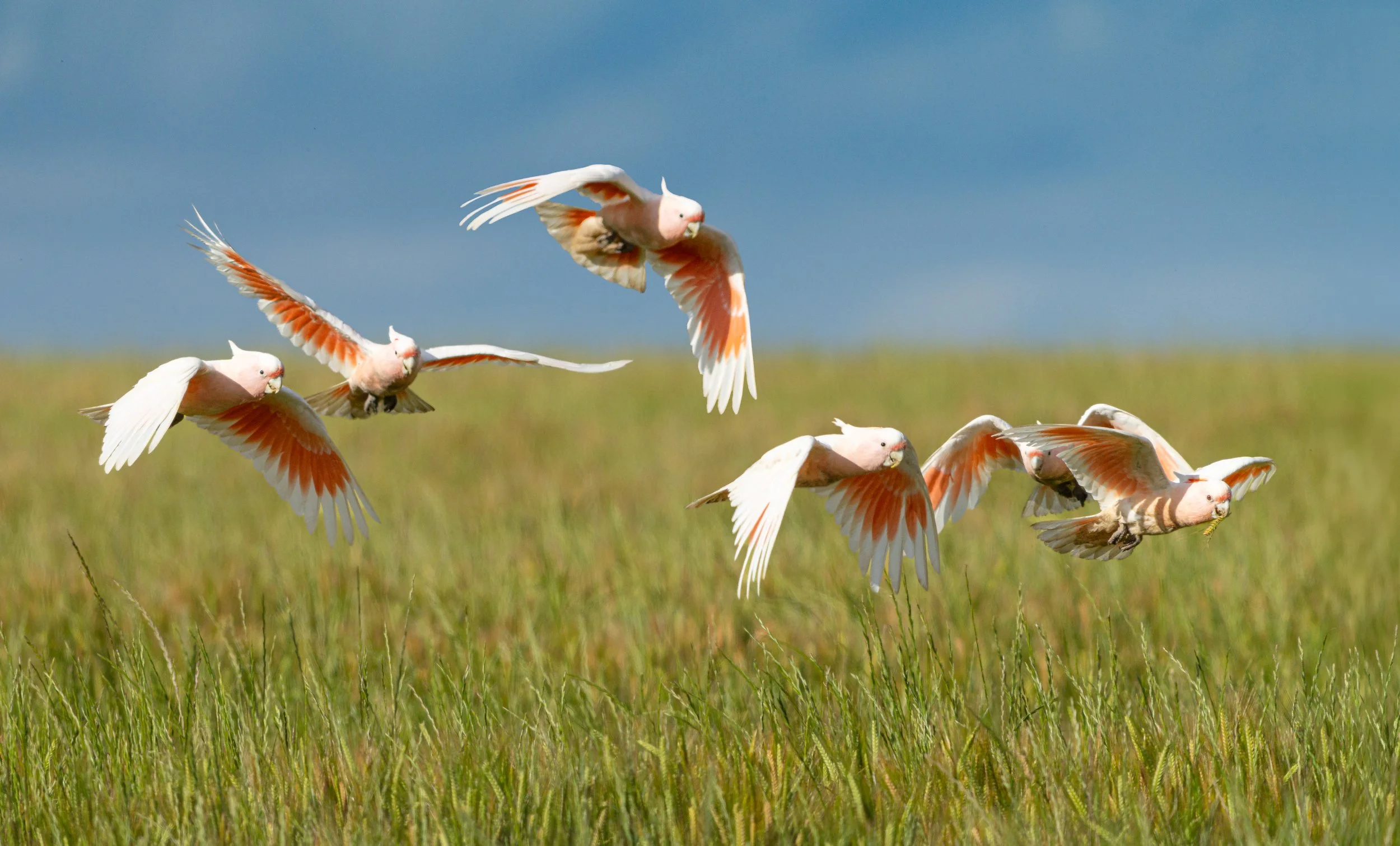
Pink Cockatoo’s
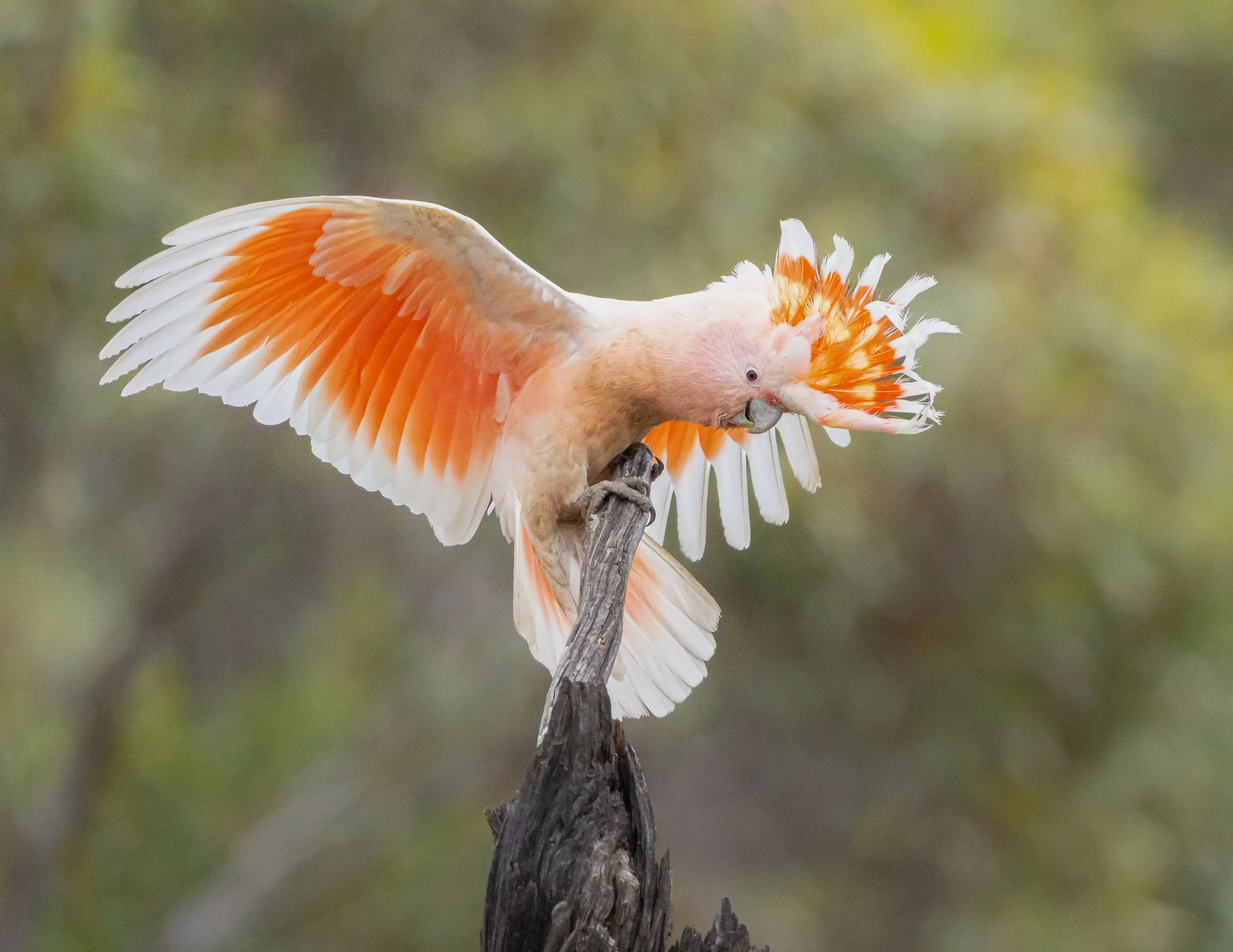
Pink Cockatoo
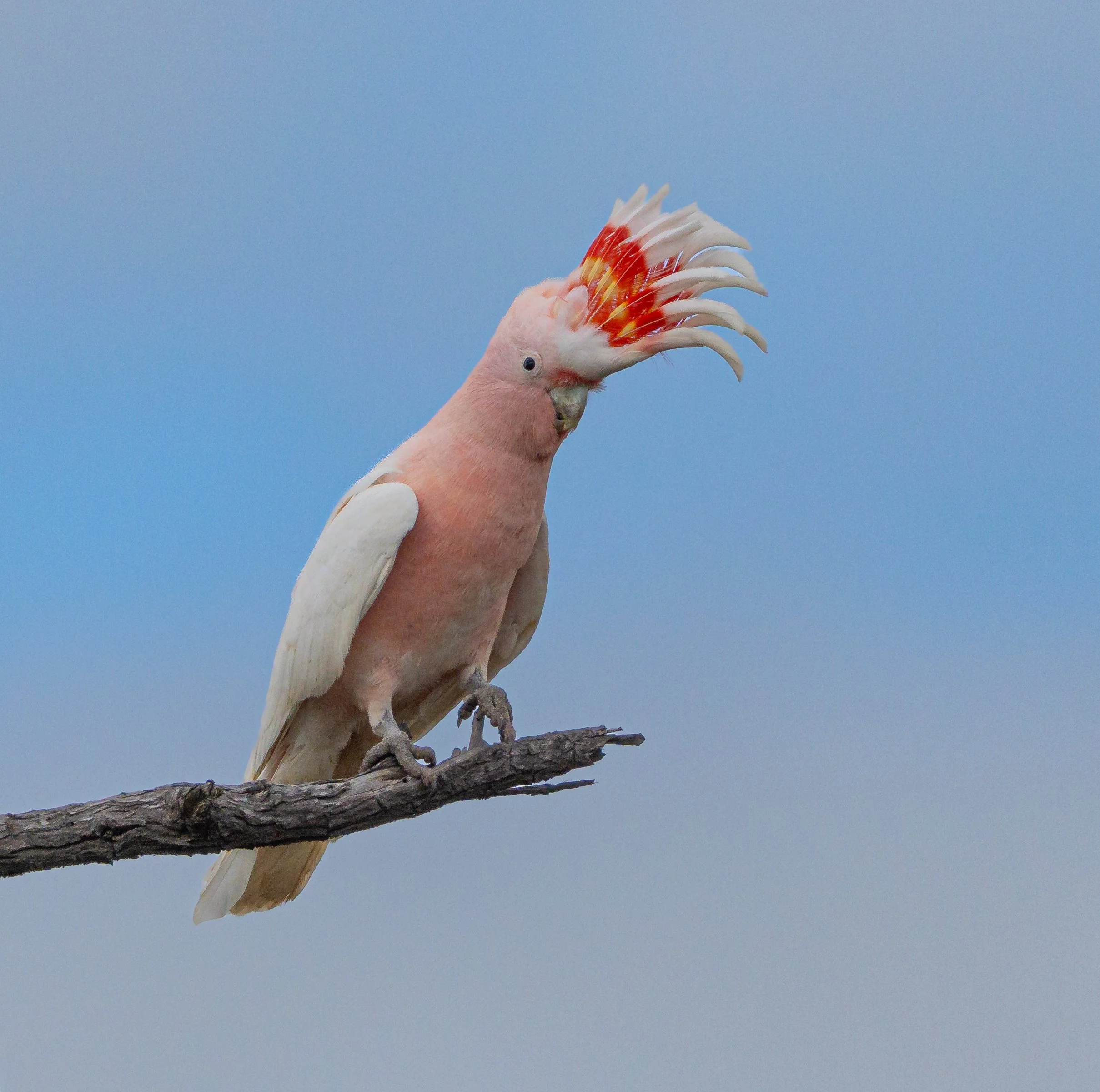
Pink Cockatoo
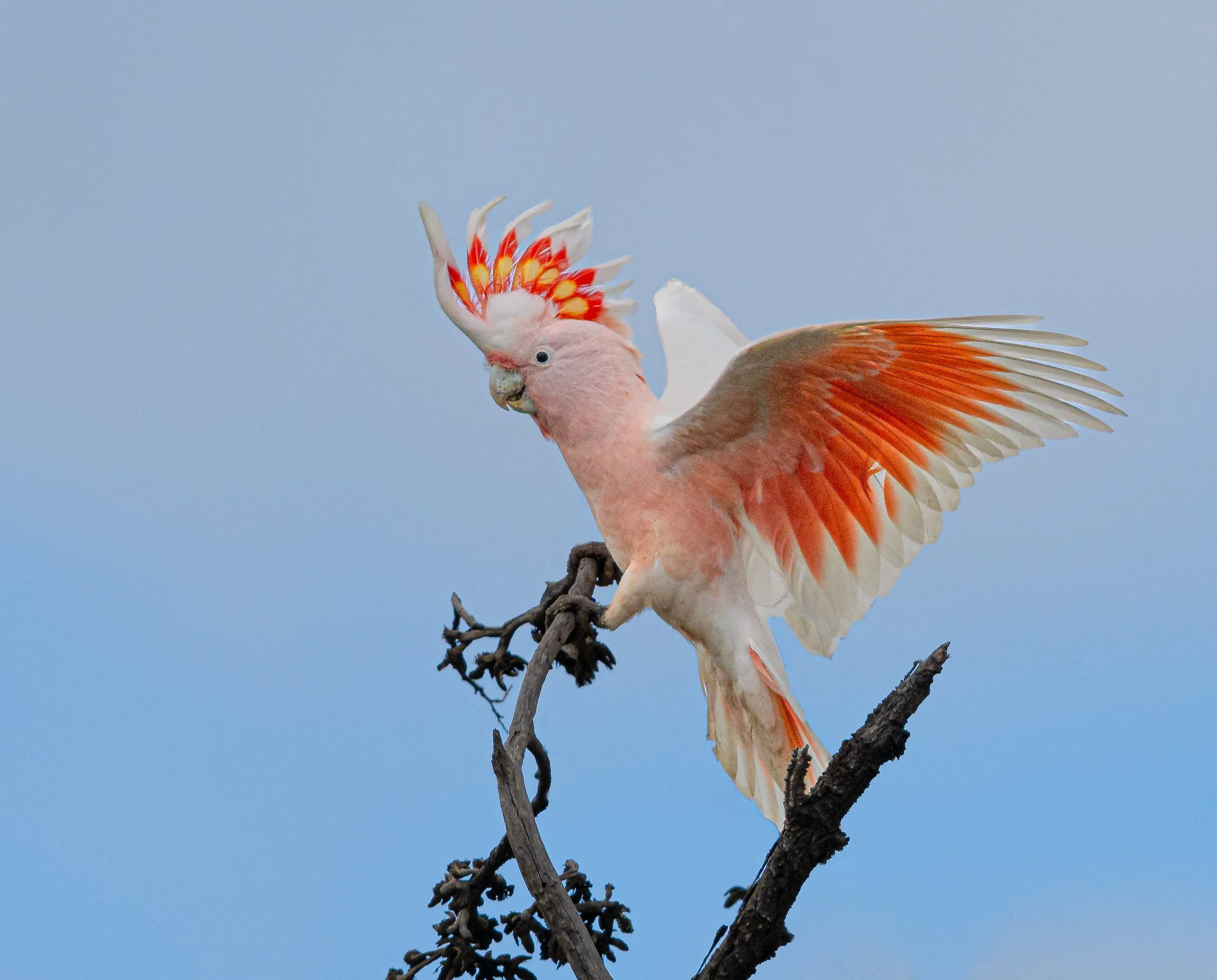
Pink Cockatoo
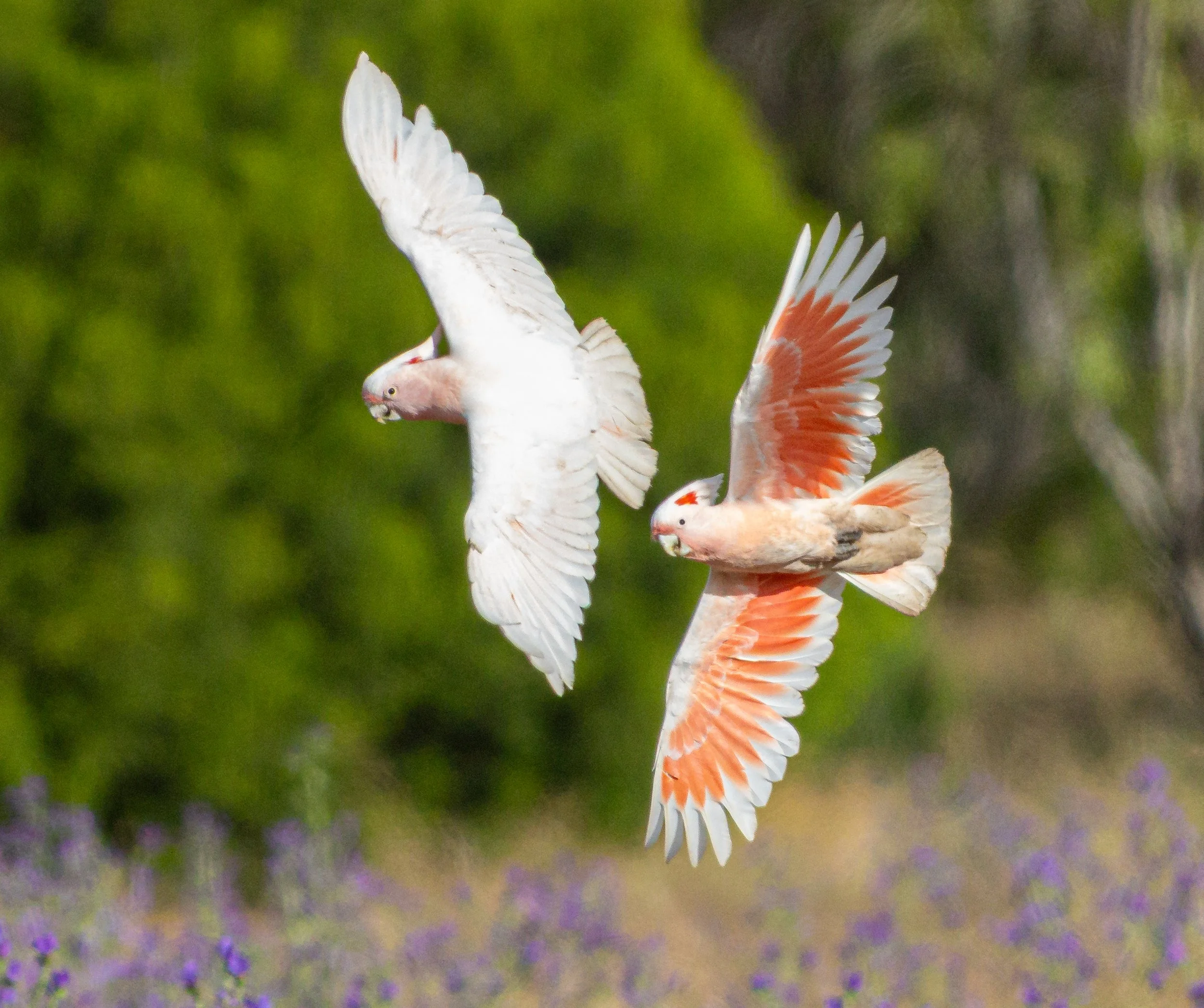
Pink Cockatoo
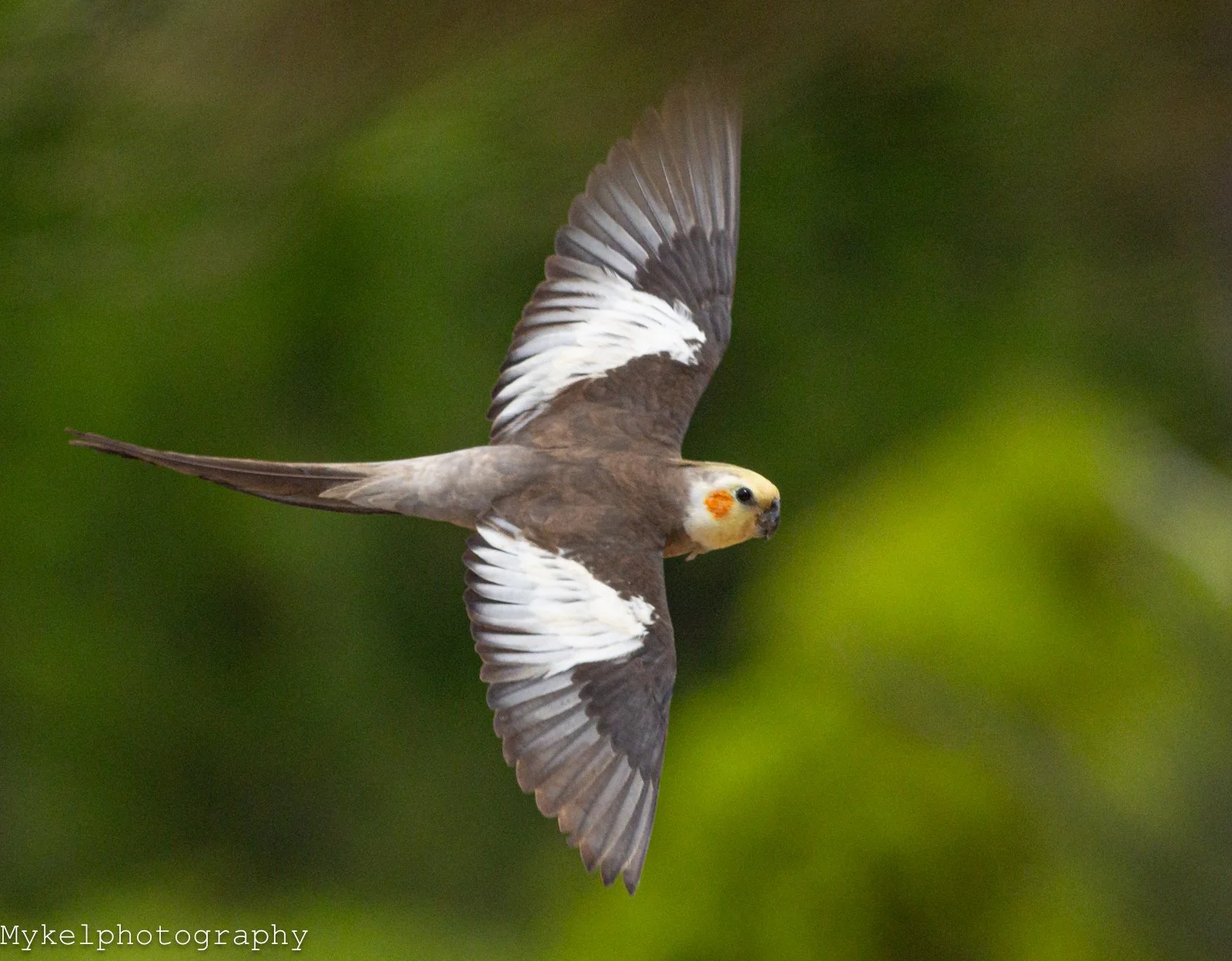
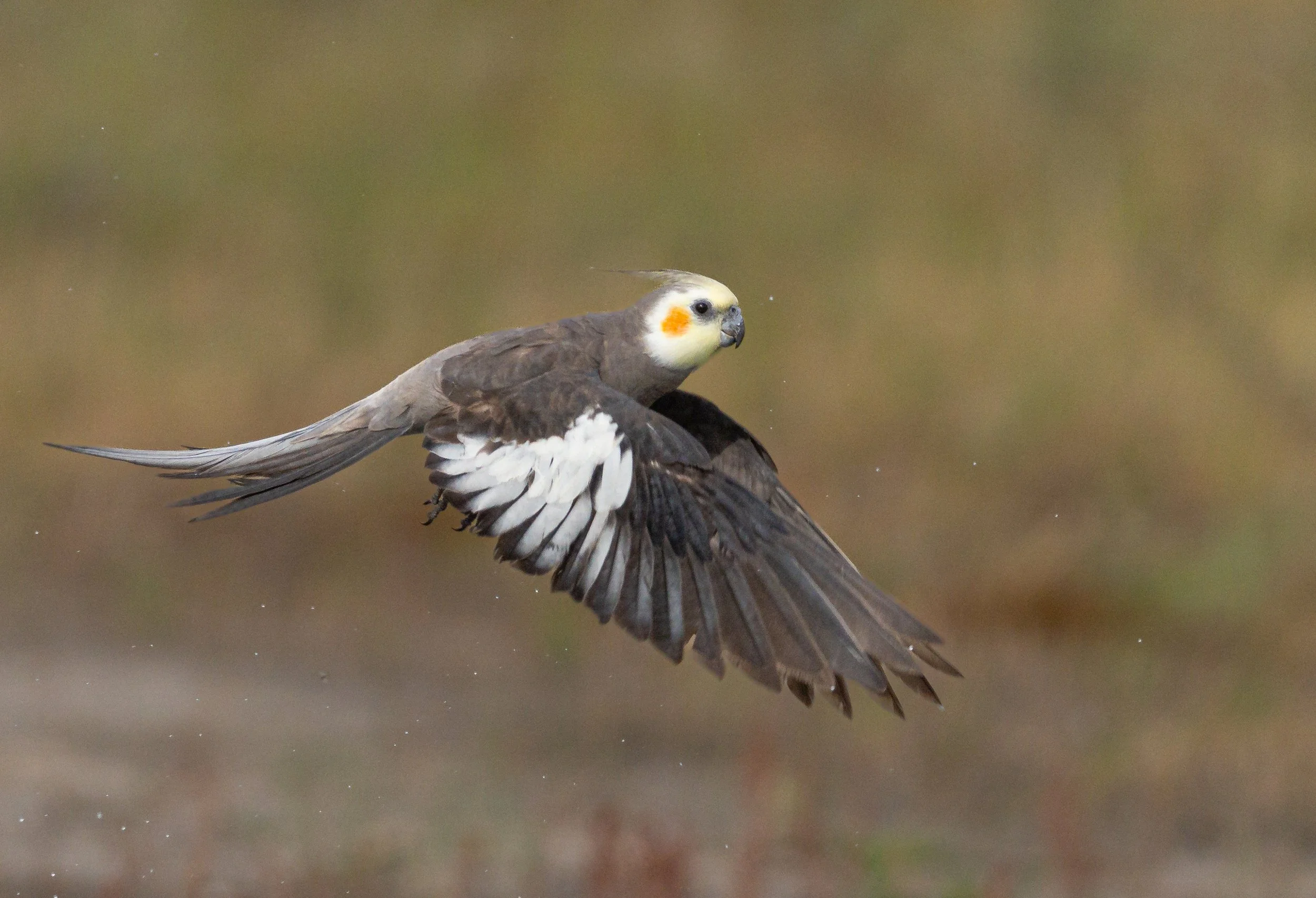
Cockatiel
Nymphicus hollandicus - Cockatiels are brownish-grey parrots with a wispy, gently-curved crest. Mostly brownish grey with a prominent white patch on the wings, Cockatiels have a distinctive head pattern comprising a yellow face with a bright orange ear patch, and a long grey and pale-yellow head crest. Males are brighter than females, and juveniles look like females.
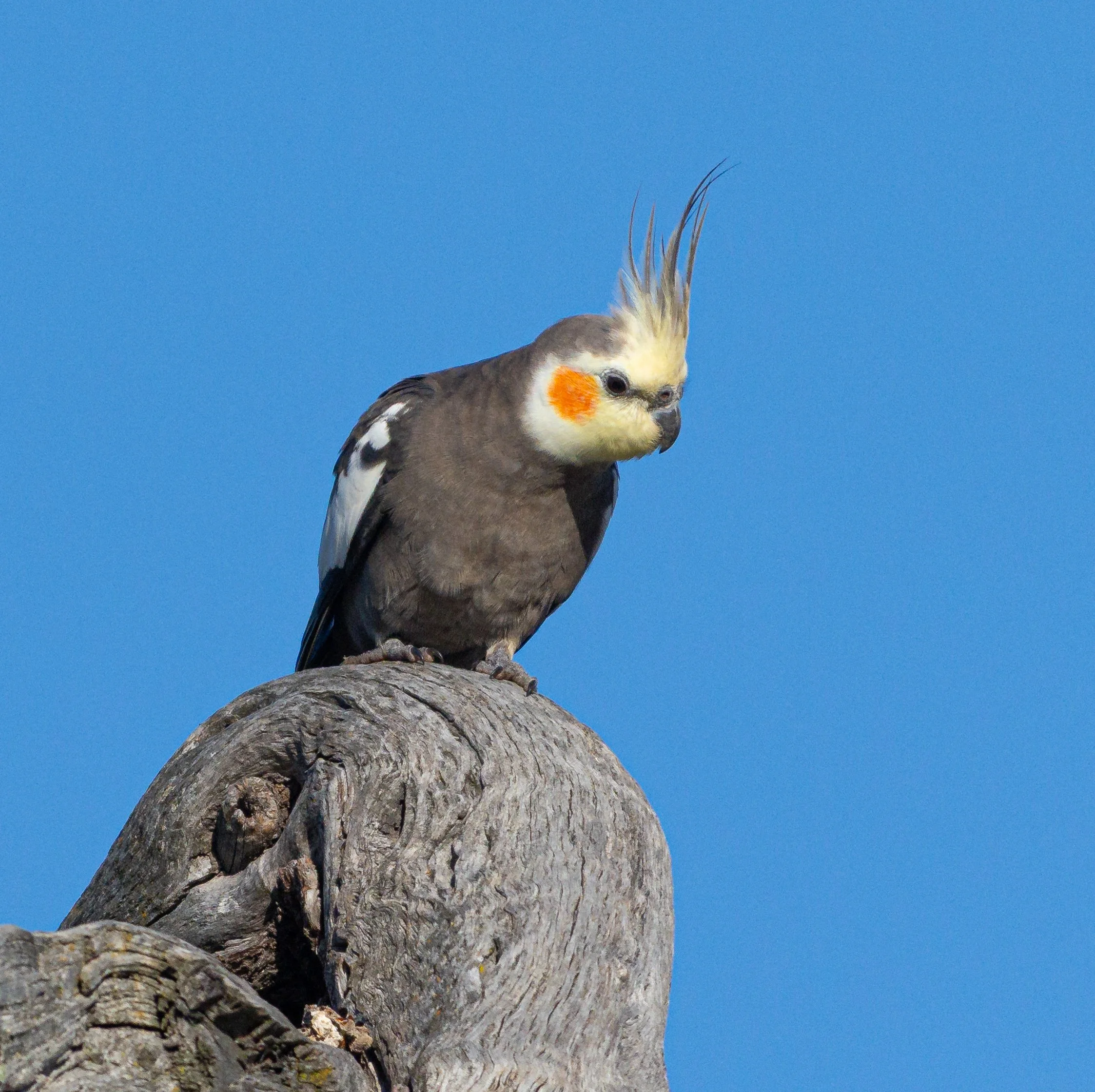
Cockatiel
Nymphicus hollandicus -
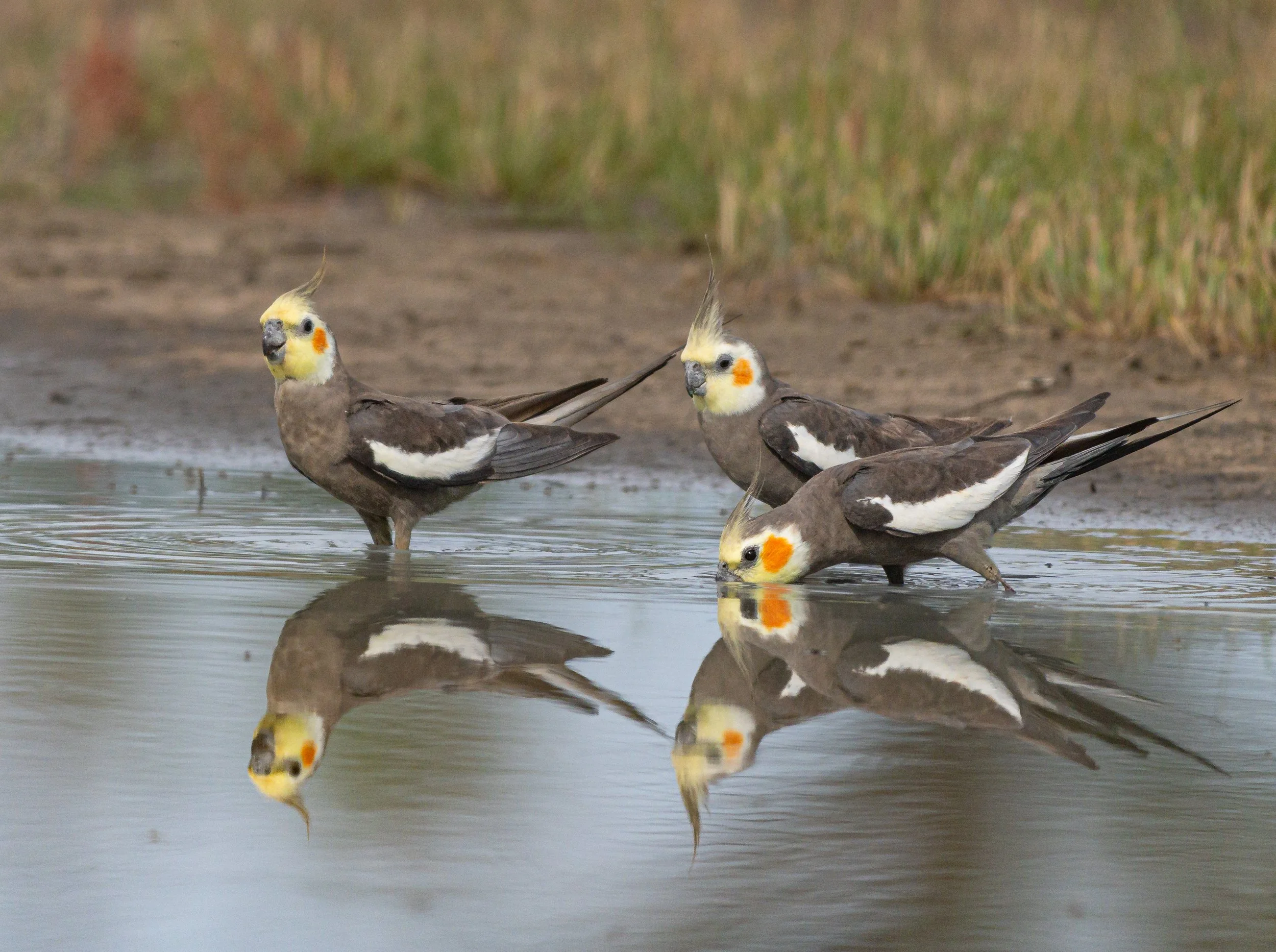
Cockatiel
Nymphicus hollandicus -
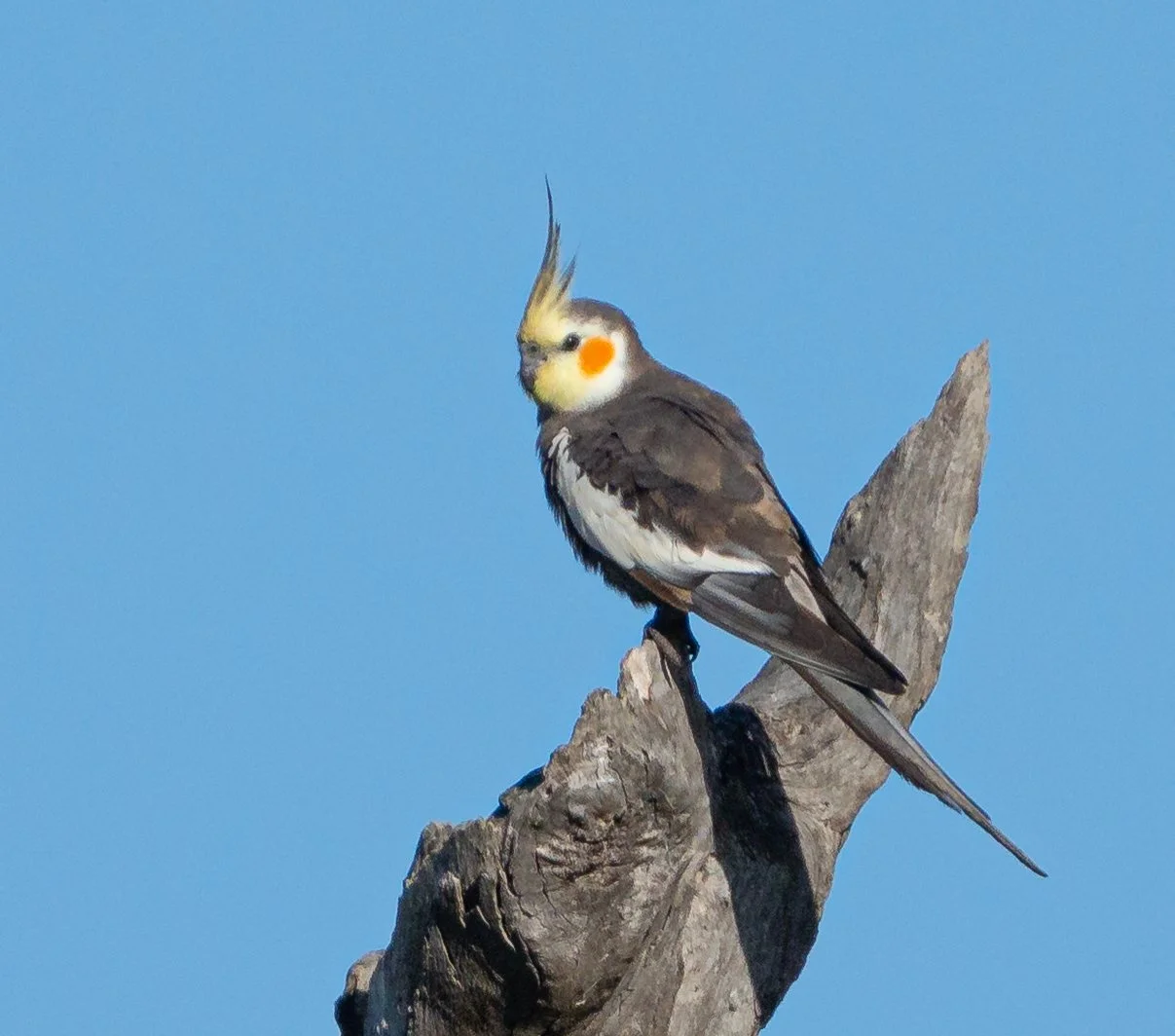
Cockatiel
Nymphicus hollandicus -
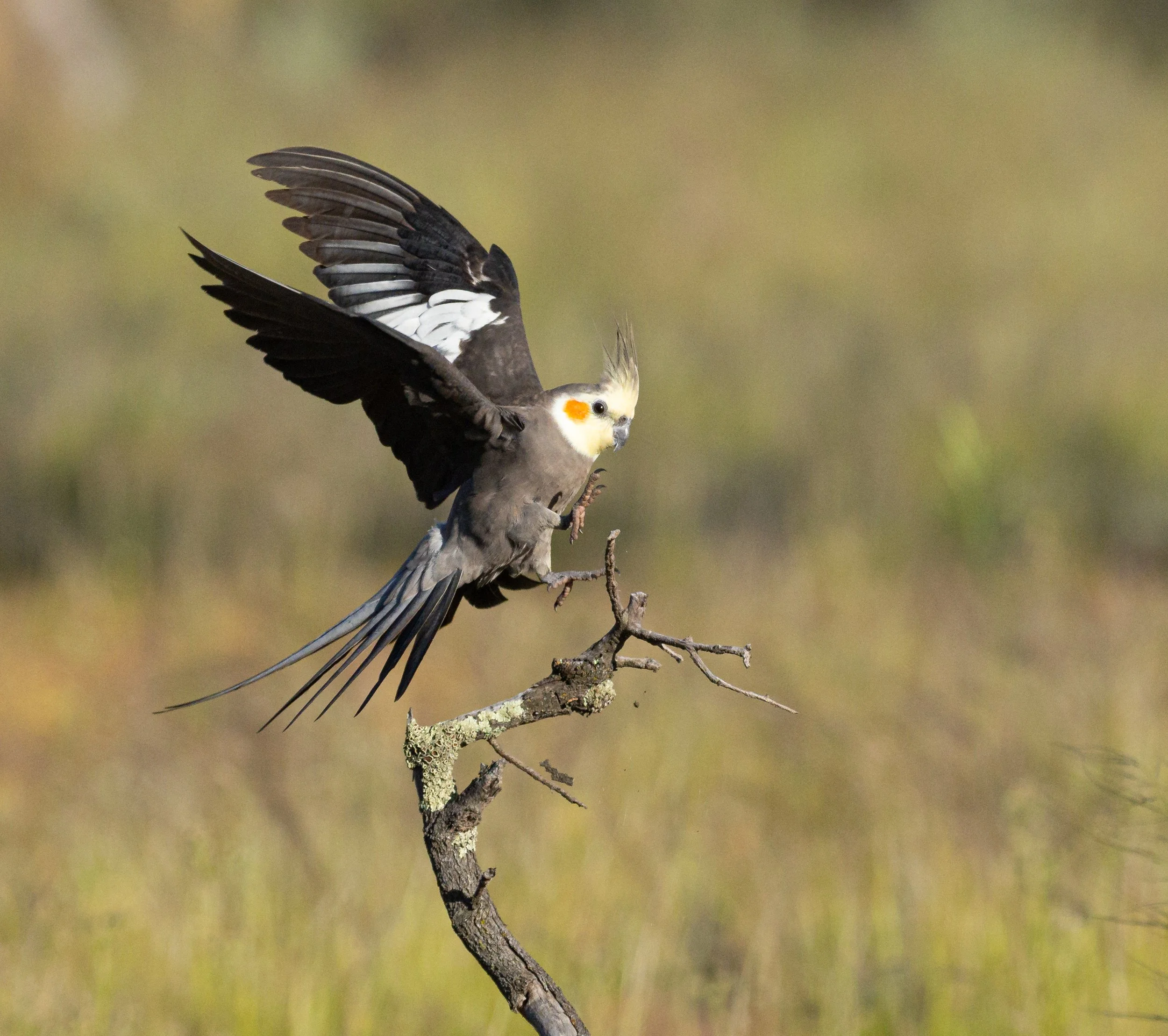
Cockatiel
Nymphicus hollandicus -
Cockatiel
Nymphicus hollandicus -
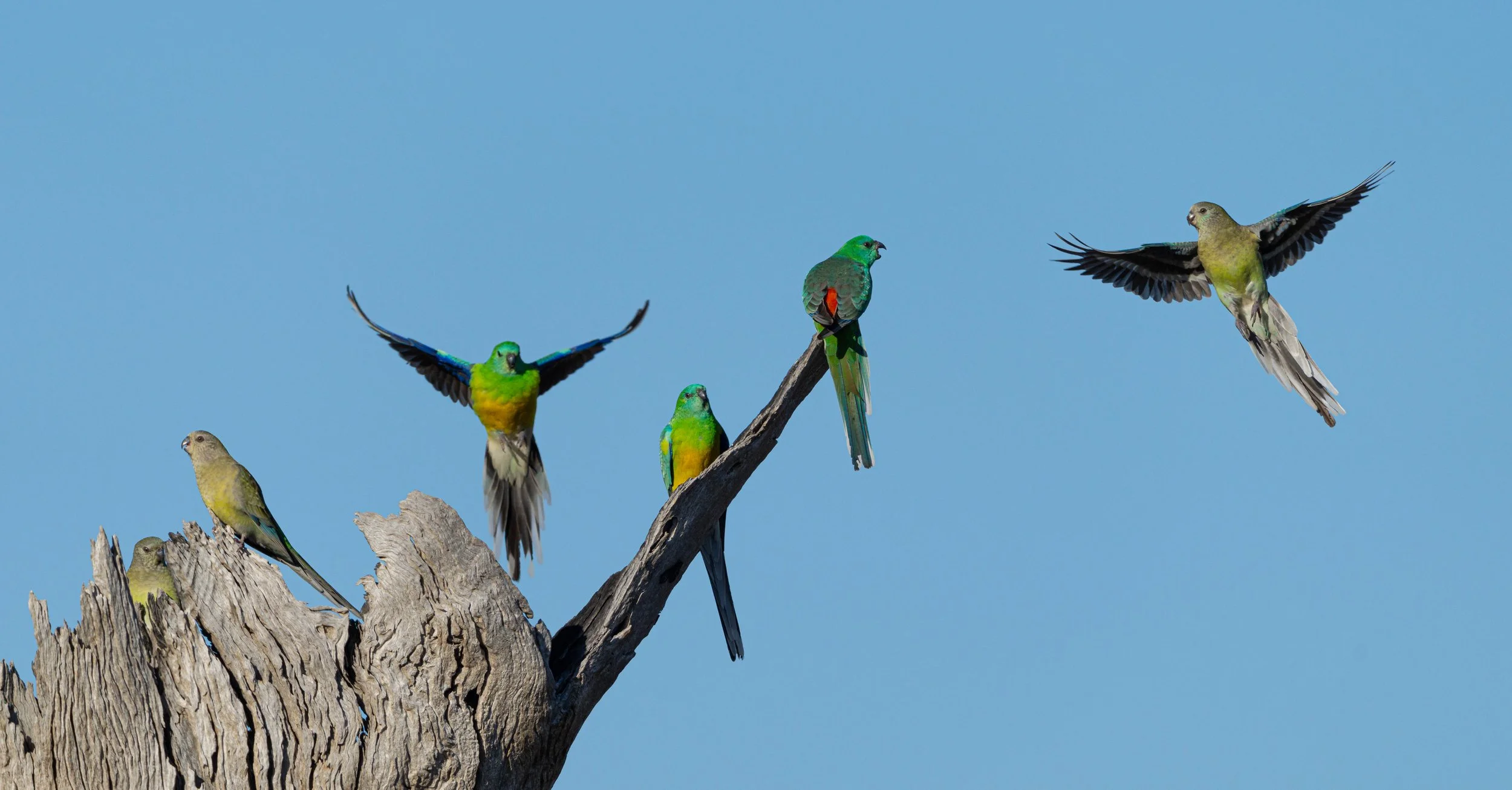
Red-rumped Parrot Psephotus haematonotus - Ground feeding parrot. Male is bright green with blue head and red rump; female is quite different in being much duller-olive green and lacking red rump. Common in open habitats, particularly farmland and surrounding woodland areas in southeastern Australia.
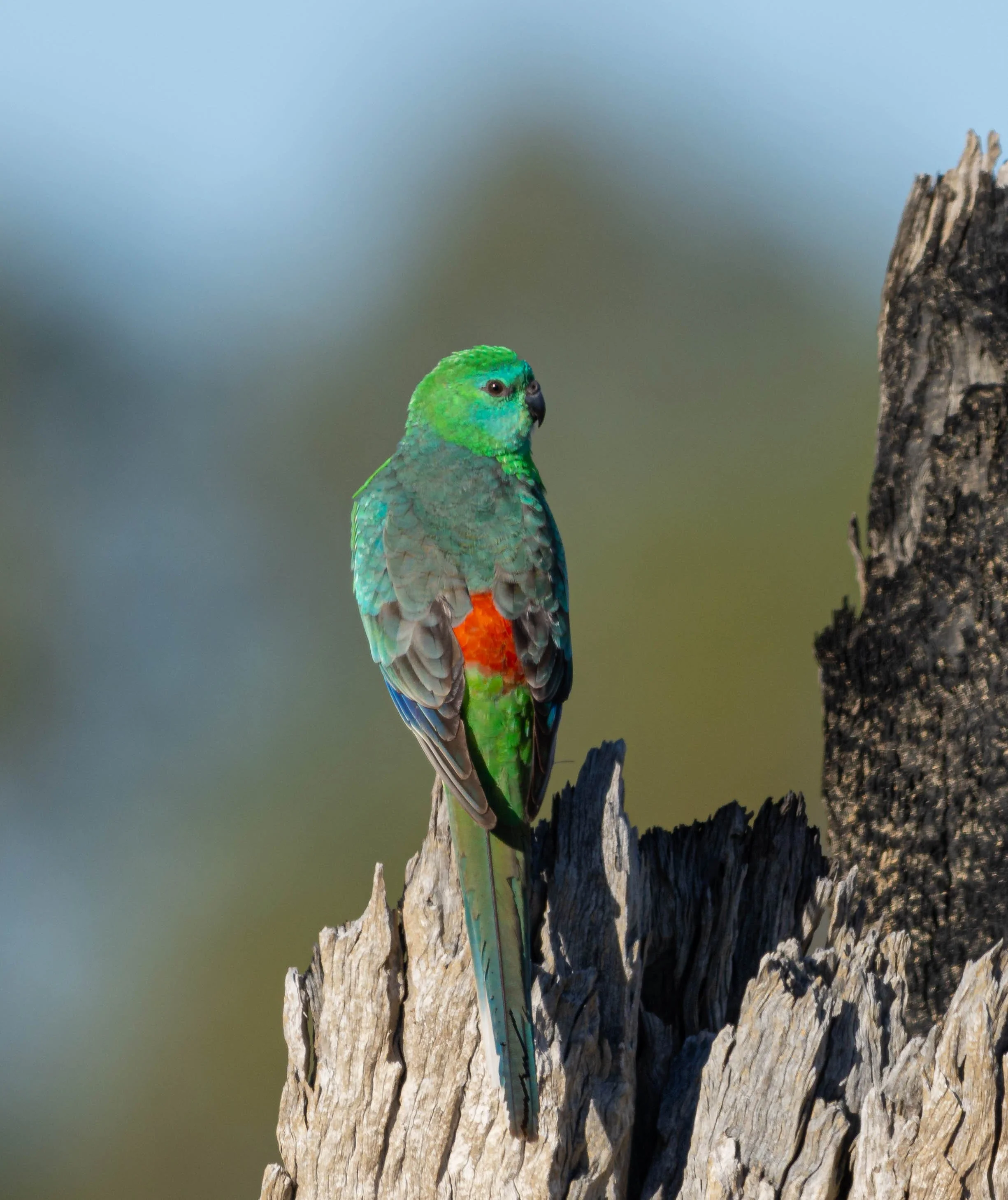
Red-rumped Parrot Psephotus haematonotus
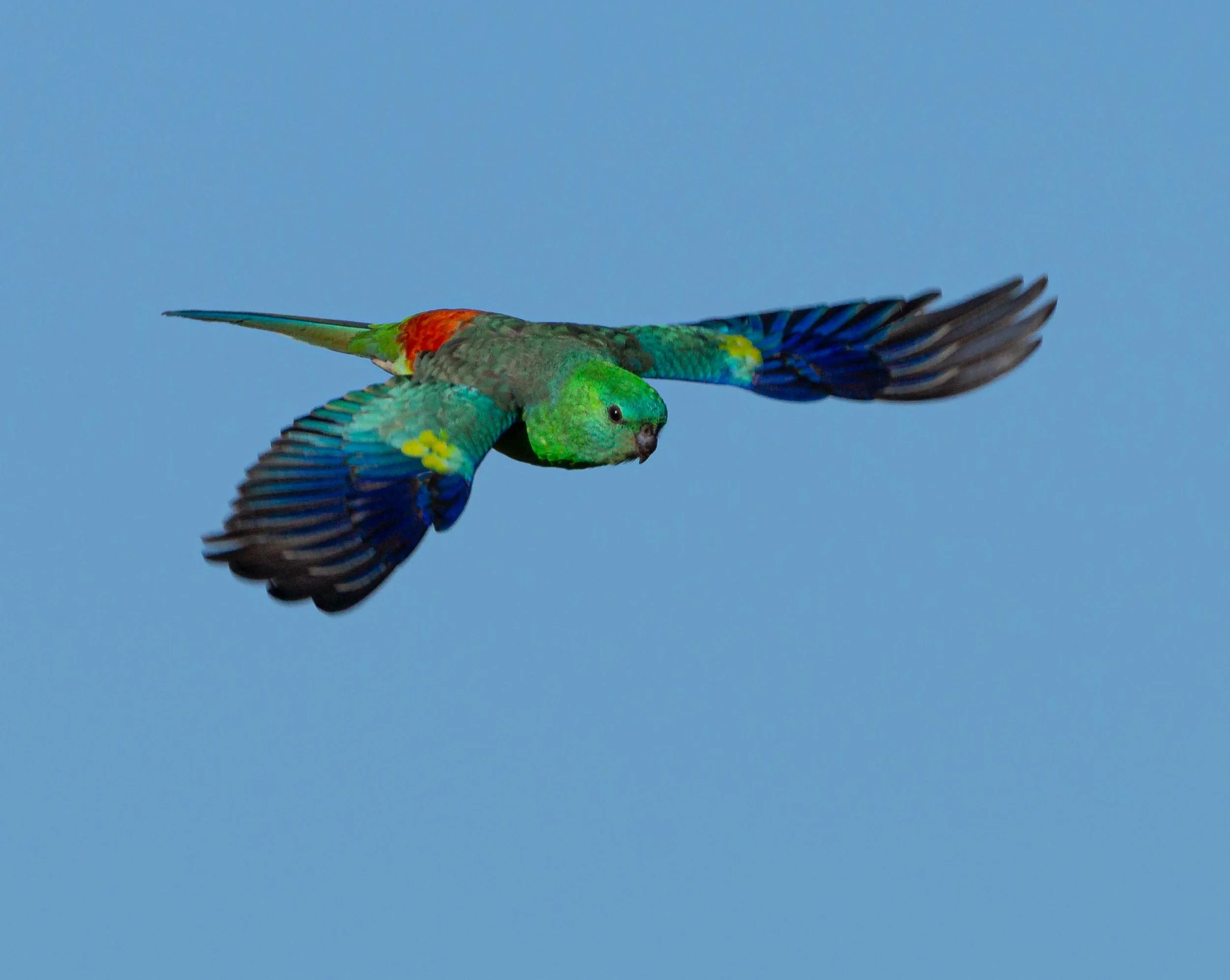
Red-rumped Parrot Psephotus haematonotus
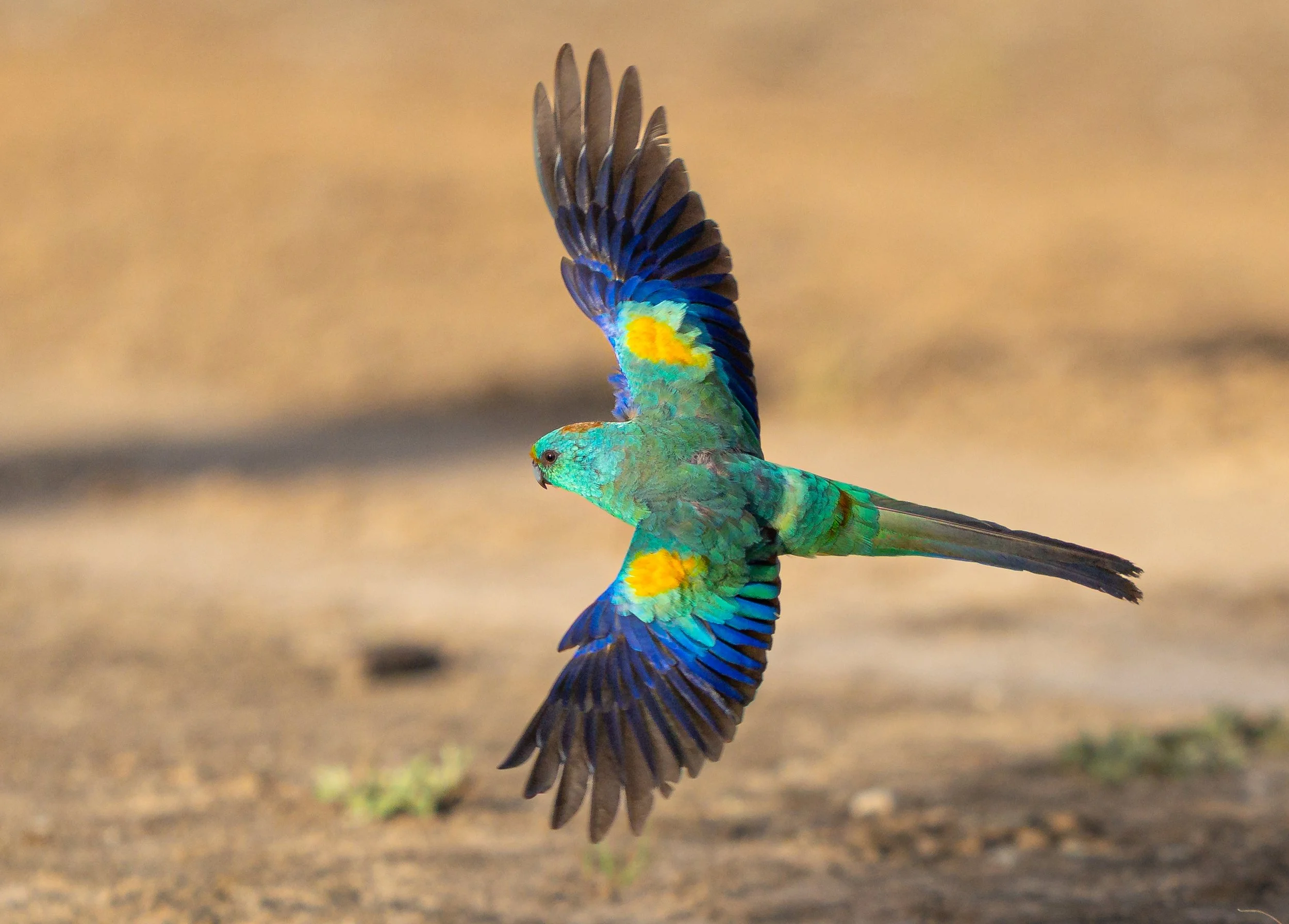
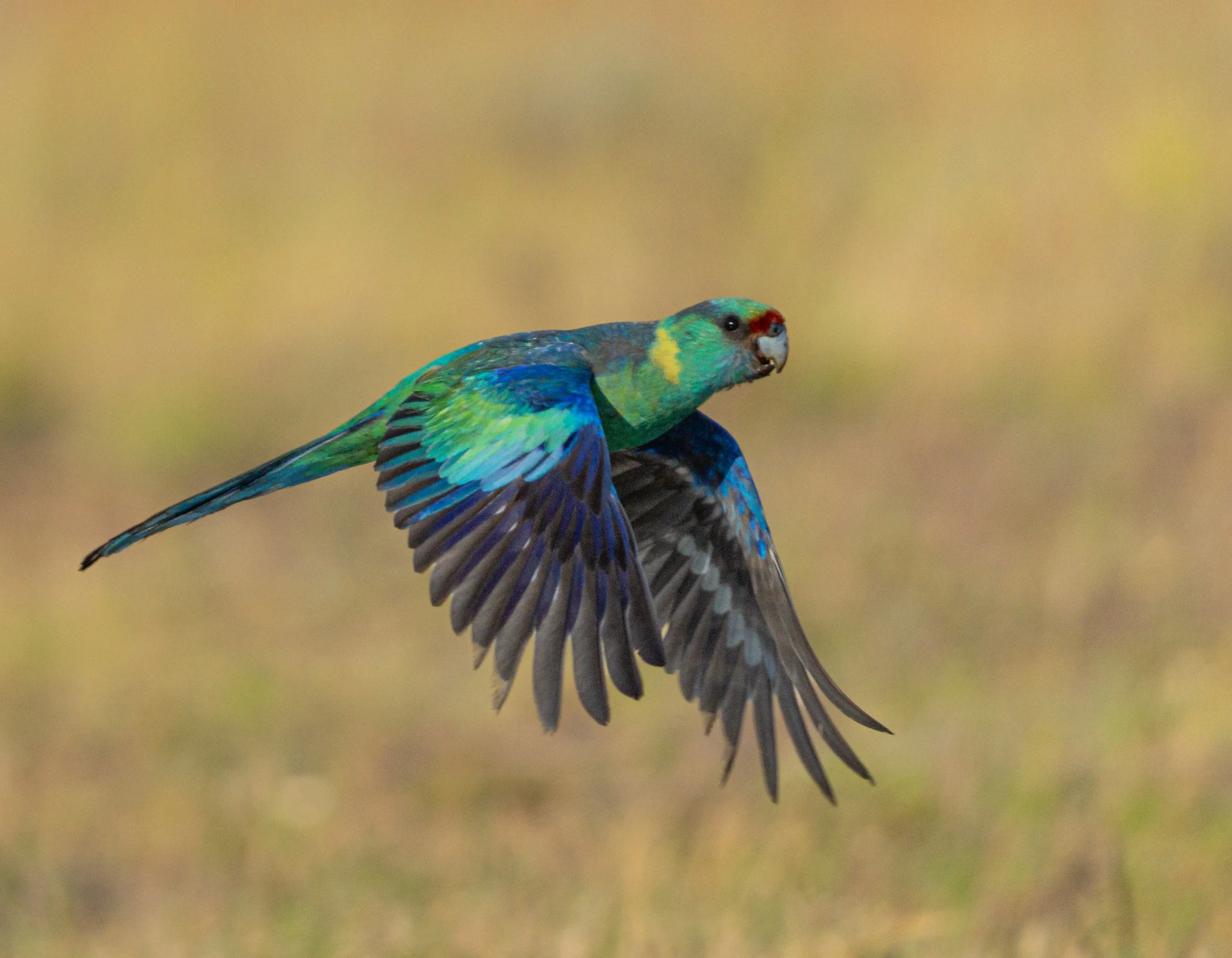
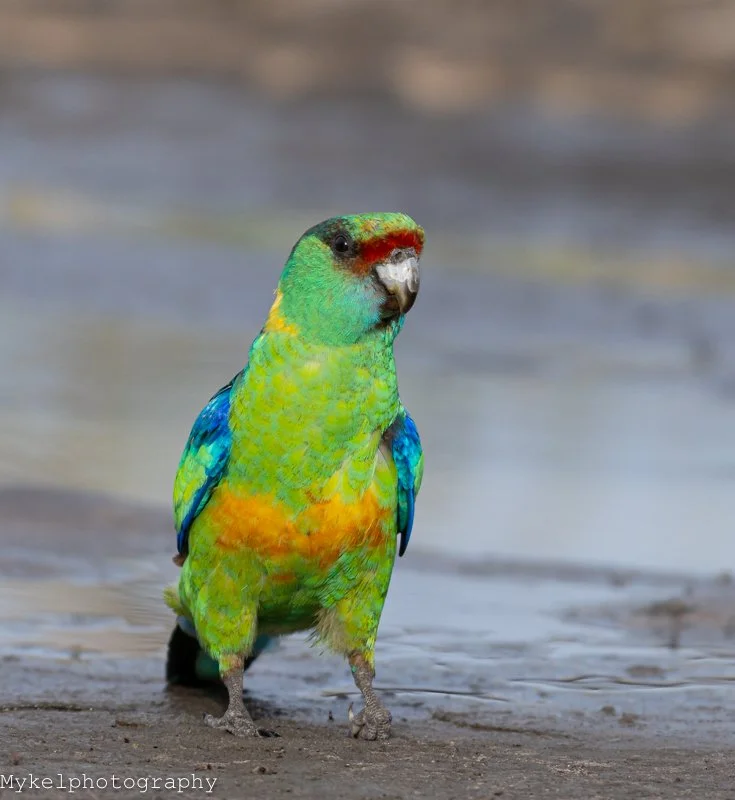
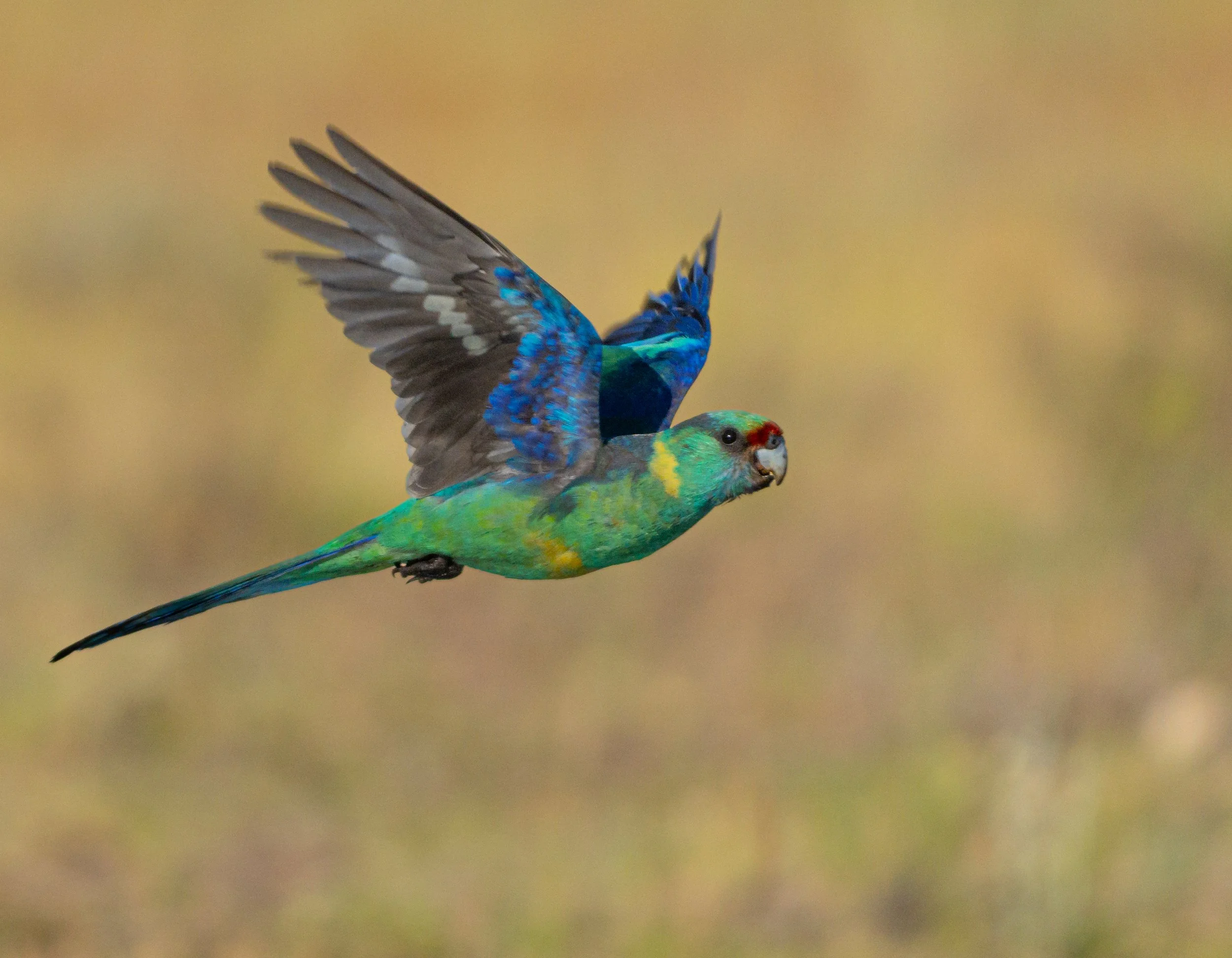
Mulga Parrot Psephotellus varius - Medium-sized colorful parrot, widespread across more arid and semi-arid woodlands of southern inland Australia. Adult male very brightly colored and striking in appearance, primarily turquoise-green with dark blue and yellow in the wings and yellow and red in lower belly. Female primarily brownish-green but with splashes of turquoise, blue, red, and yellow. Typically feeds on the ground
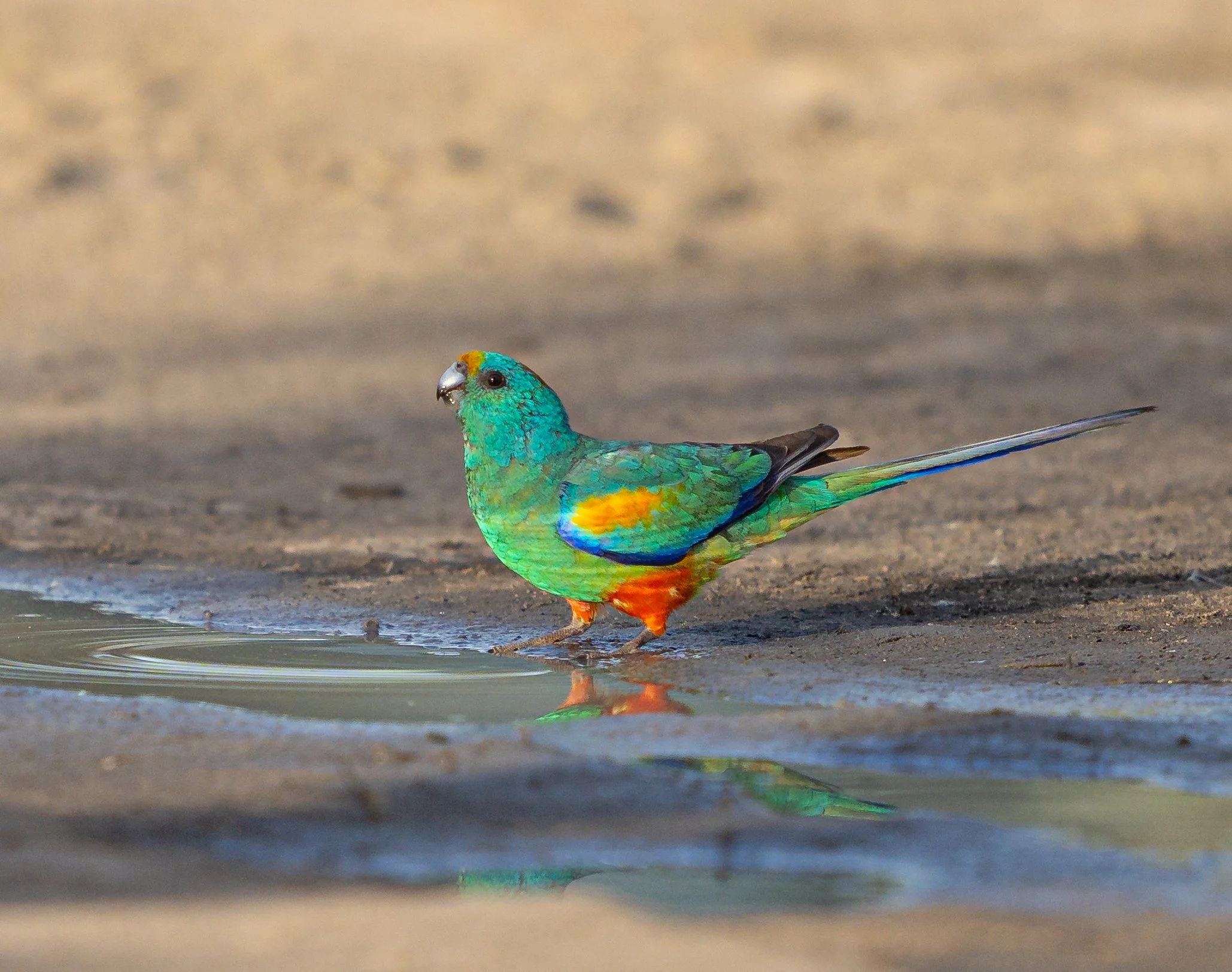
Mulga Parrot Psephotellus varius
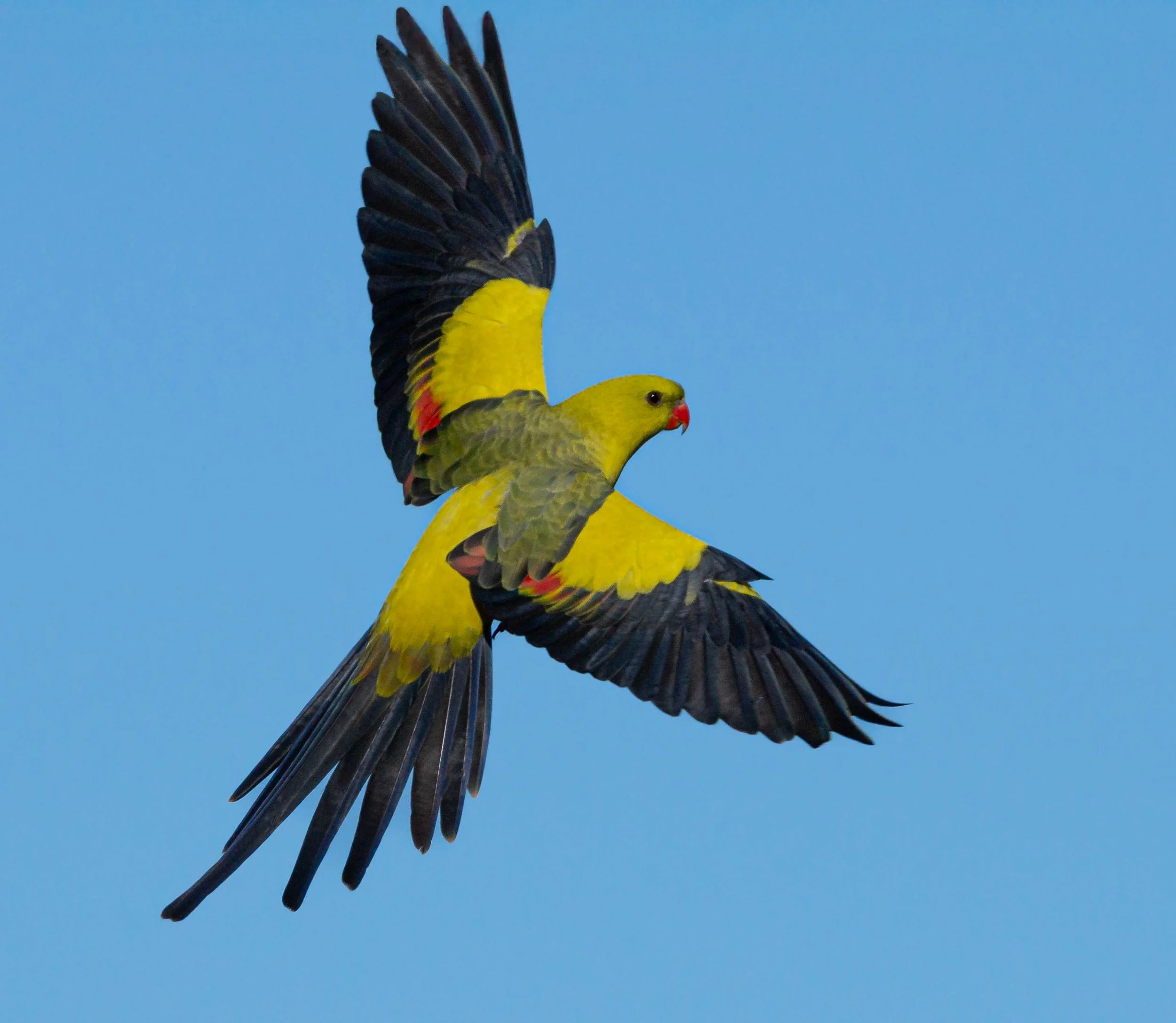
Regent Parrot Polytelis anthopeplus - Large, long-tailed, distinctive parrot of open inland areas with scattered woodlands, where it breeds in hollows of large trees. When perched, note greenish-yellow body, black wing with red and yellow patches, and red bill. In flight, black flight feathers and tail contrast strongly with yellow wing coverts and rump
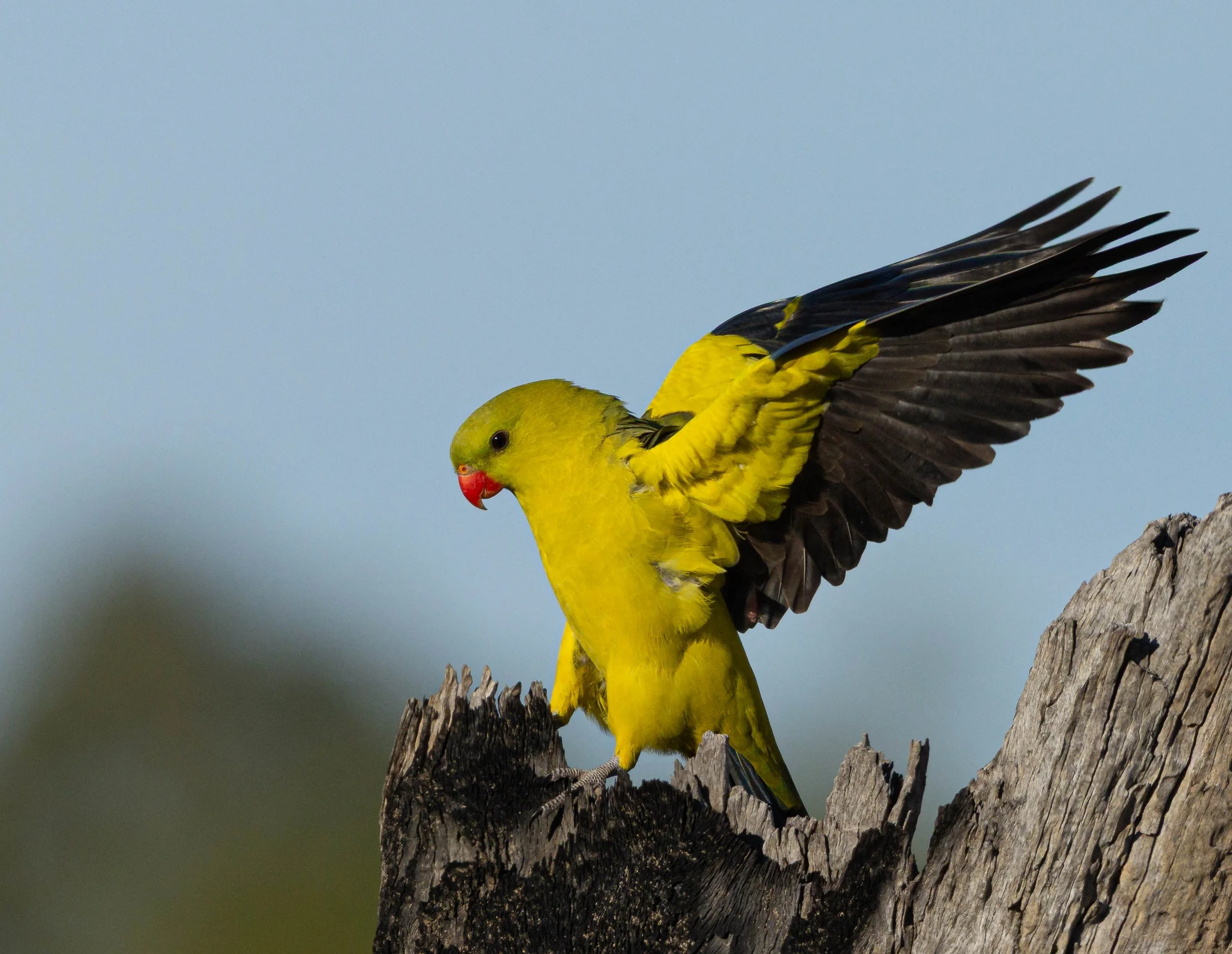
Regent Parrot Polytelis anthopeplus
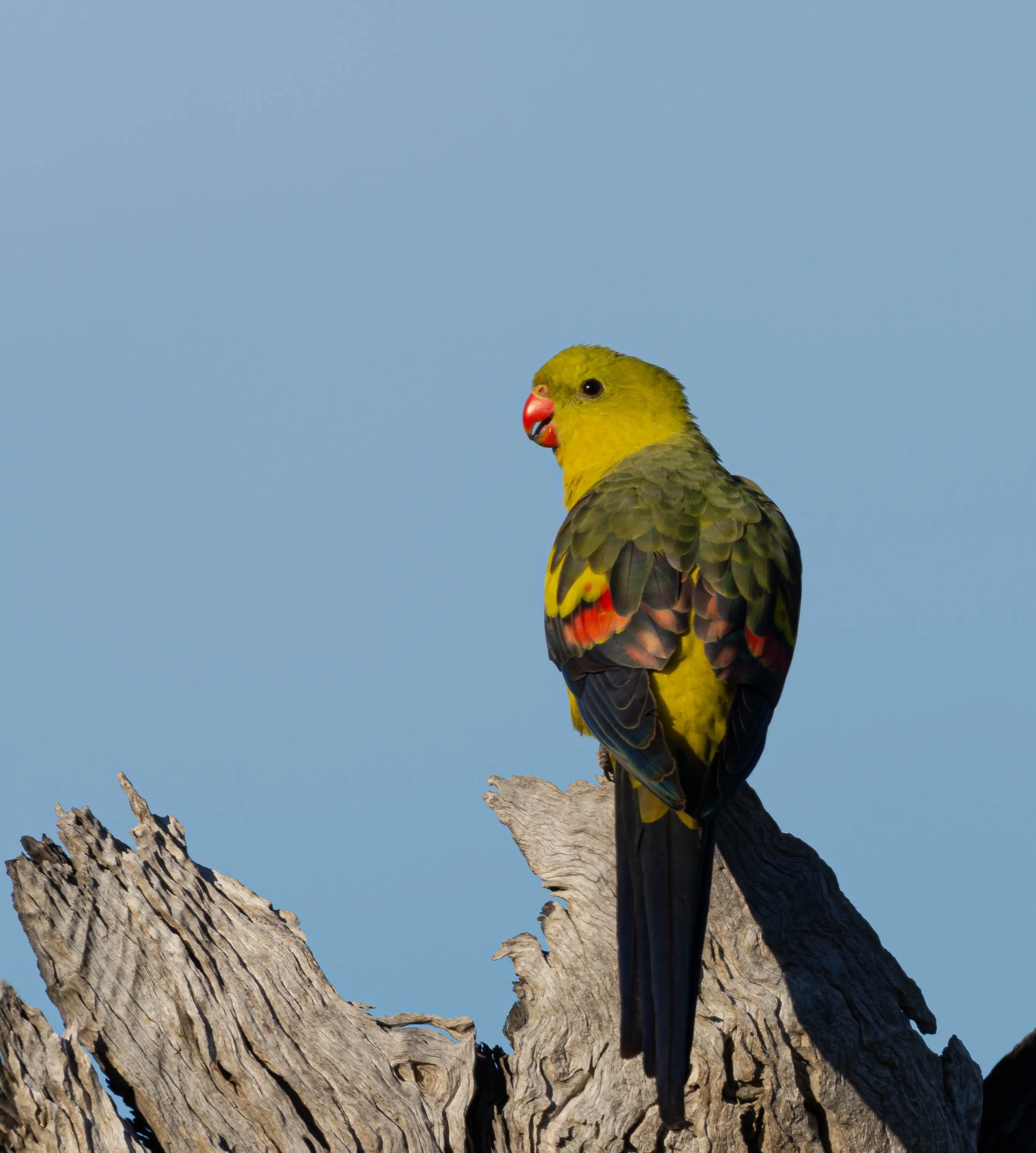
Regent Parrot Polytelis anthopeplus
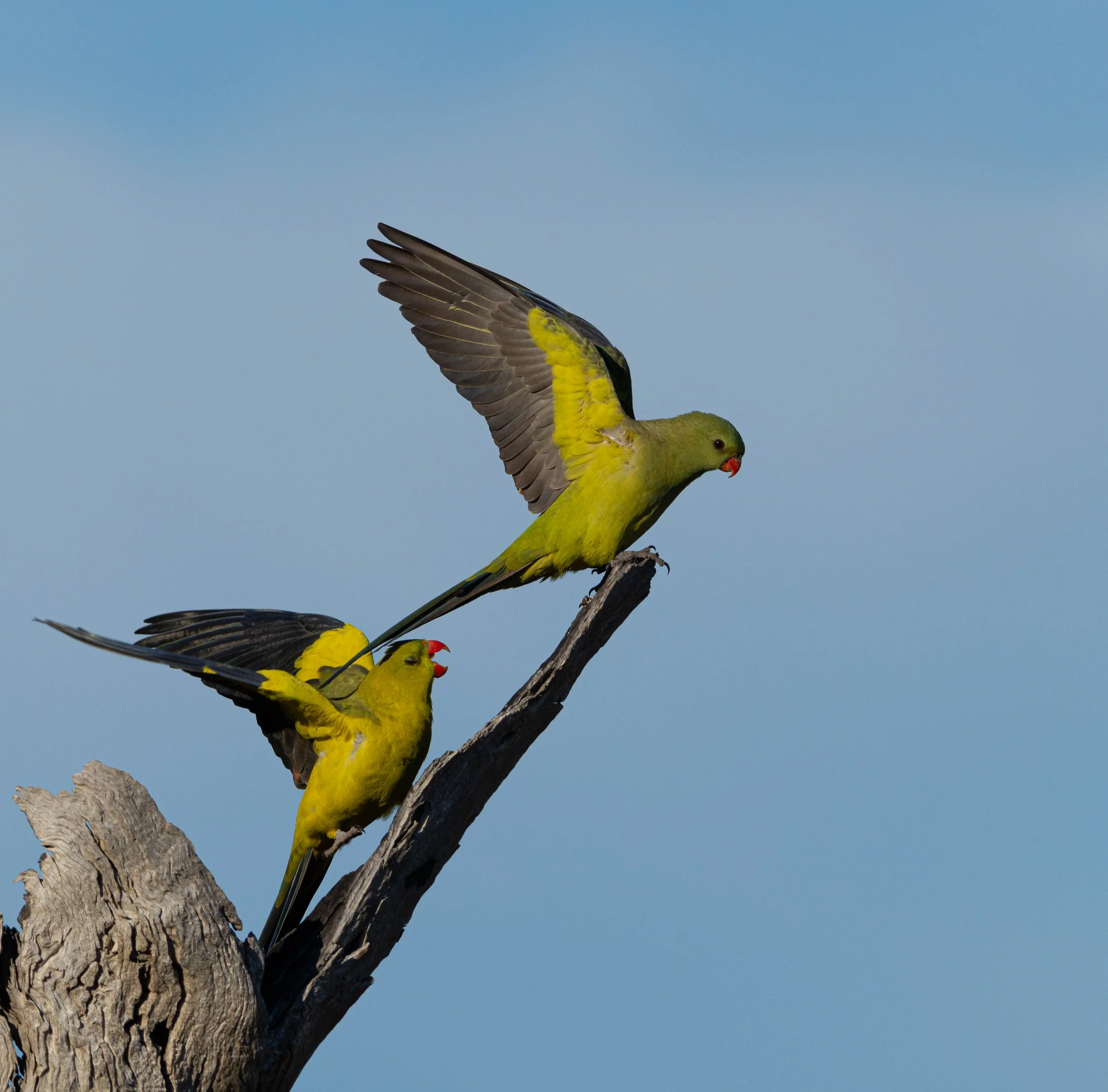
Regent Parrot Polytelis anthopeplus
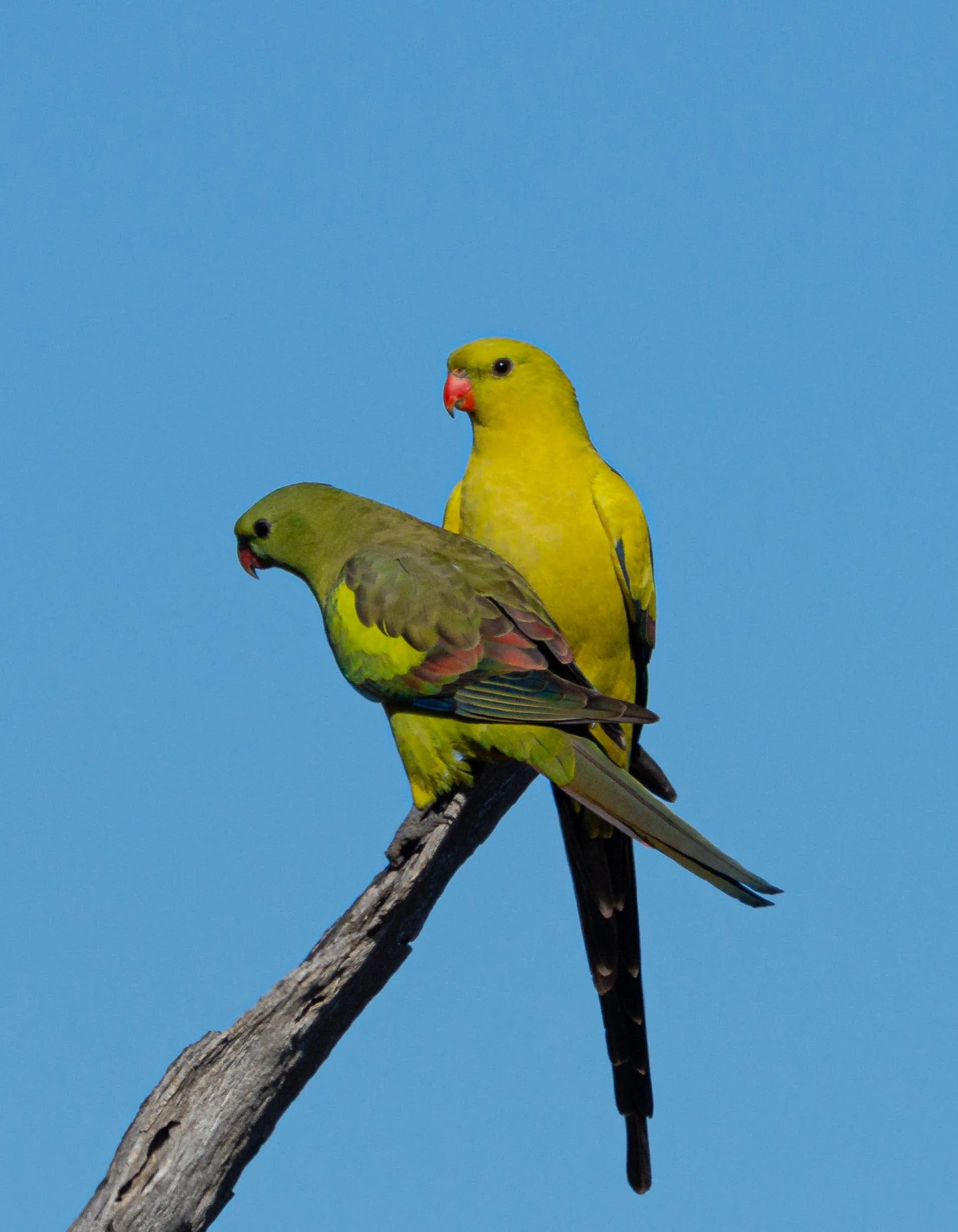
Regent Parrot Polytelis anthopeplus
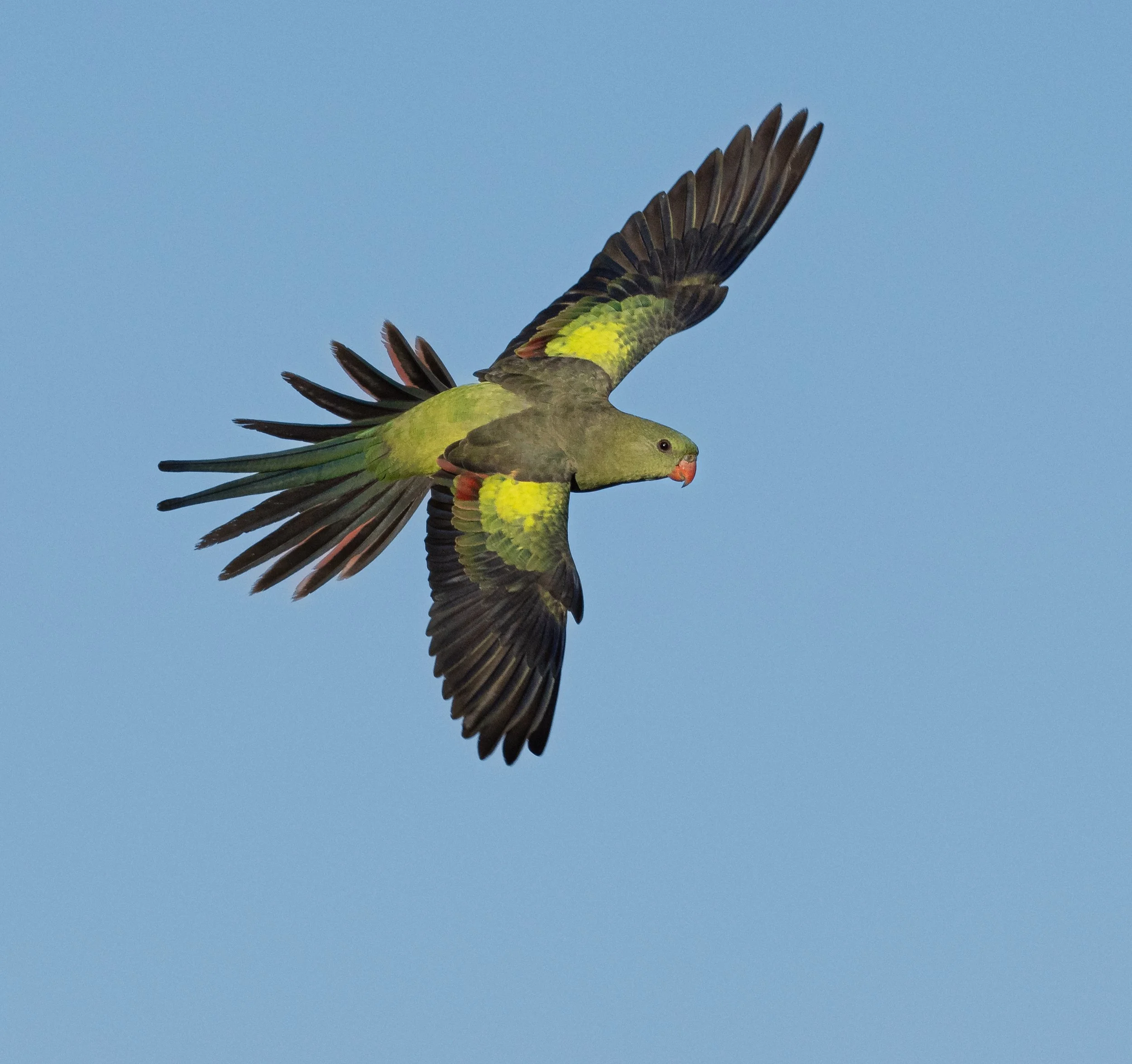
Regent Parrot Polytelis anthopeplus
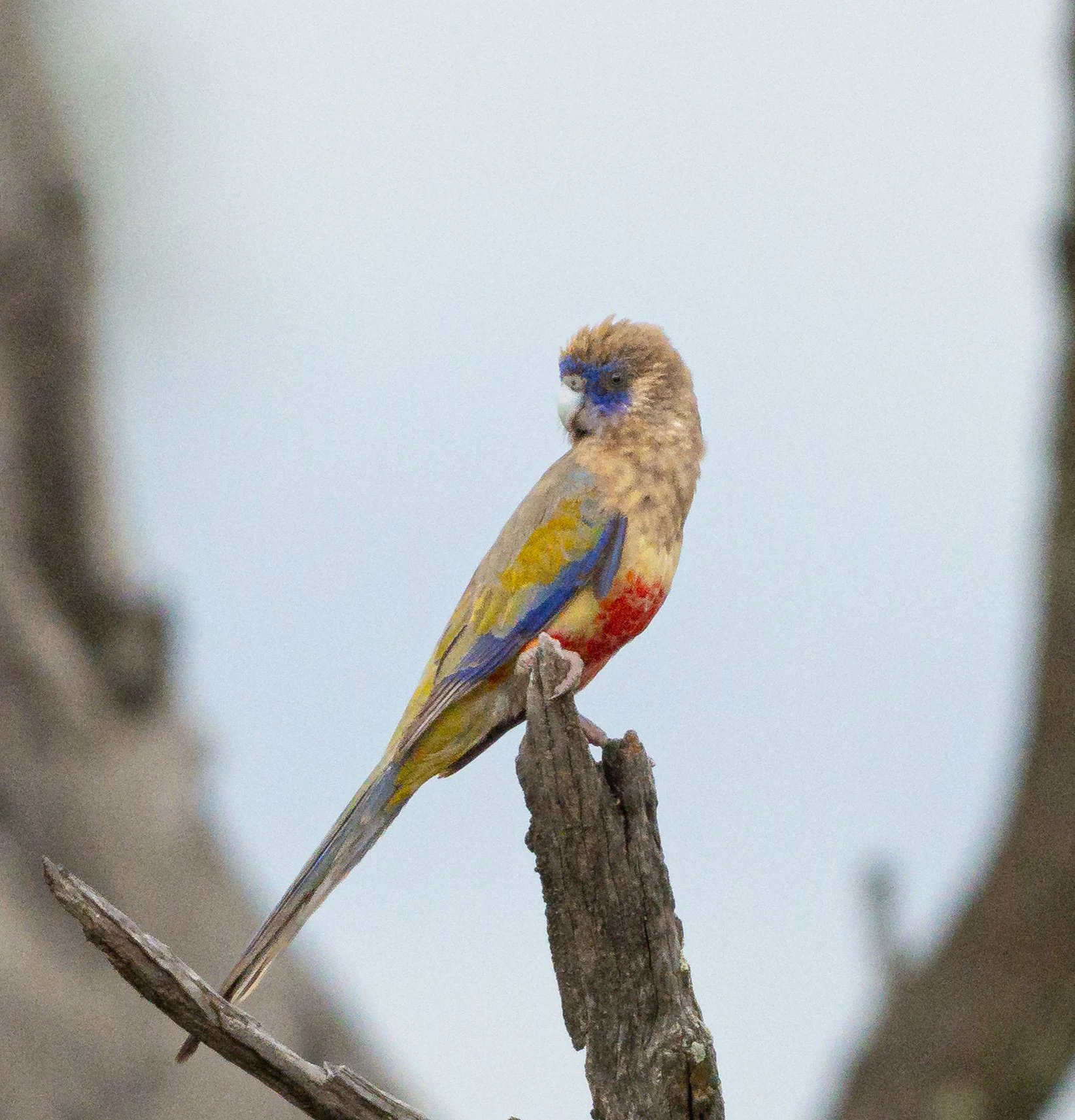
Greater Bluebonnet Northiella haematogaster - Brown parrot with yellow-and-red belly and deep blue face, typically found in dry inland habitats in eastern Australia. Multiple subspecies vary in the color of their wing patch, belly, and undertail. Usually seen in small groups, this species is often hard to approach and is easily flushed. In flight, the blue wings and red shoulders contrast with pale brown back
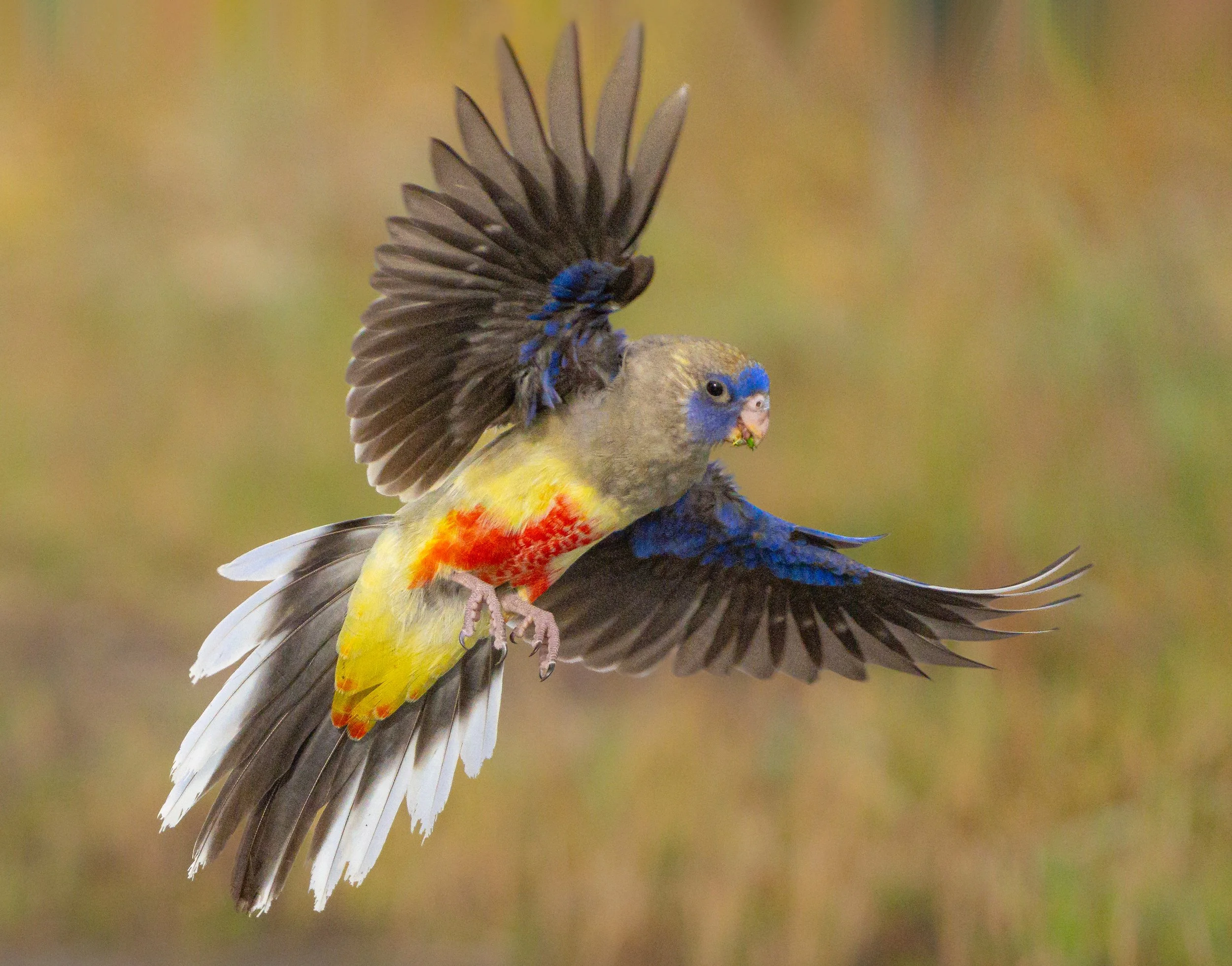
Greater Bluebonnet Northiella haematogaster
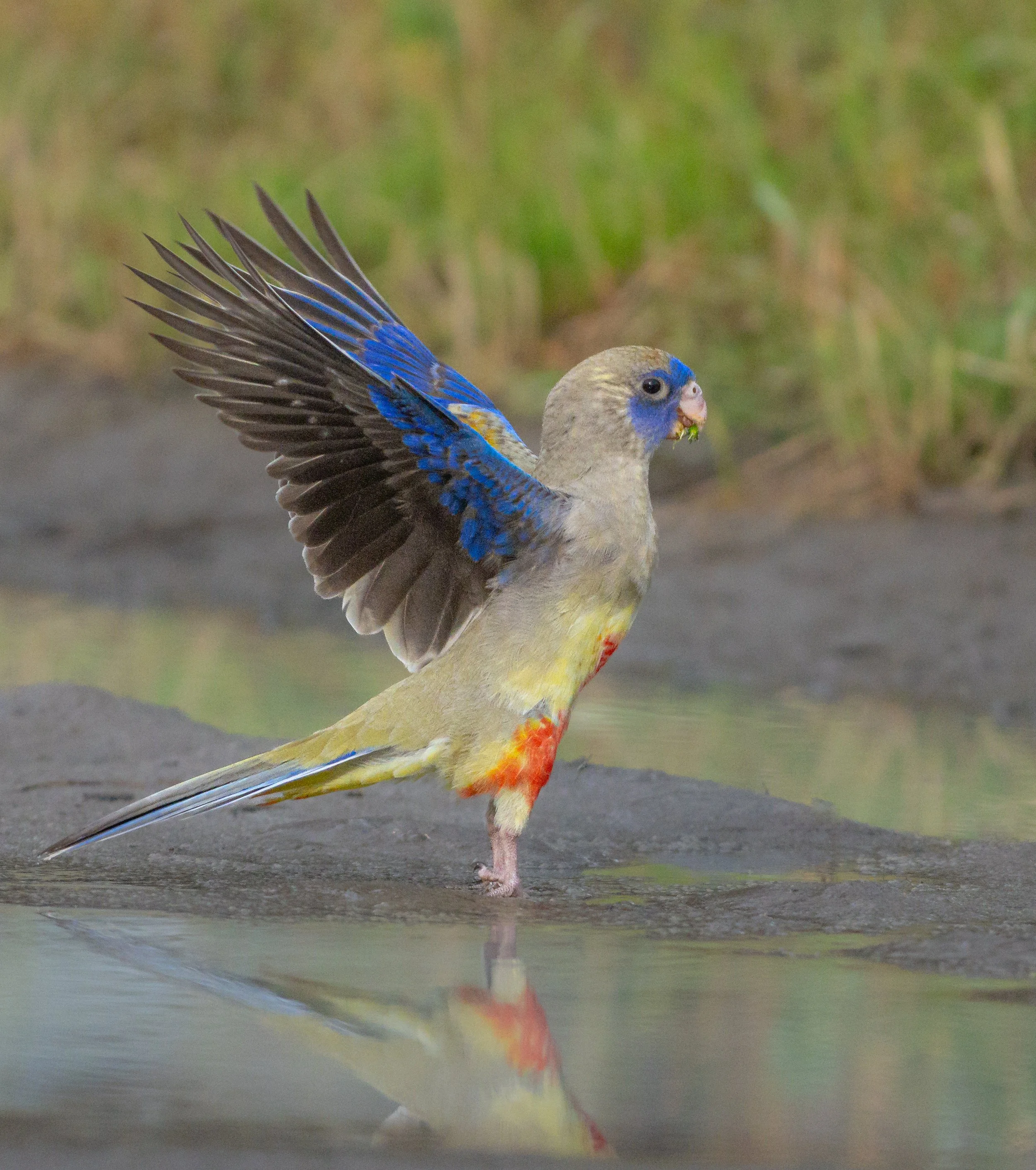
Greater Bluebonnet Northiella haematogaster
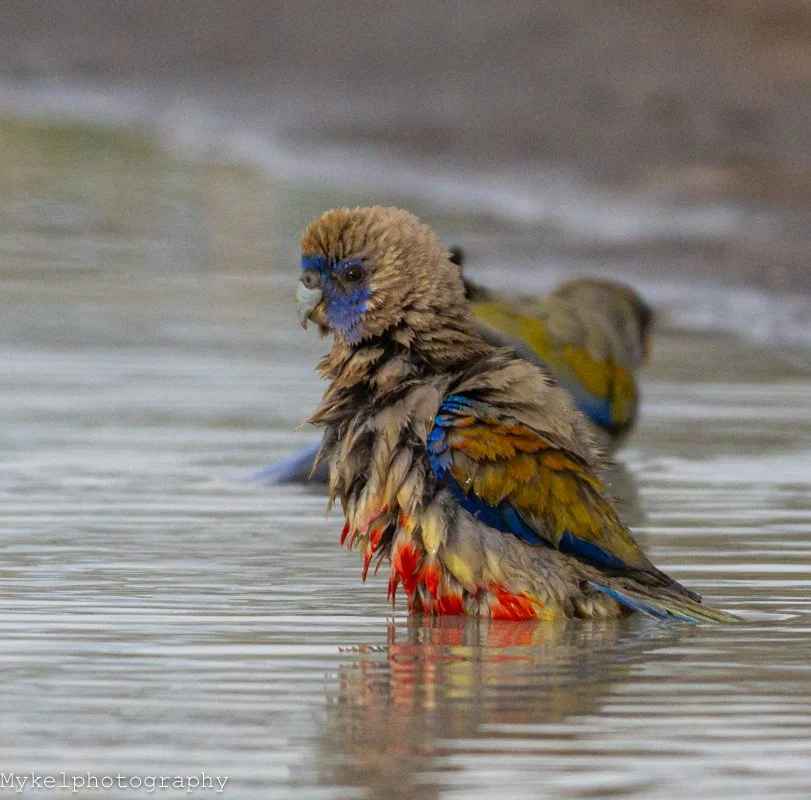
Greater Bluebonnet Northiella haematogaster
Australian Ringneck Barnardius zonarius - Large green parrot with a yellow collar. Four separate subspecies are recognized, with varying habitat preferences ranging from harsh arid mulga woodlands to suburban parks. Plumages also vary, and the subspecies sometimes interbreed. Shared characteristics are a yellow "ring" around the neck and overall turquoise-green plumage. The subspecies in eastern Australia have green heads, while those in central and western Australia have blackish heads. Some subspecies have orange belly bands and red above the bill
Australian Ringneck Barnardius zonarius
Australian Ringneck Barnardius zonarius
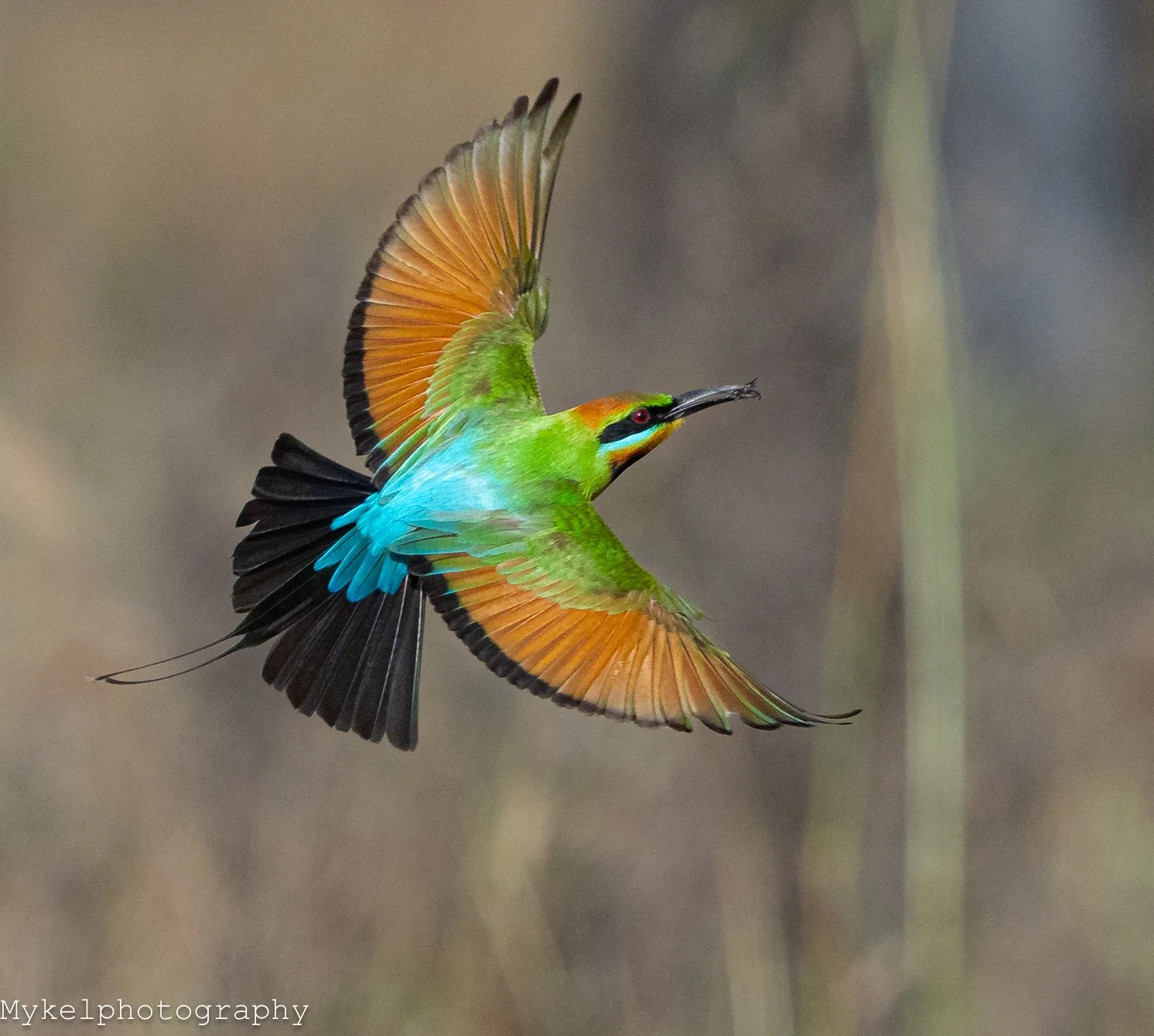
Rainbow Bee-eater Merops ornatus- A striking, colourful bird, the Rainbow Bee-eater is medium sized, with a long slim curved bill and a long tail with distinctive tail-streamers. It has a golden crown and a red eye set in a wide black stripe from the base of the bill to the ears, which is edged with a thin blue line. The throat is orange-yellow, with a broad black band separating it from a green breast. The upperparts are green, with the flight feathers coppery and black tipped. The underwings are bright orange, with a black edge. The lower abdomen is blue. The tail is black, including the long tail streamers, with a blue tinge. Females have shorter, thicker tail streamers than males, but are otherwise similar. Young birds are duller and greener, lacking the black band on the chest and the long tail streamers.
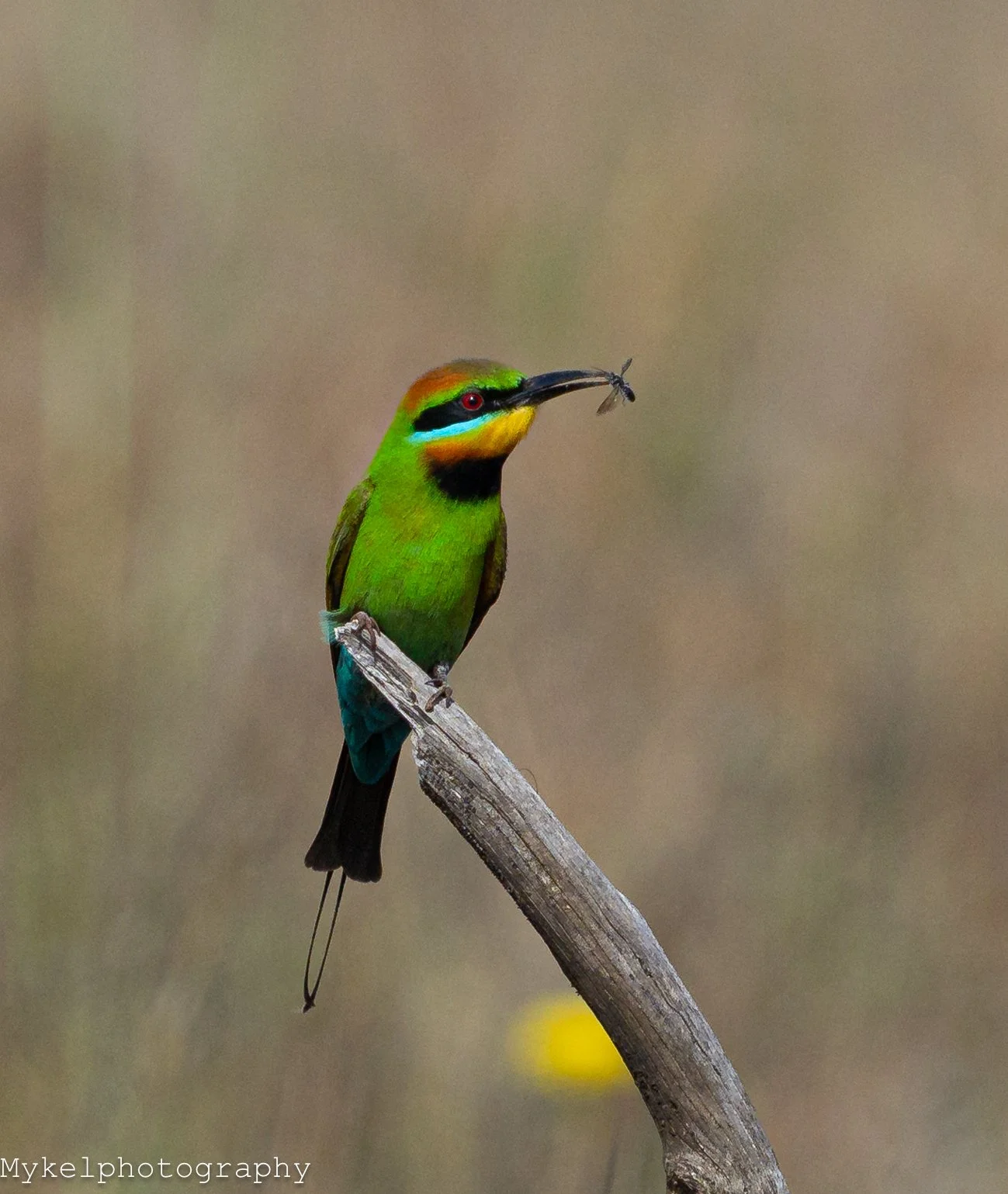
Rainbow Bee-eater
Merops ornatus
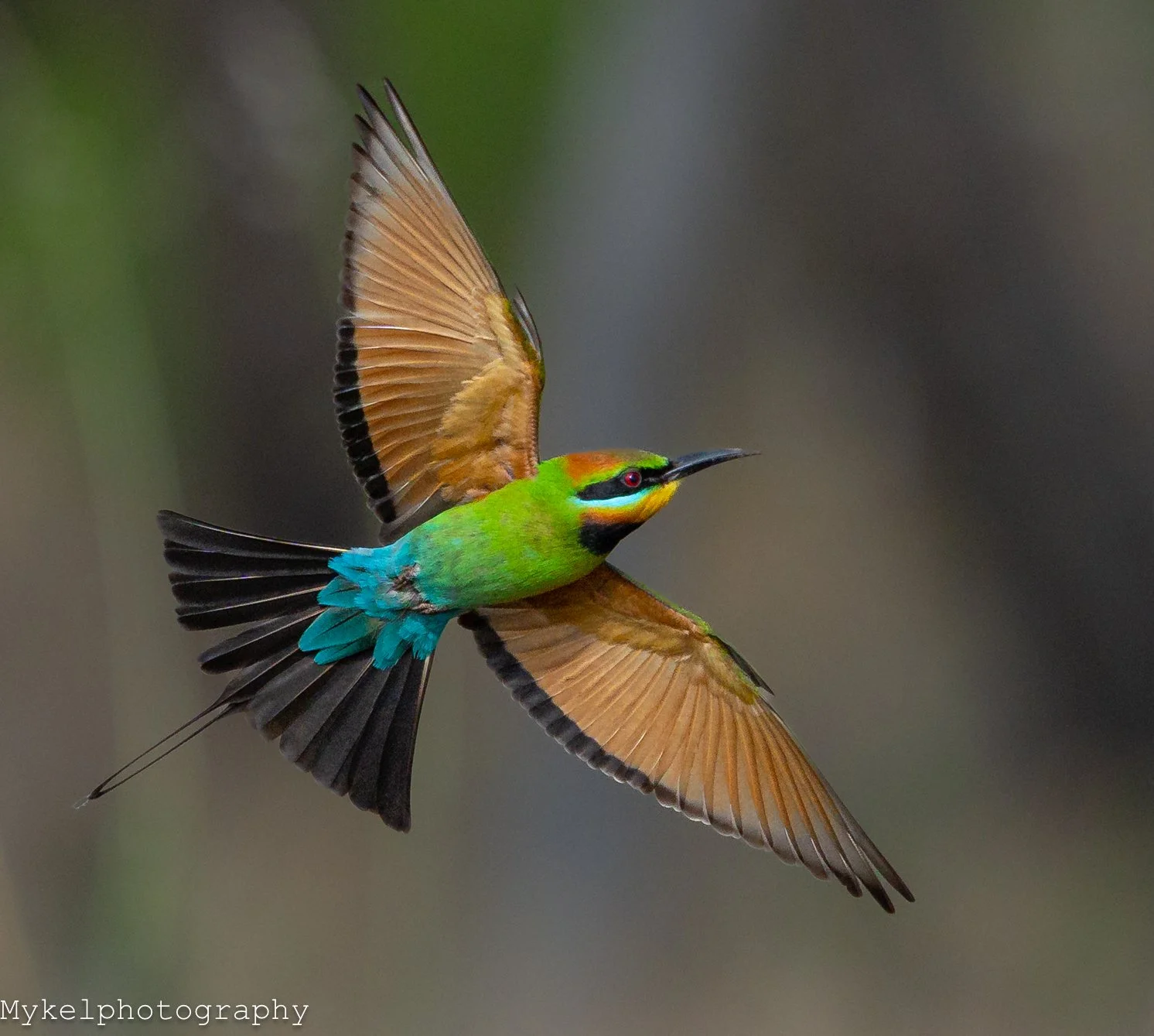
Rainbow Bee-eater
Merops ornatus
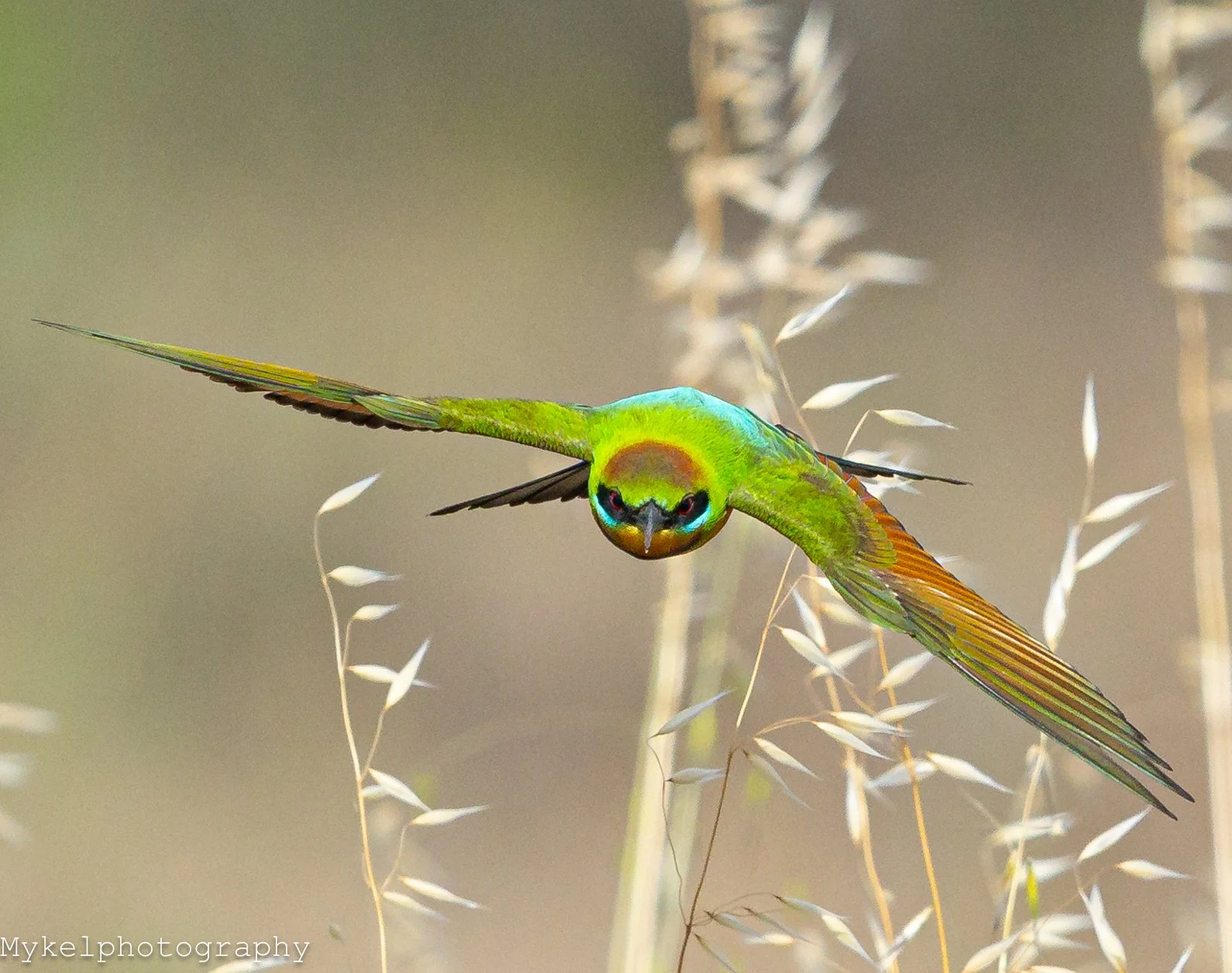
Rainbow Bee-eater
Merops ornatus
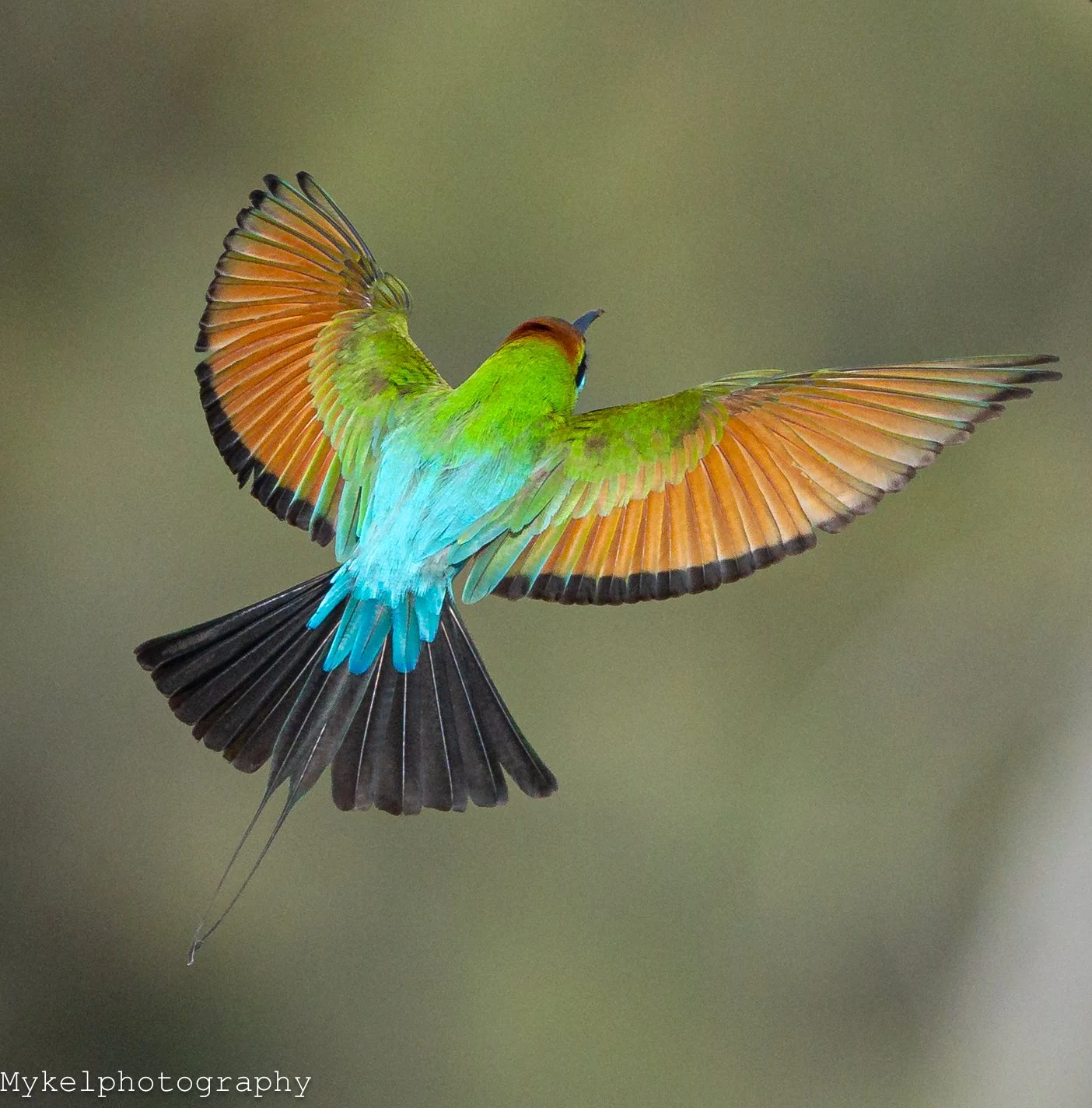
Rainbow Bee-eater
Merops ornatus
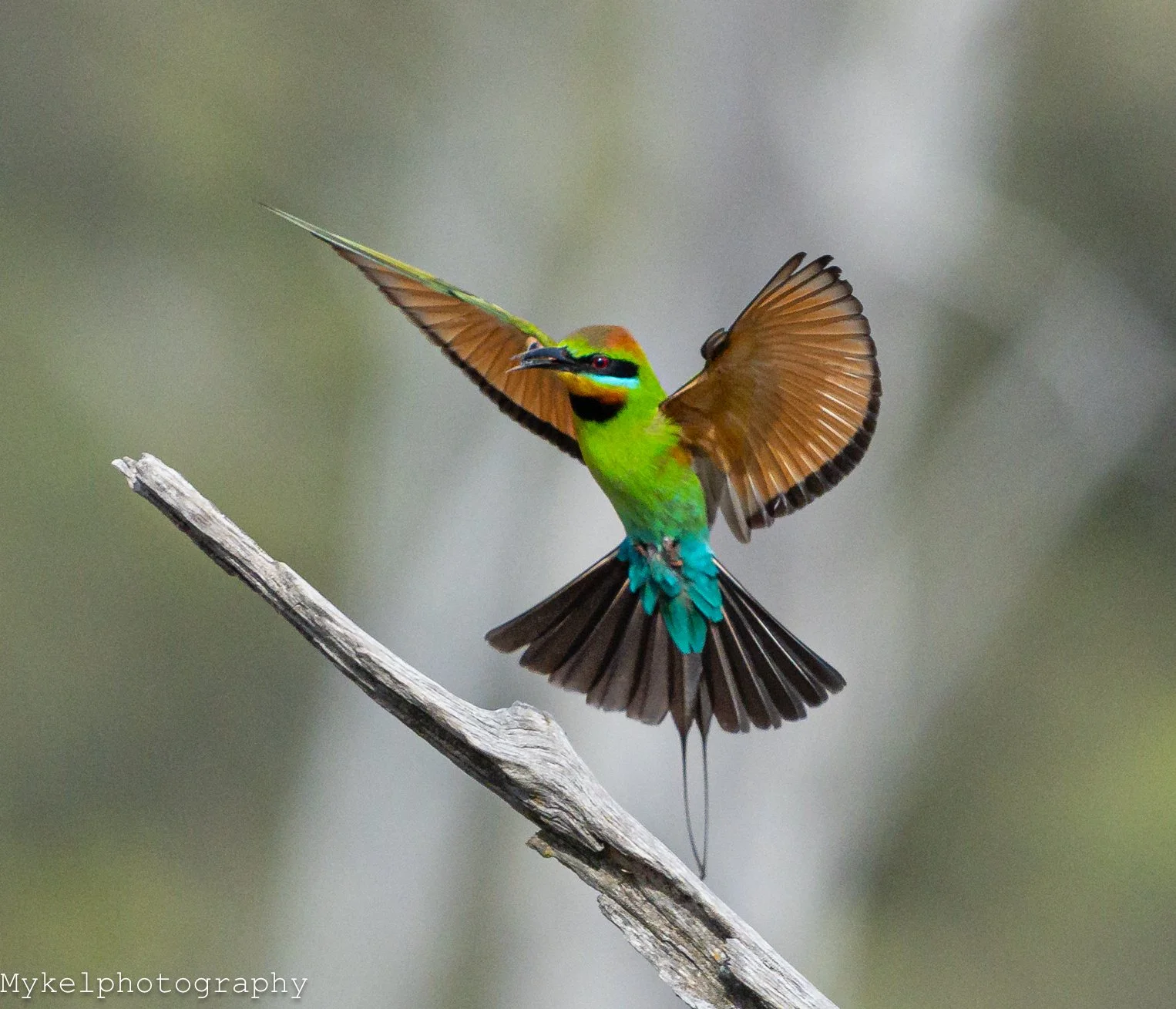
Rainbow Bee-eater
Merops ornatus
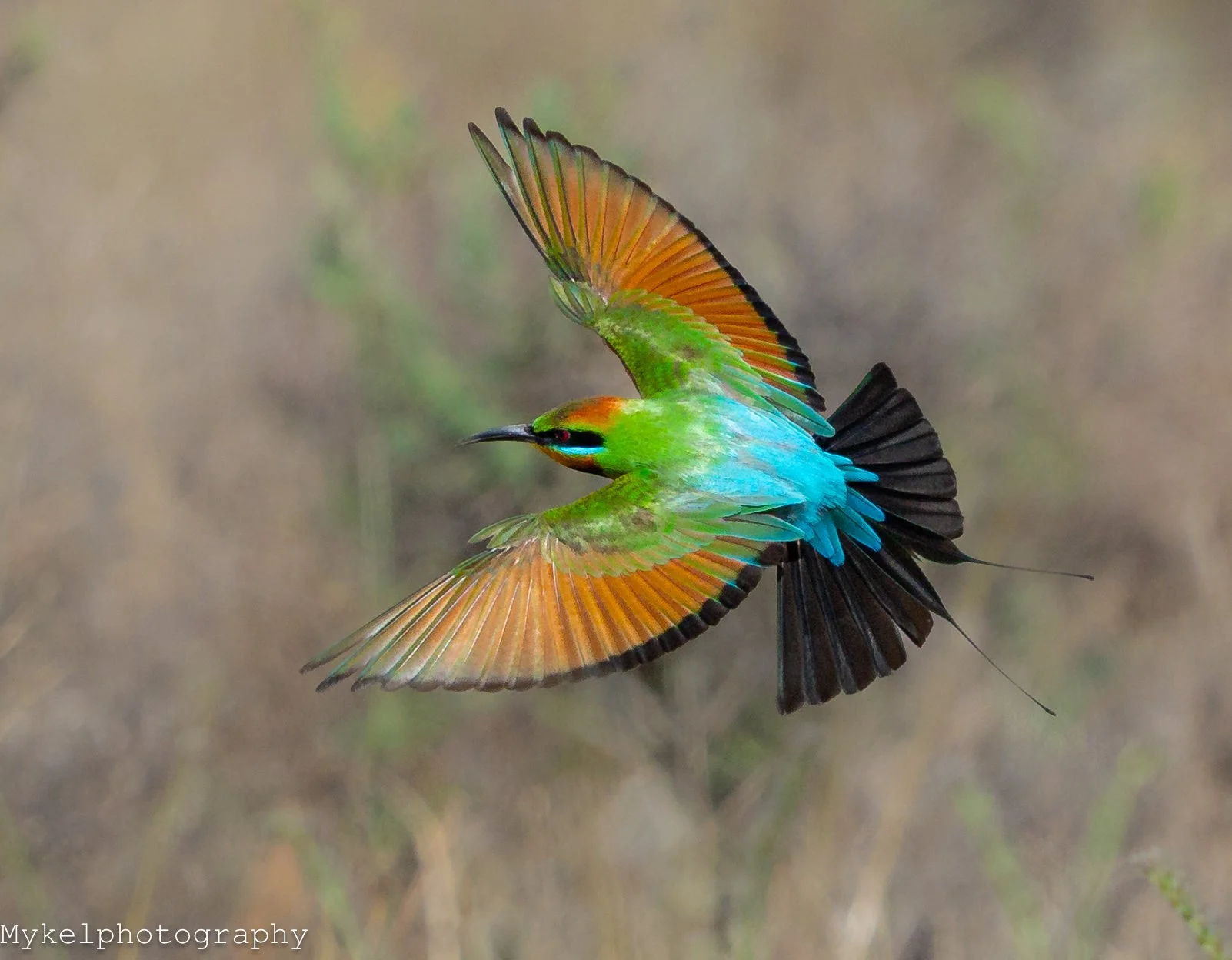
Rainbow Bee-eater
Merops ornatus
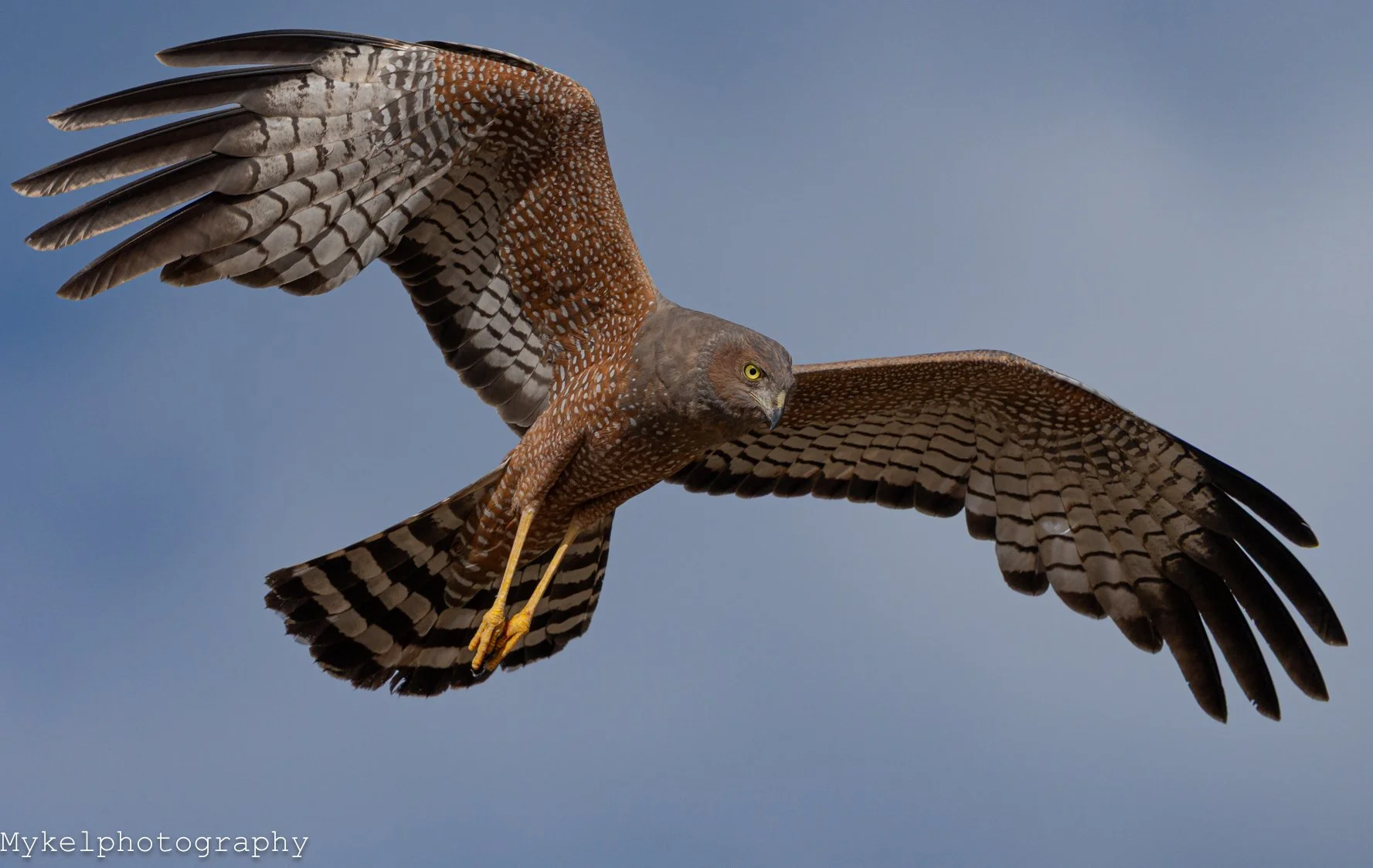
Spotted Harrier Circus assimilis - Long-legged medium-sized raptor with long narrow wings. Adult has chestnut underparts with striking white spots; immature streaked below. Flies low at slow speeds over open habitats. Often perches on fence-posts. Occurs in drier habitats than Swamp Harrier.
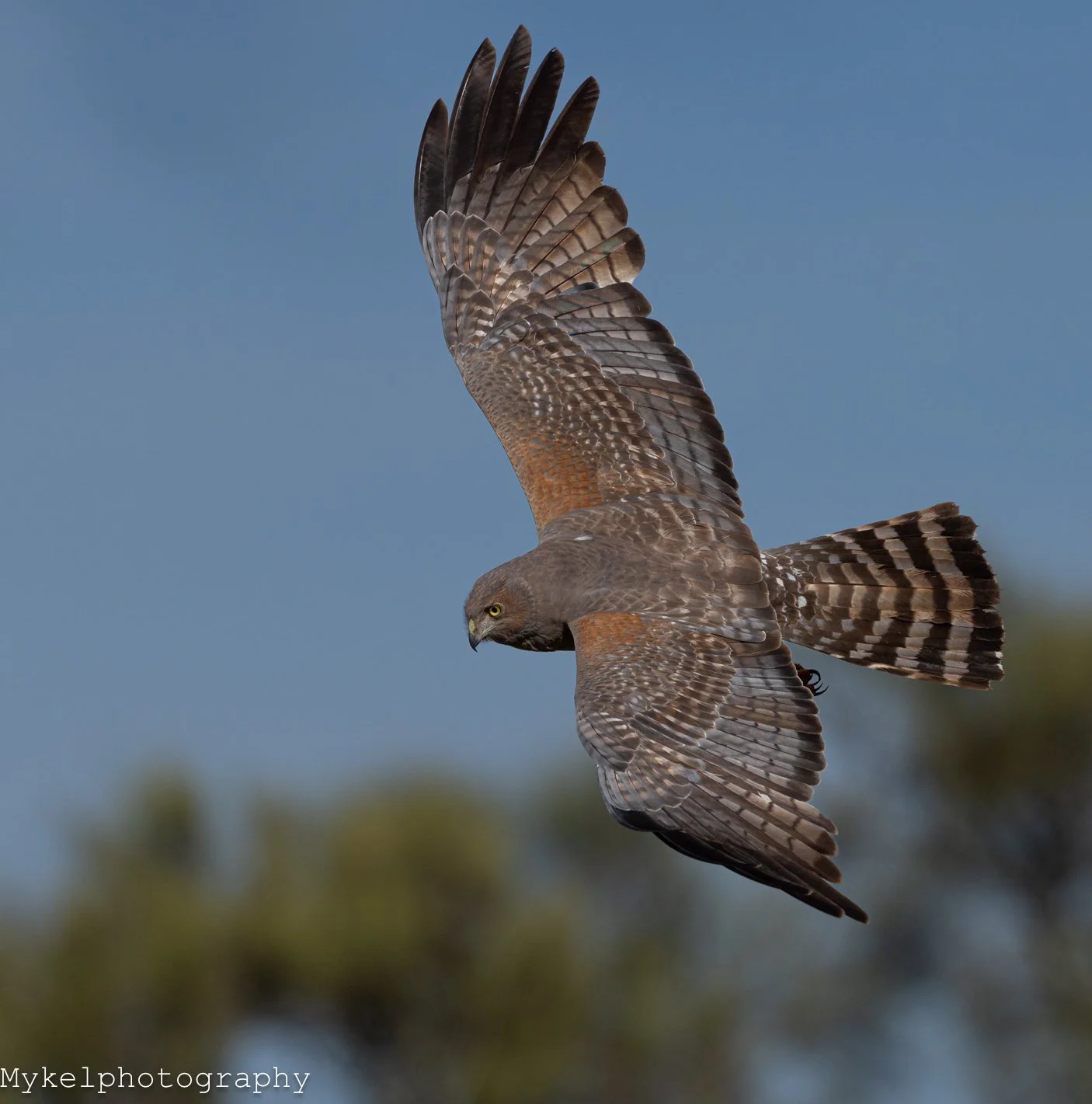
Spotted Harrier Circus assimilis
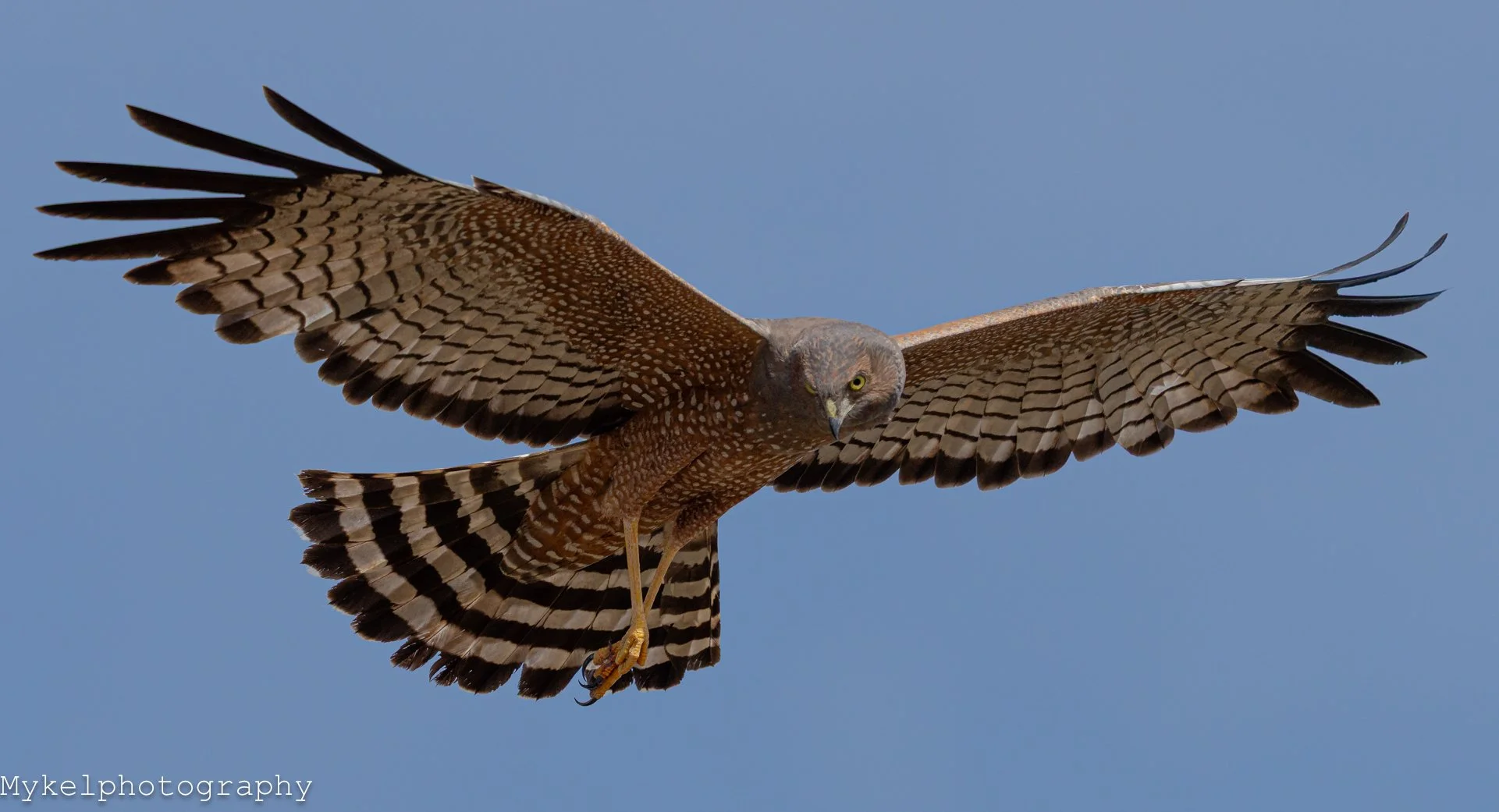
Spotted Harrier Circus assimilis
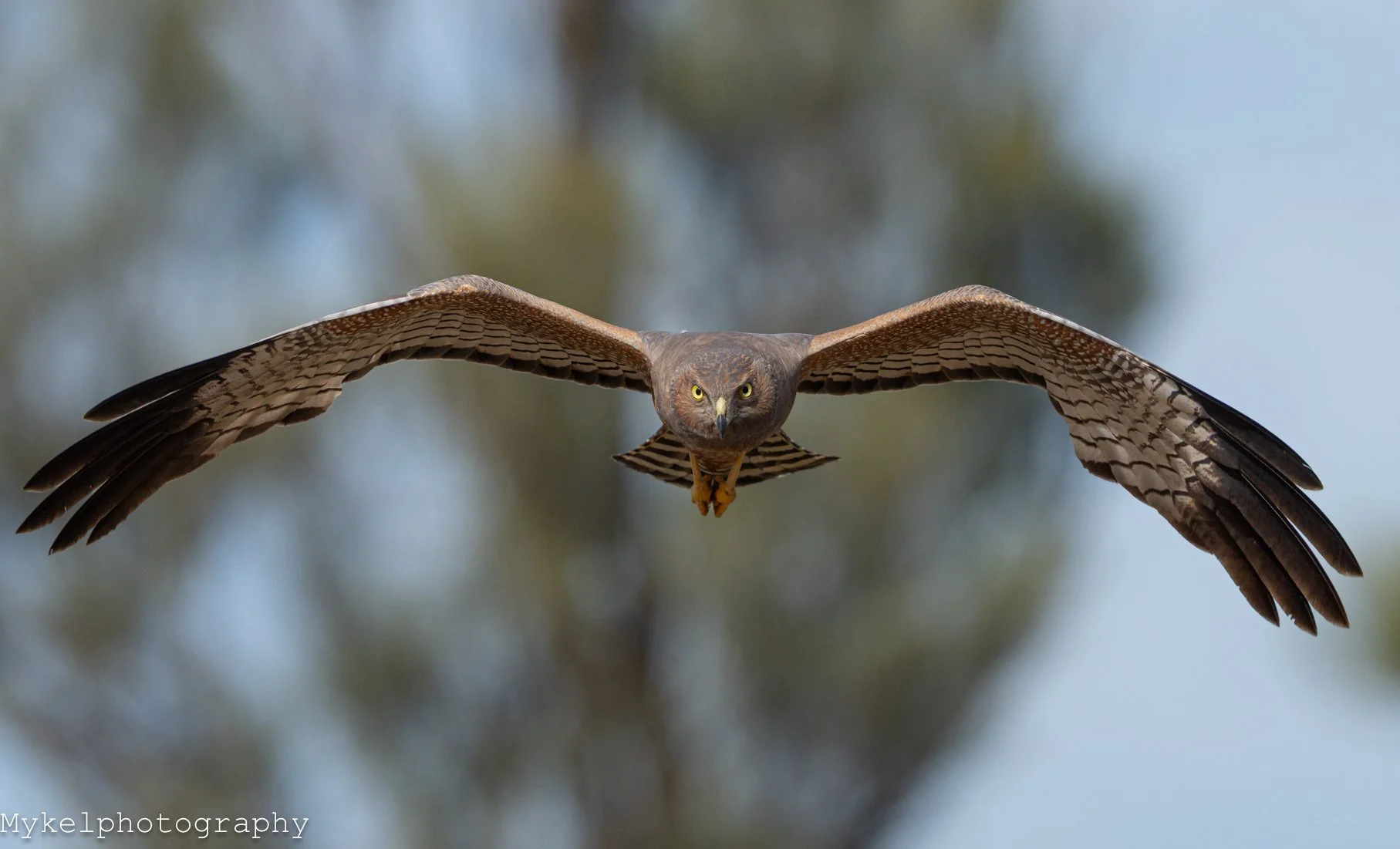
Spotted Harrier Circus assimilis
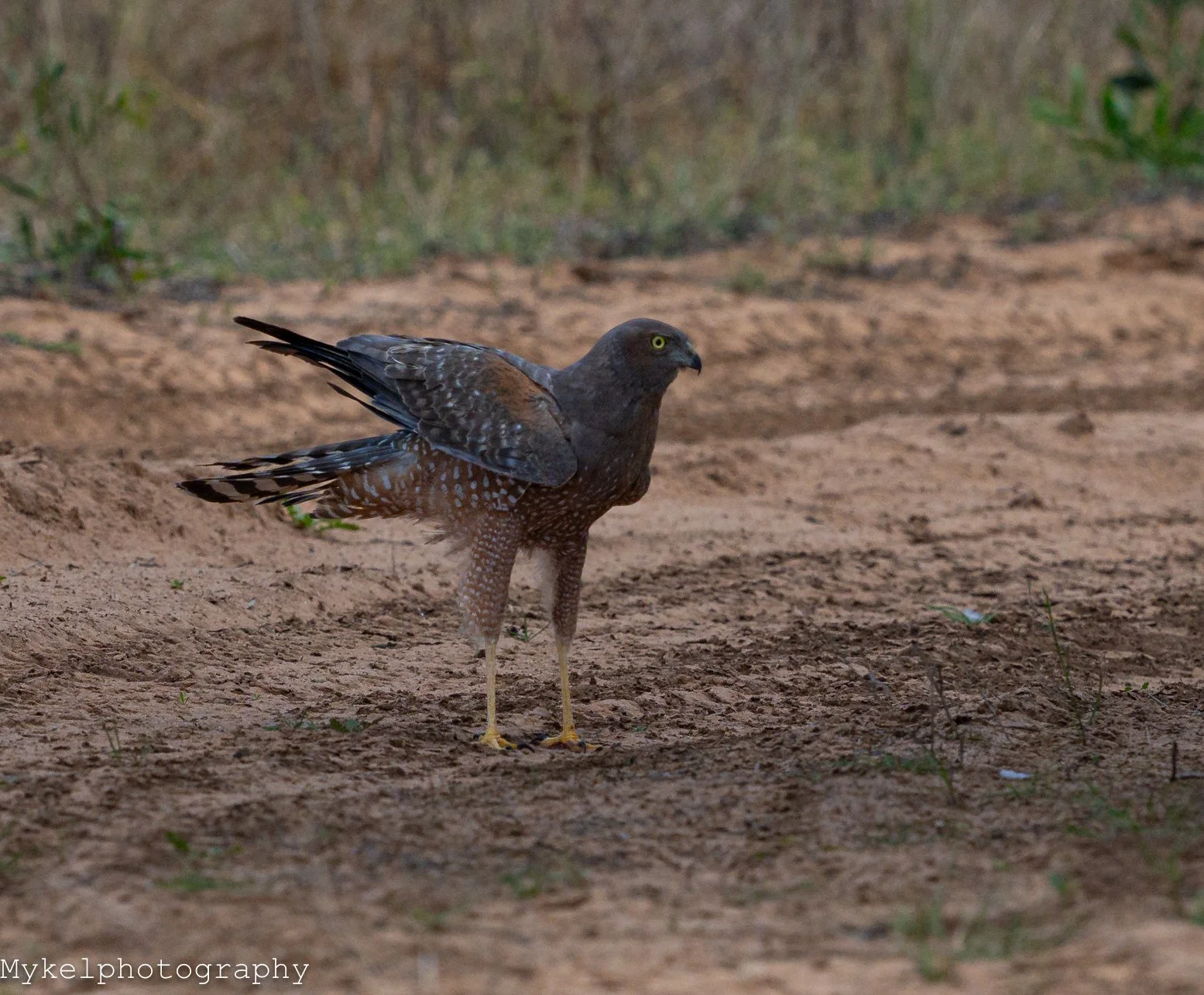
Spotted Harrier Circus assimilis
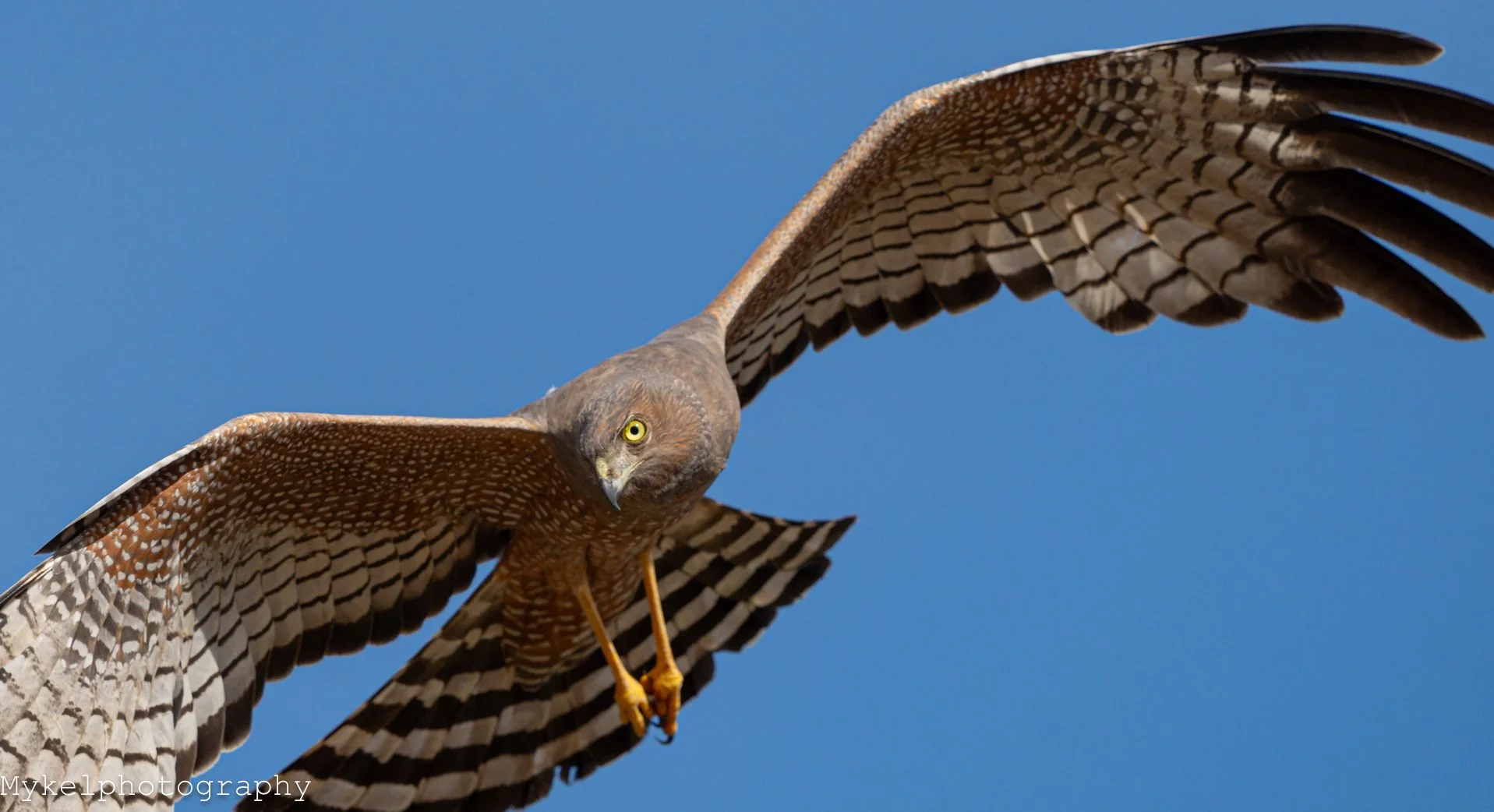
Spotted Harrier Circus assimilis
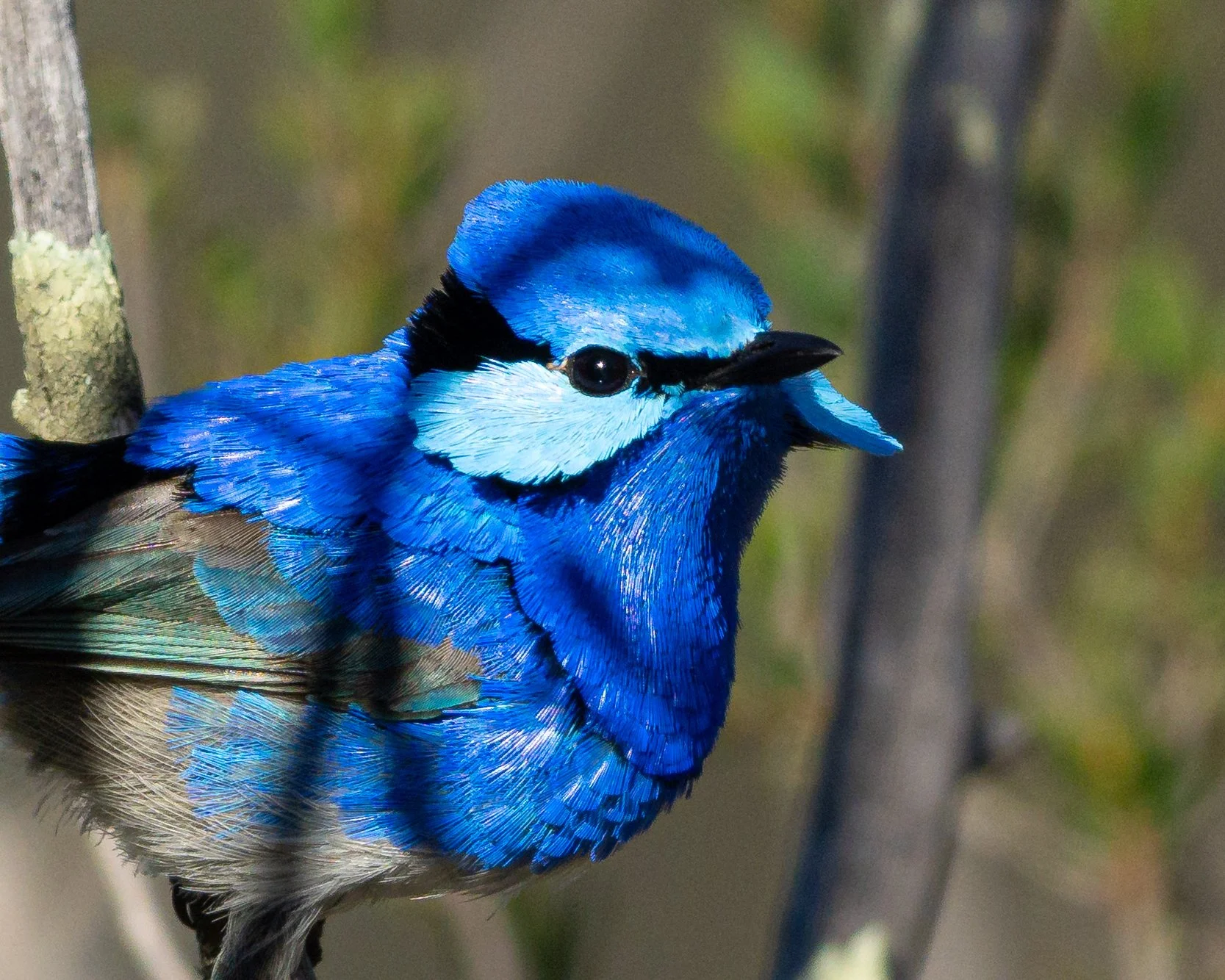
Splendid Fairywren Malurus splendens
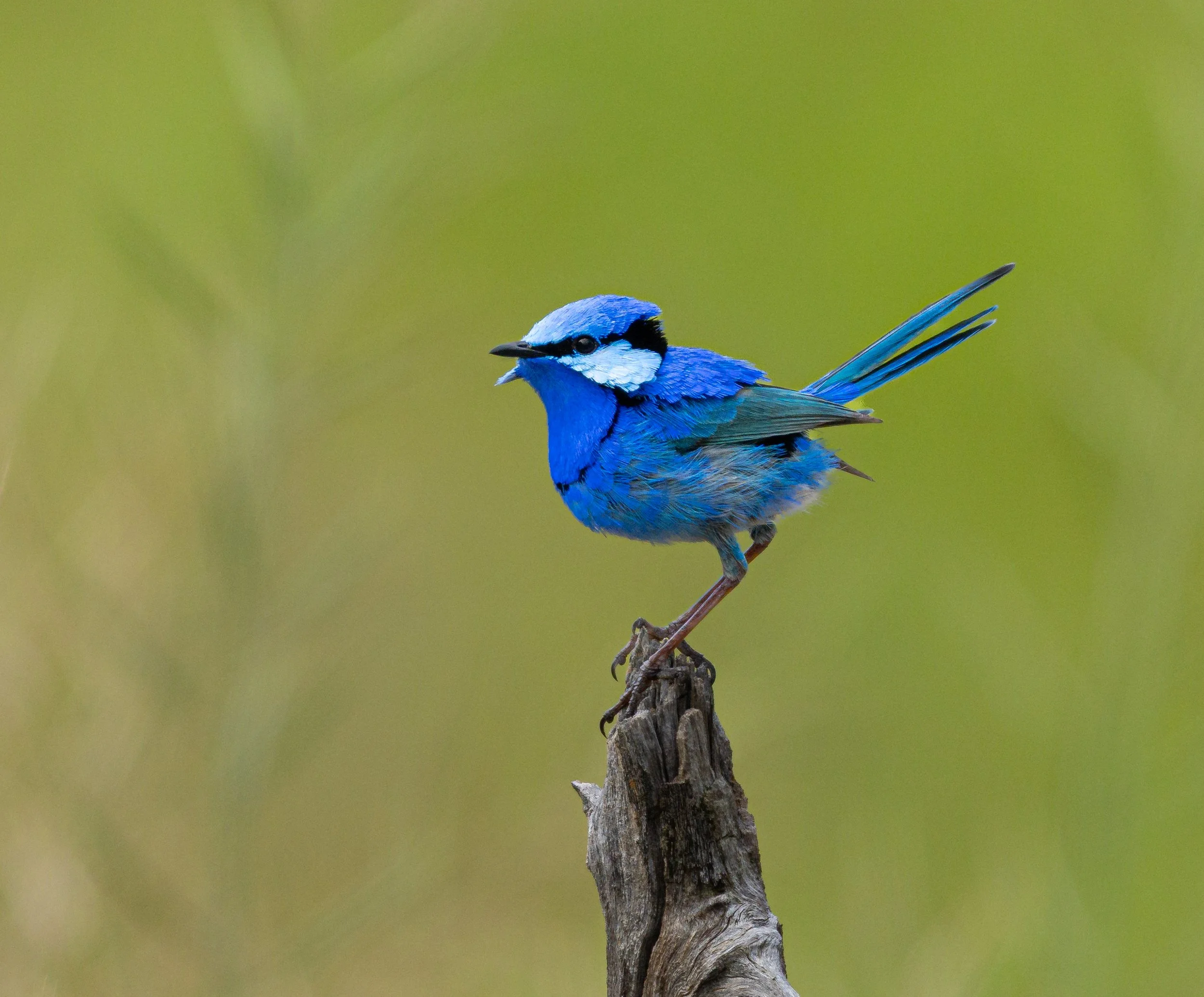
Splendid Fairywren Malurus splendens - A small bird with a long blue tail that is held cocked. Breeding males are almost entirely blue with a strong black line from the bill through the eyes and around the back of the head, a black chest band, and a black rump. Nonbreeding males are fairly plain grayish-brown birds with black bills, bright blue tails, and some blue in the folded wing. Females are tan above with a duller blue tail and a reddish bill. Note that the patch between the eye and bill (lores) on females is a fraction paler than the bill (in Purple-backed Fairywren the lores are much darker than the bill). This species is fairly common in arid inland Australia, as well as in southwest Western Australia
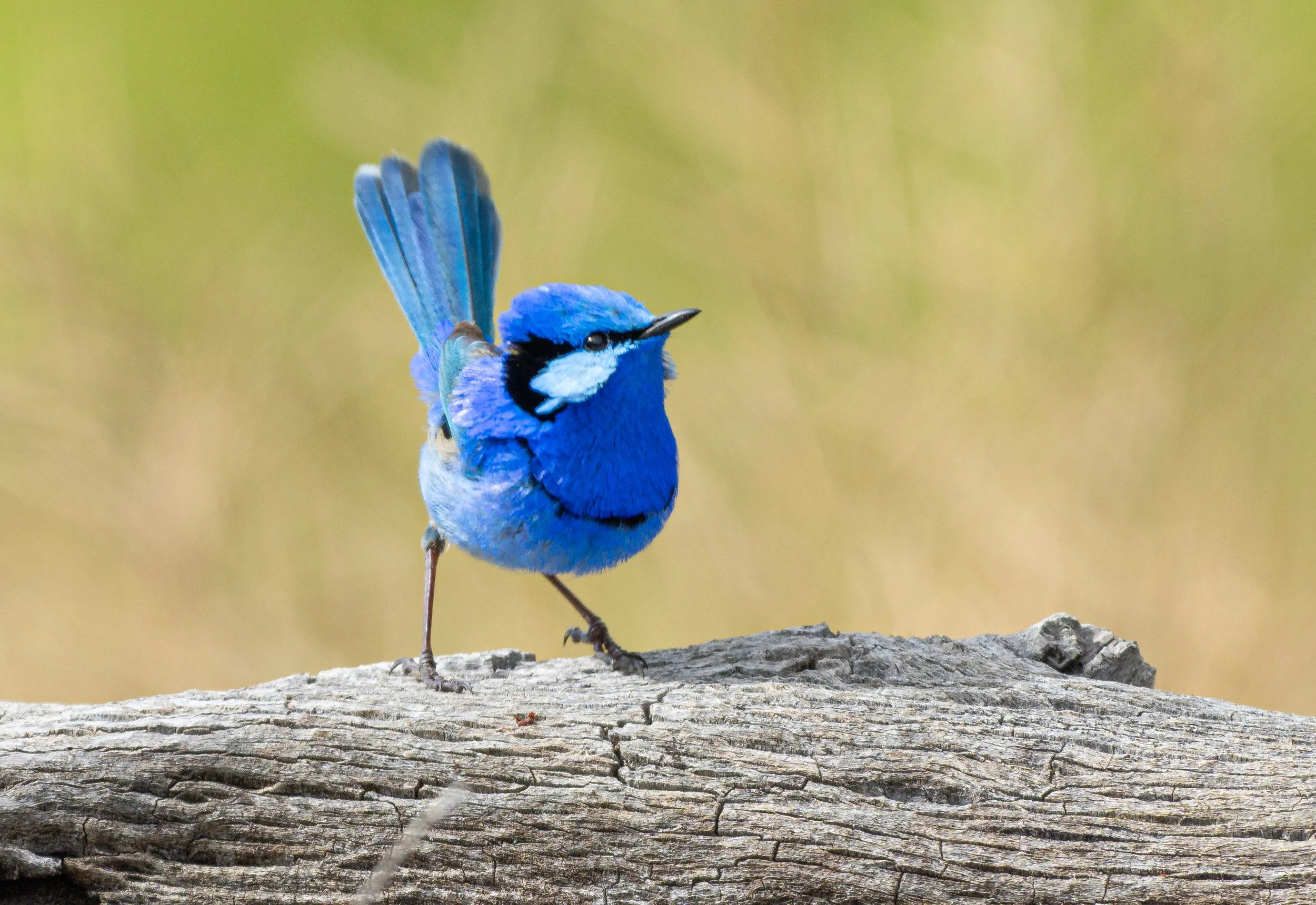
Splendid Fairywren Malurus splendens
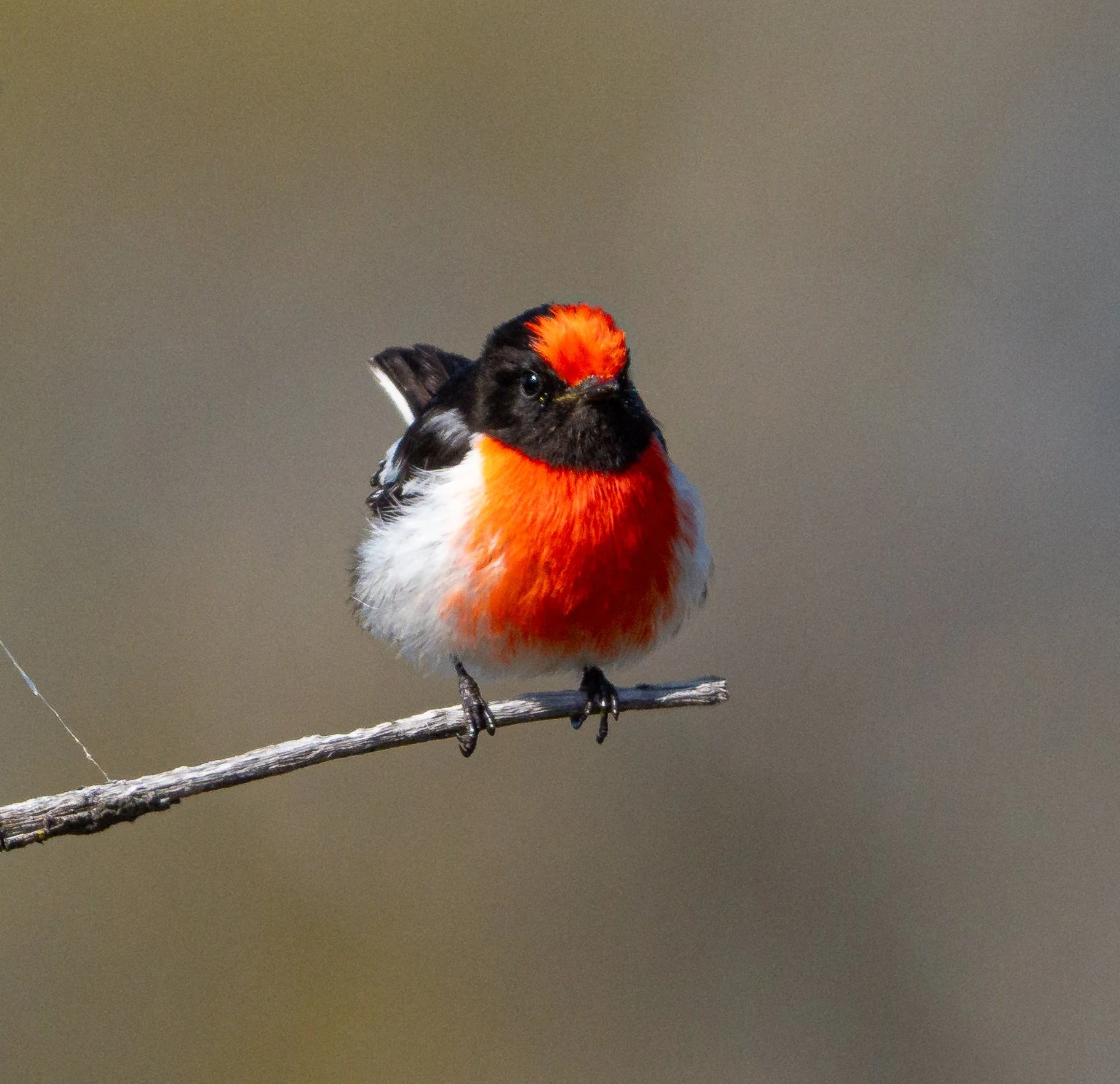
Red-capped Robin Petroica goodenovii - Small Australian robin. Male black above, with a black head and chin, vivid scarlet breast and forecrown. Folded wing black with extensive white panels. Female brown above, pale below, with faint reddish forehead and darker wing showing pale panels. Found across much of inland Australia, typically alone or in pairs in more arid environments that other robins in the genus. Hunts by plucking prey from the ground, in typical Australian robin style.
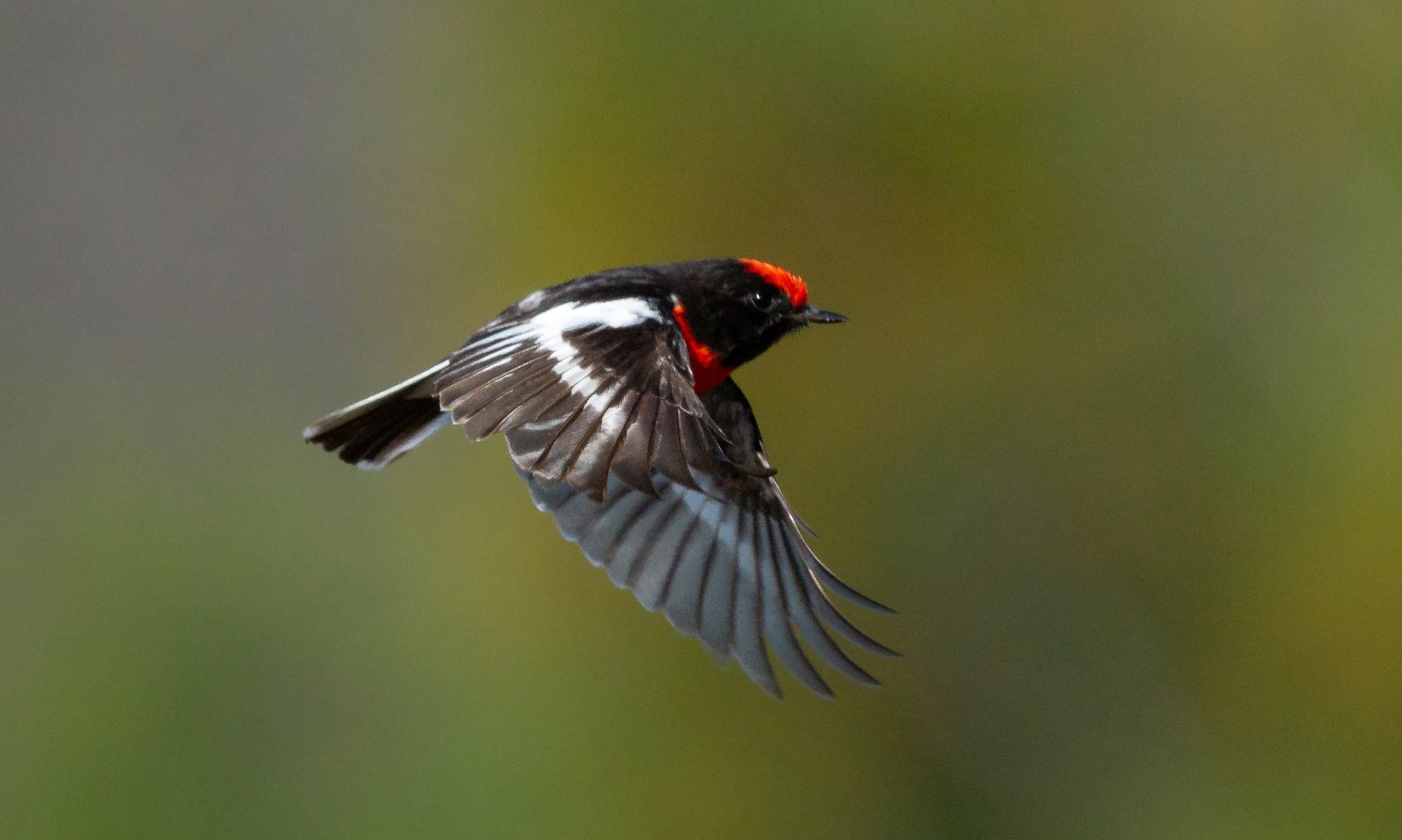
Red-capped Robin Petroica goodenovii
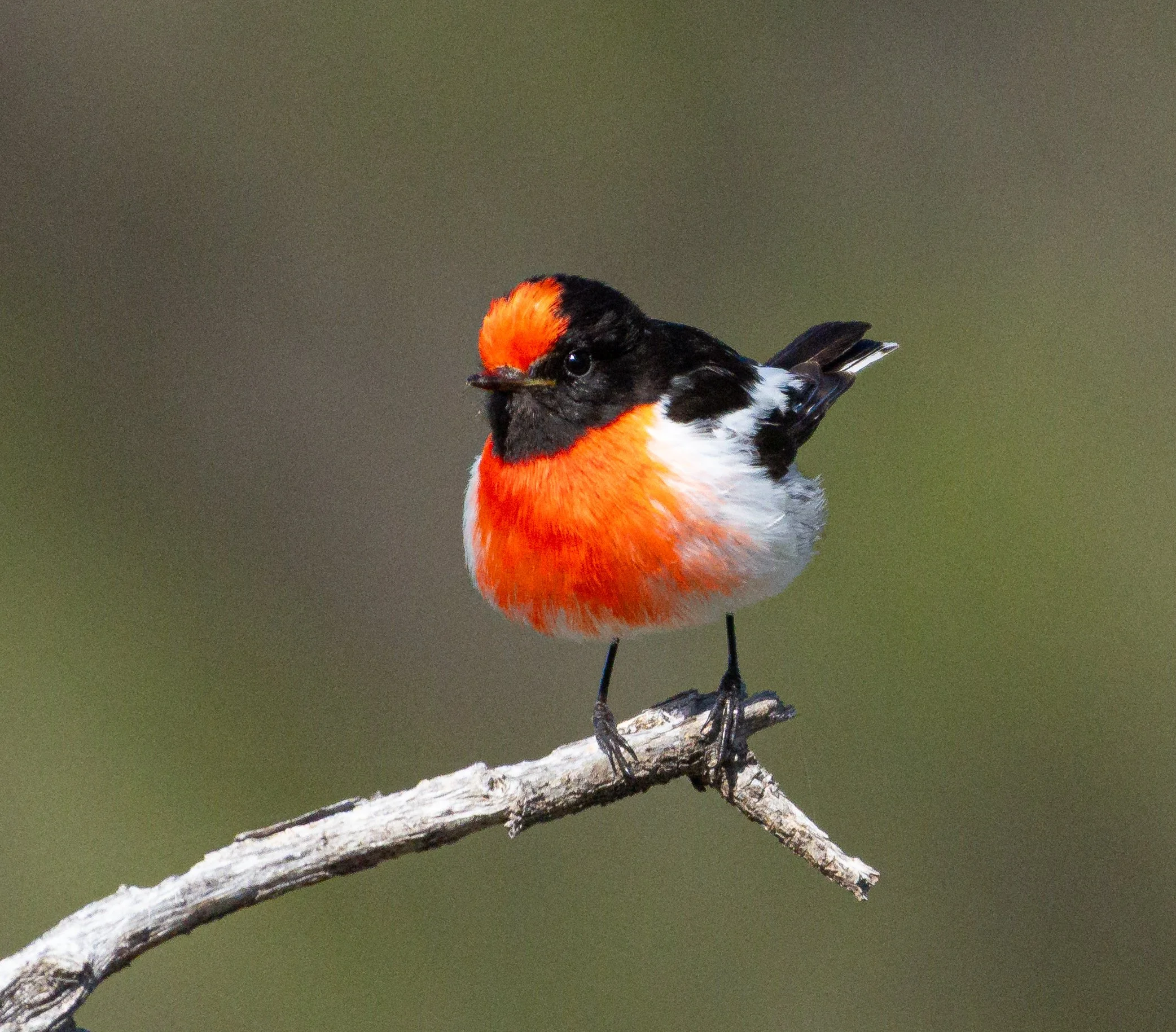
Red-capped Robin Petroica goodenovii
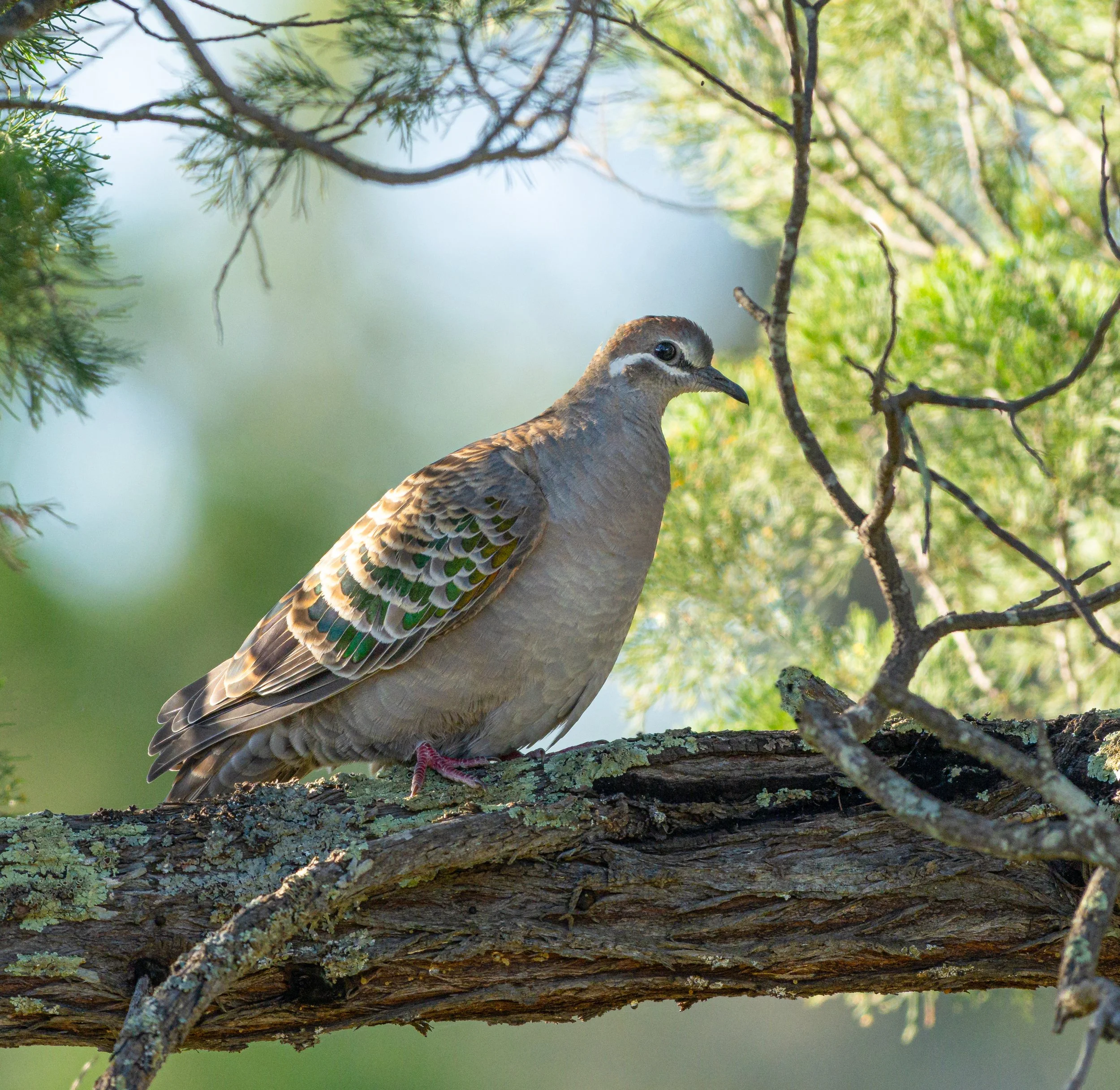
Common Bronzewing Phaps chalcoptera - A plump, attractive brown pigeon with beautiful green and bronze iridescent coloration in the wings. Males have a bright yellow and white forehead that is absent in females. This species inhabits a great variety of habitats, and is often seen near a water source, alone or in pairs. When disturbed, they fly away in very direct flight with a loud clatter of wings. They only feed on the ground.
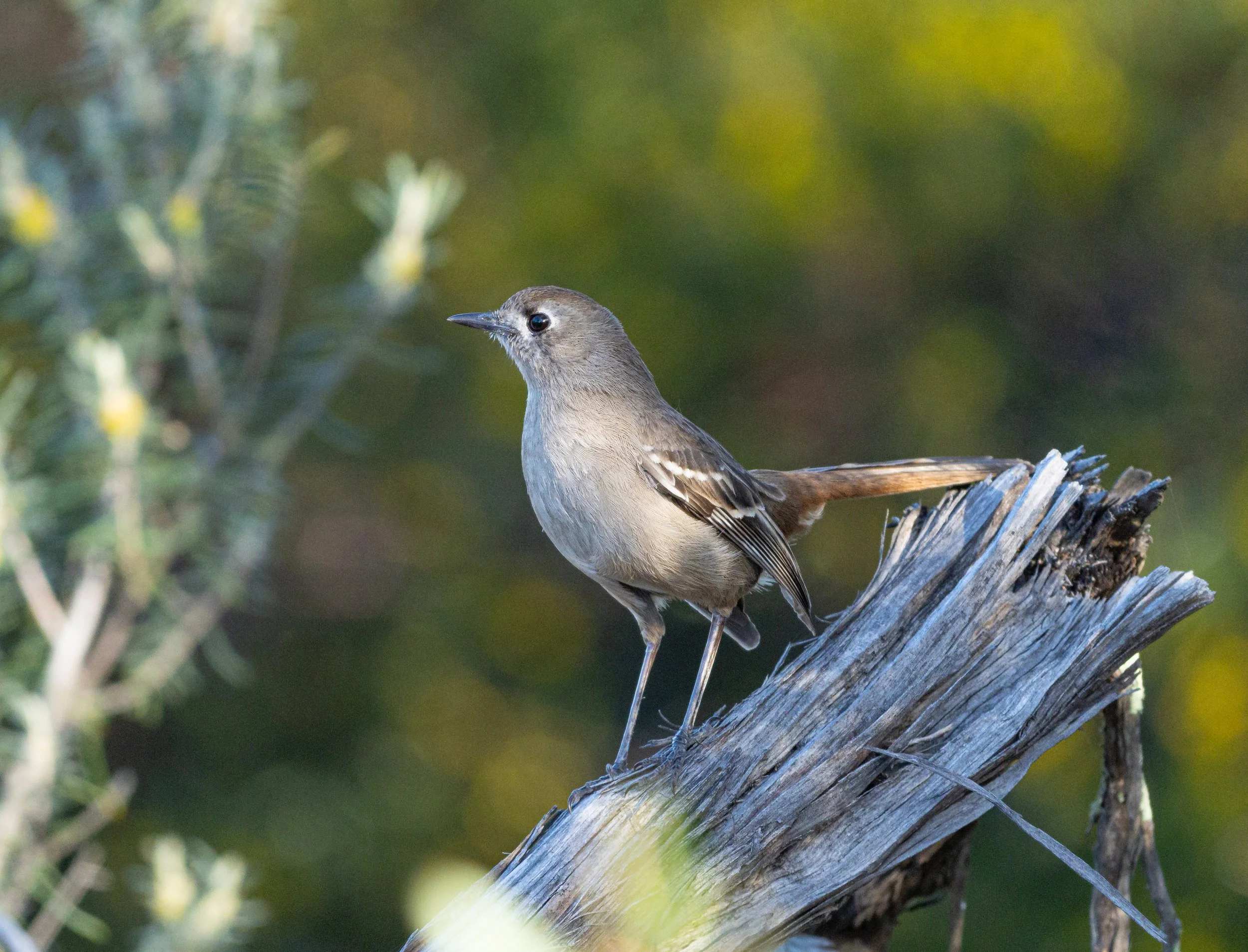
Southern Scrub-Robin Drymodes brunneopygia -
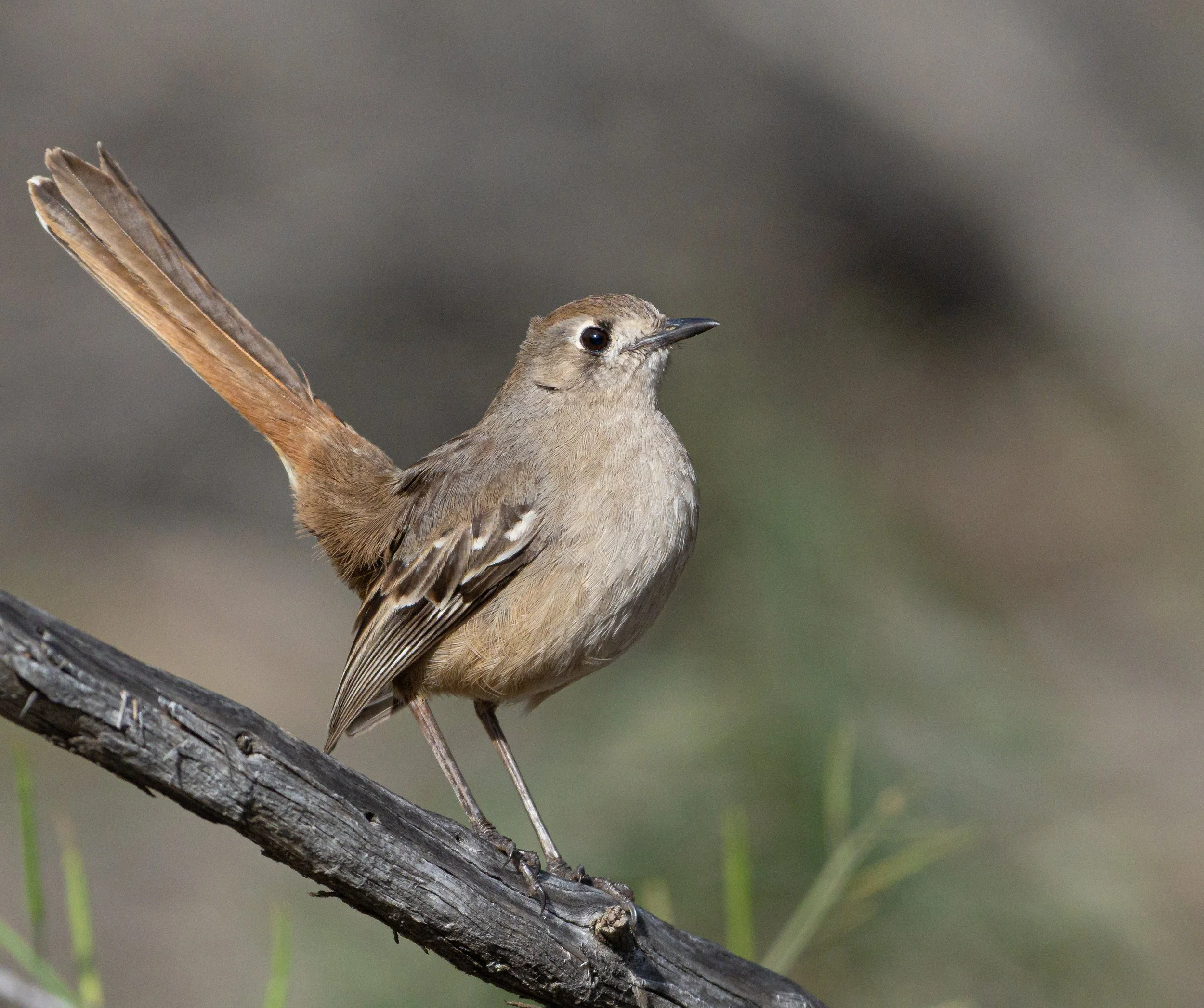
Southern Scrub-Robin Drymodes brunneopygia - Long-legged songbird found in semi-arid parts of southern Australia. Grayish above, paler gray below, with faint wingbars and long tail, often flicked upward. Very subtle dark mark through the eye and cheek. Usually seen running around on the ground in open woodland, although male also sings from higher perches.
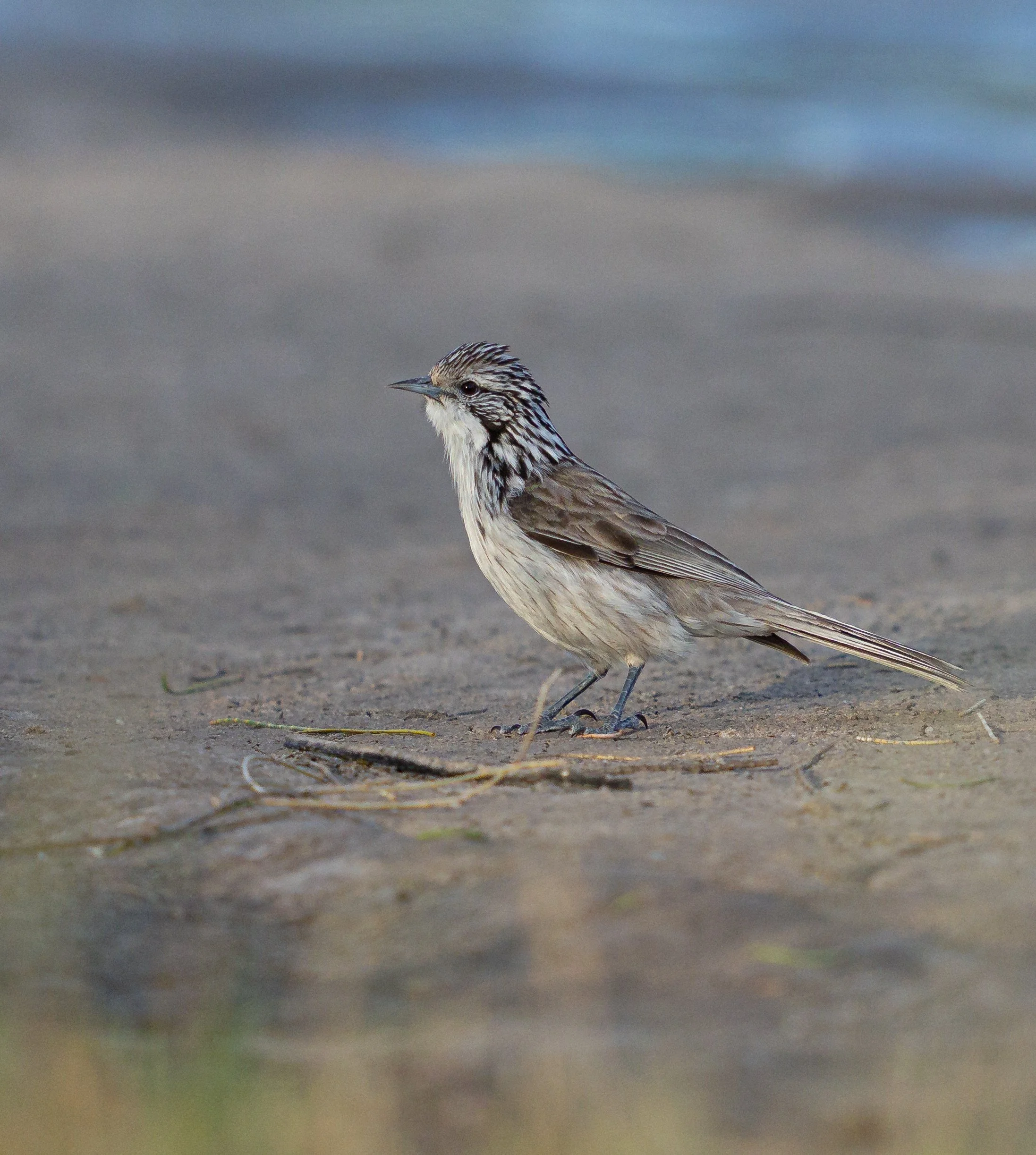
Striped Honeyeater Plectorhyncha lanceolata - Medium-sized honeyeater with distinctive streaking. Underparts white, upperparts primarily gray. Distinctively streaked black-and-white on head, extending to upper back. Occupies a broad range of habitats in eastern Australia. Fairly secretive and is heard more often than seen
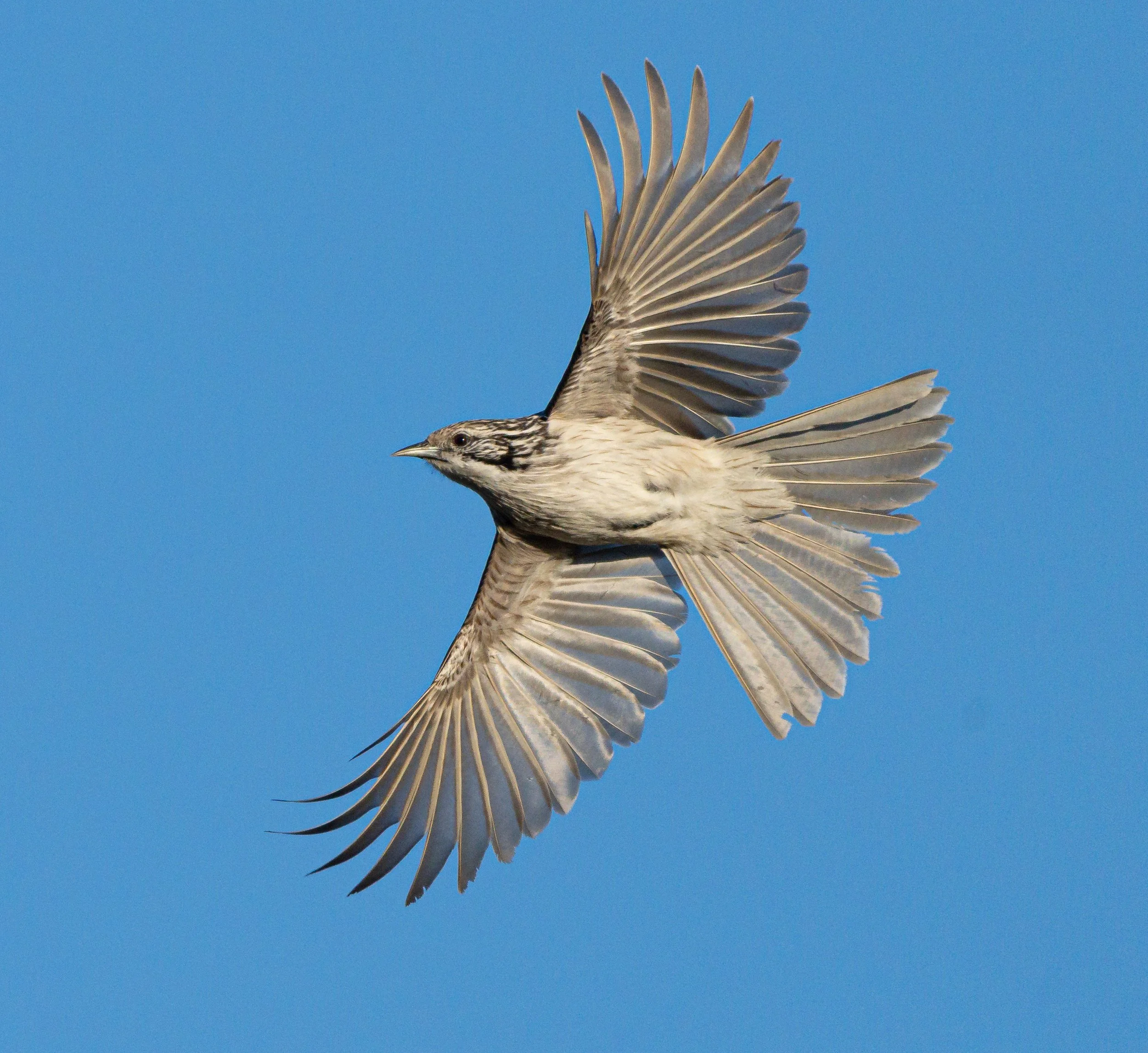
Striped Honeyeater Plectorhyncha lanceolata
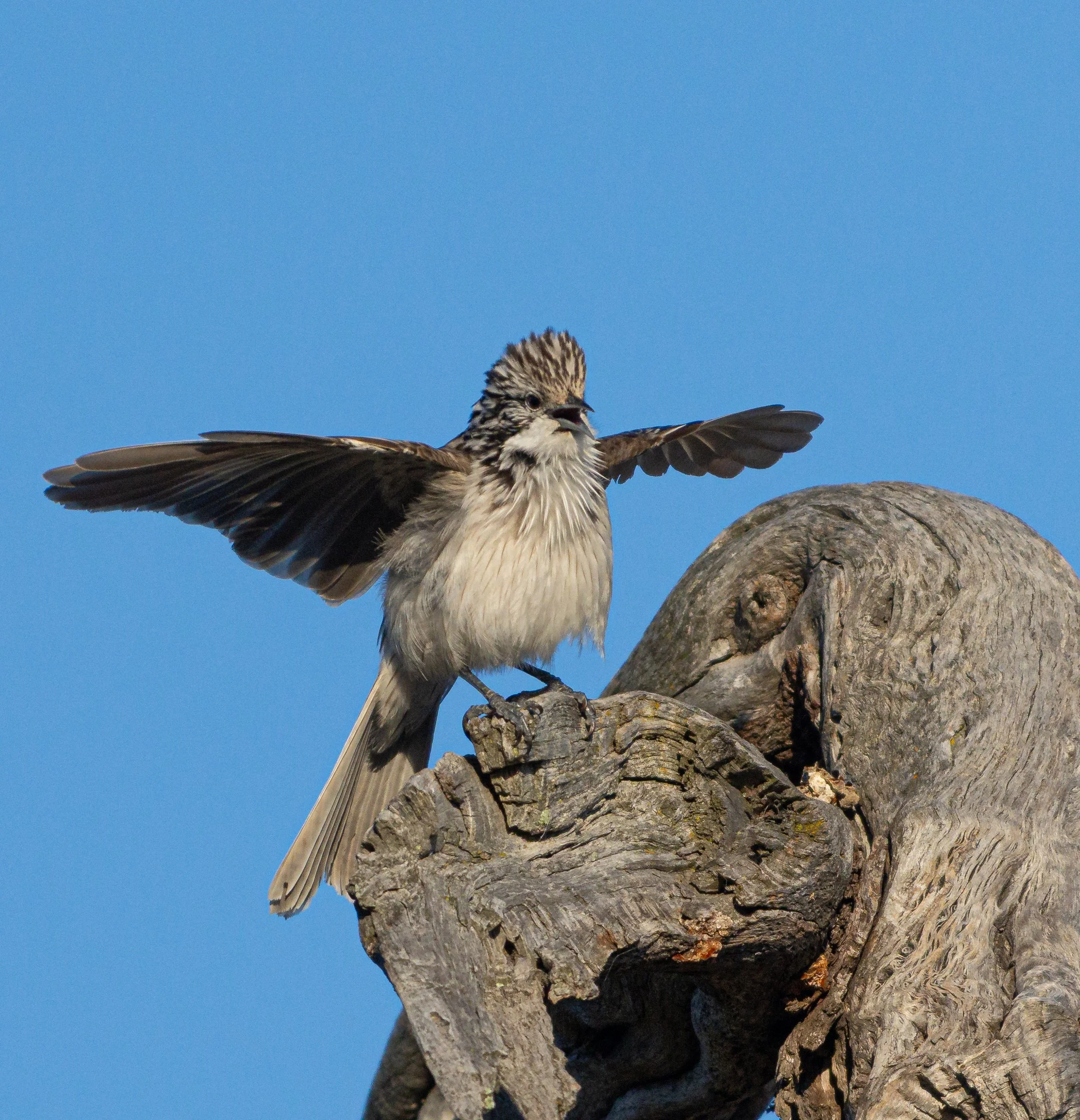
Striped Honeyeater Plectorhyncha lanceolata
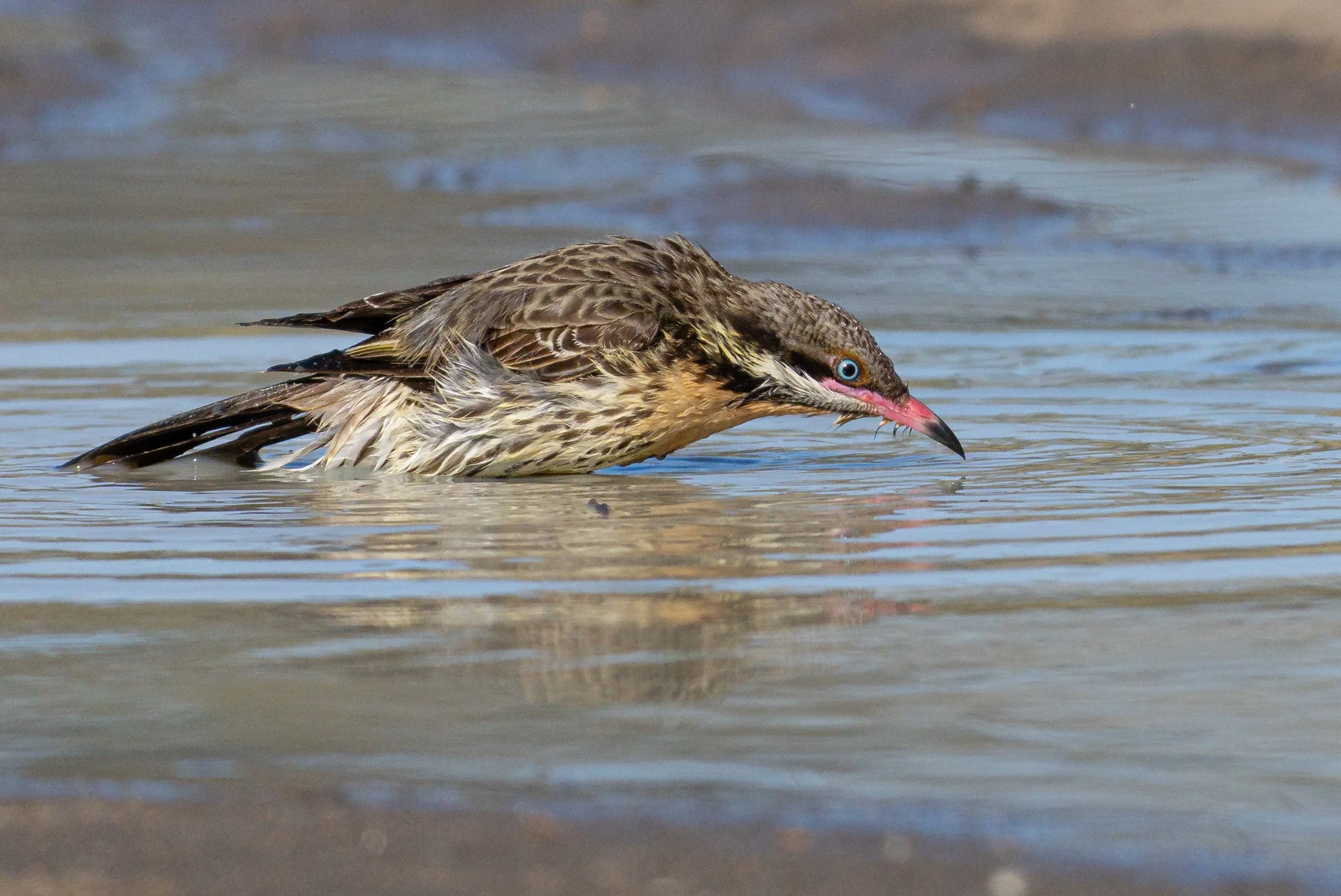
Spiny-cheeked Honeyeater Acanthagenys rufogularis - Medium to large honeyeater of inland Australia. Its heavily streaked plumage, large pale cinnamon throat patch and upper-chest are notable. Also note the dark tip to an otherwise pale pinkish bill. A fairly common species across the drier inland parts of Australia including parks and gardens in towns. Its loud and smooth calls are a characteristic sound over much of inland Australia.
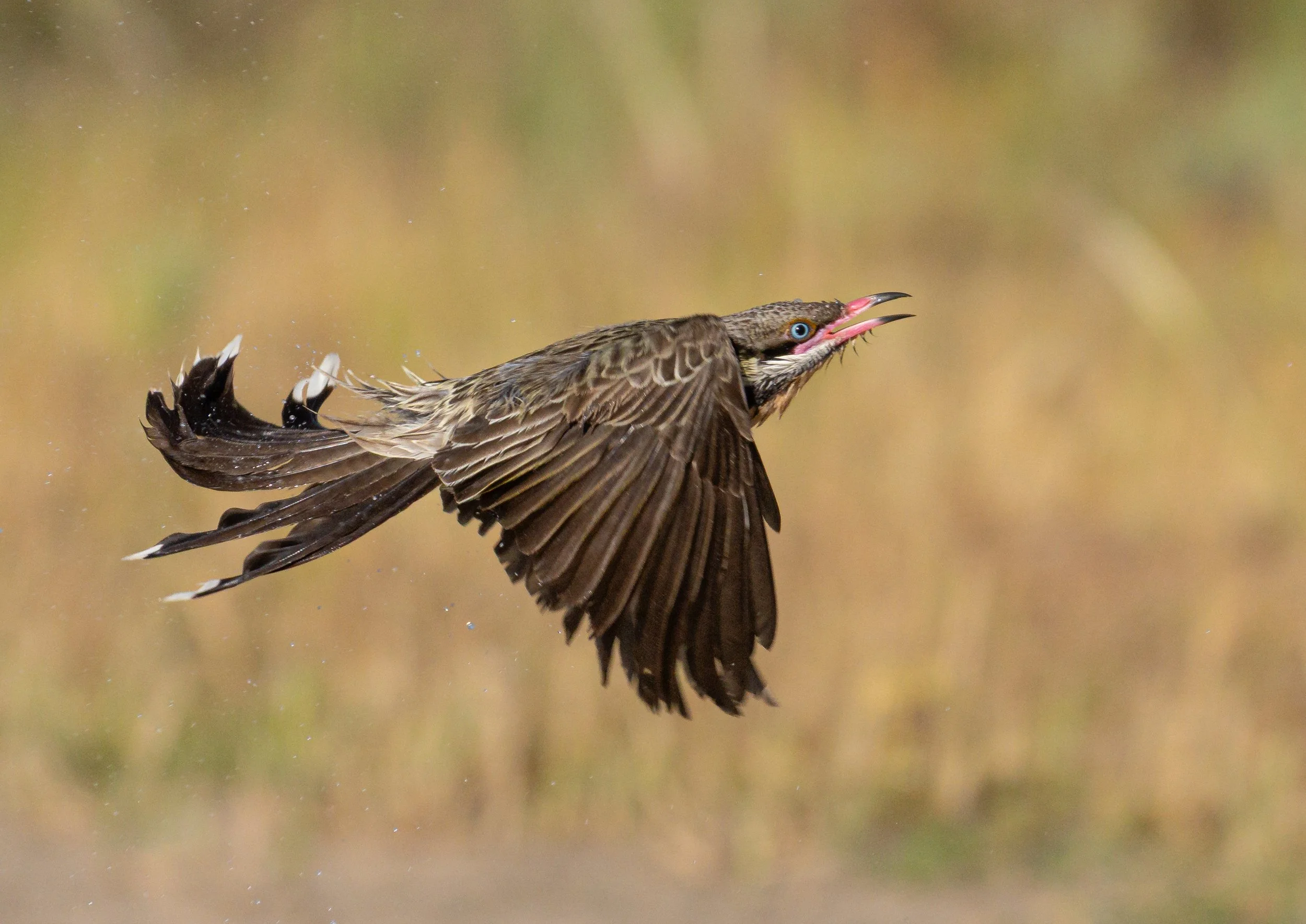
Spiny-cheeked Honeyeater Acanthagenys rufogularis
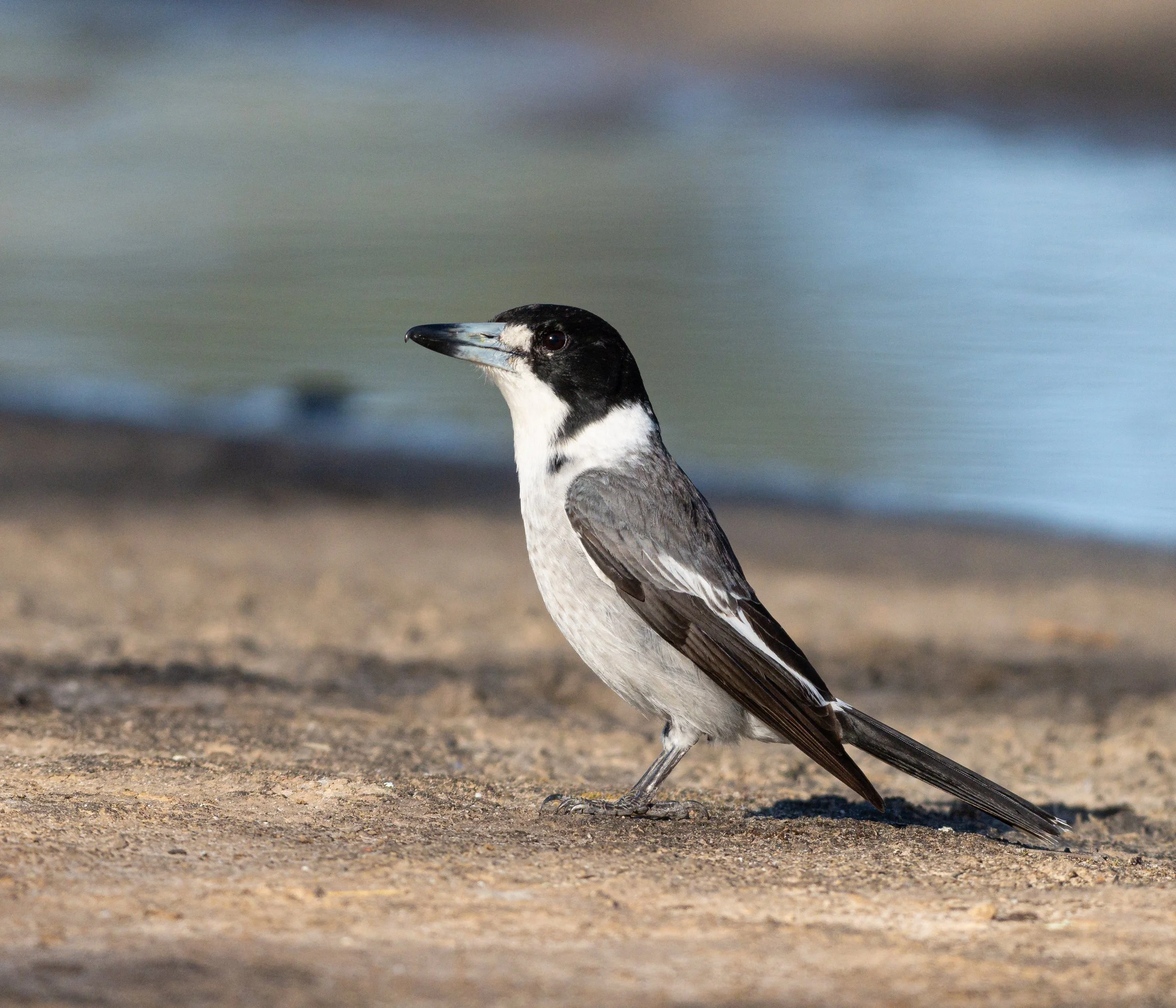
Grey Butcherbird Cracticus torquatus
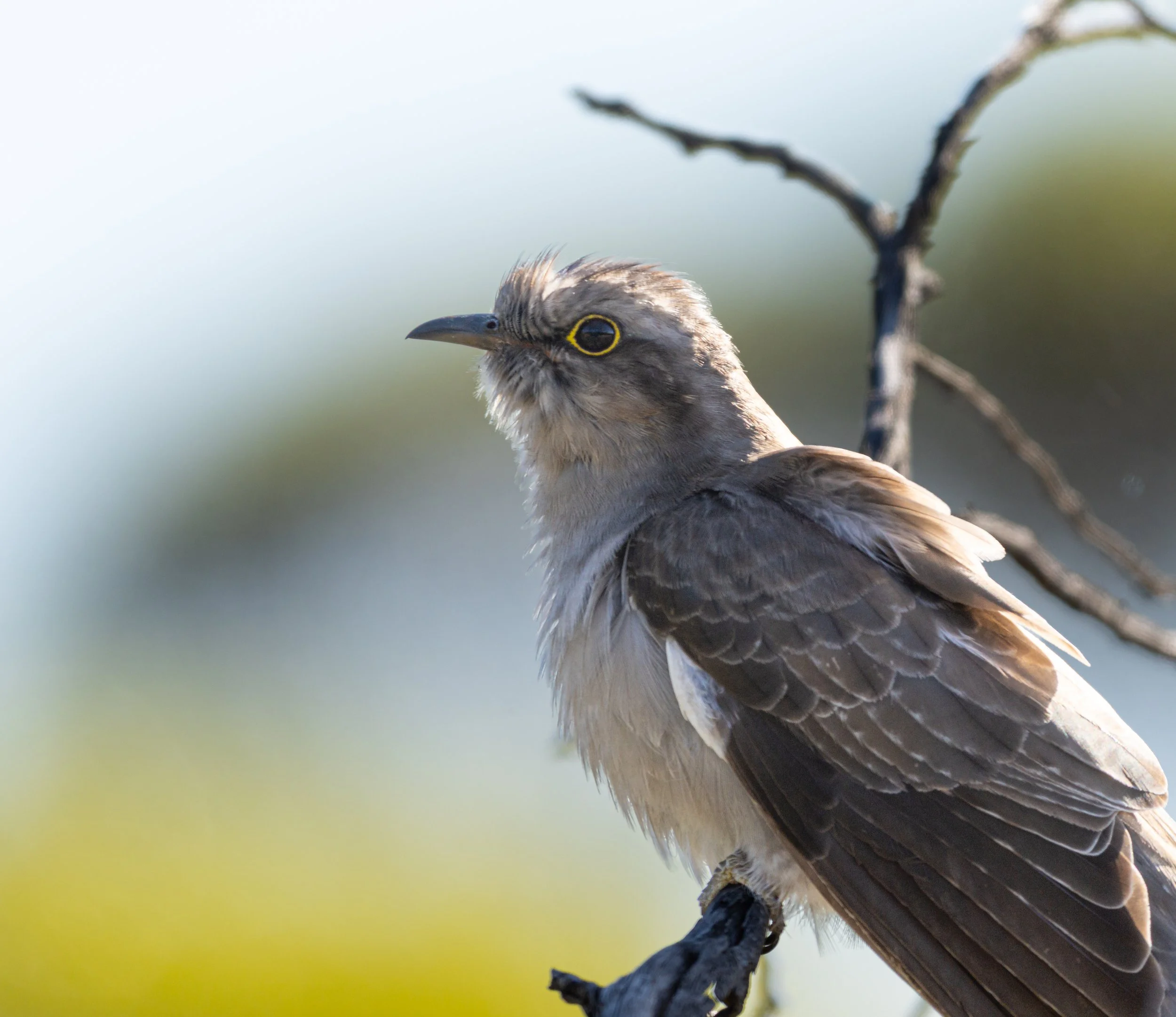
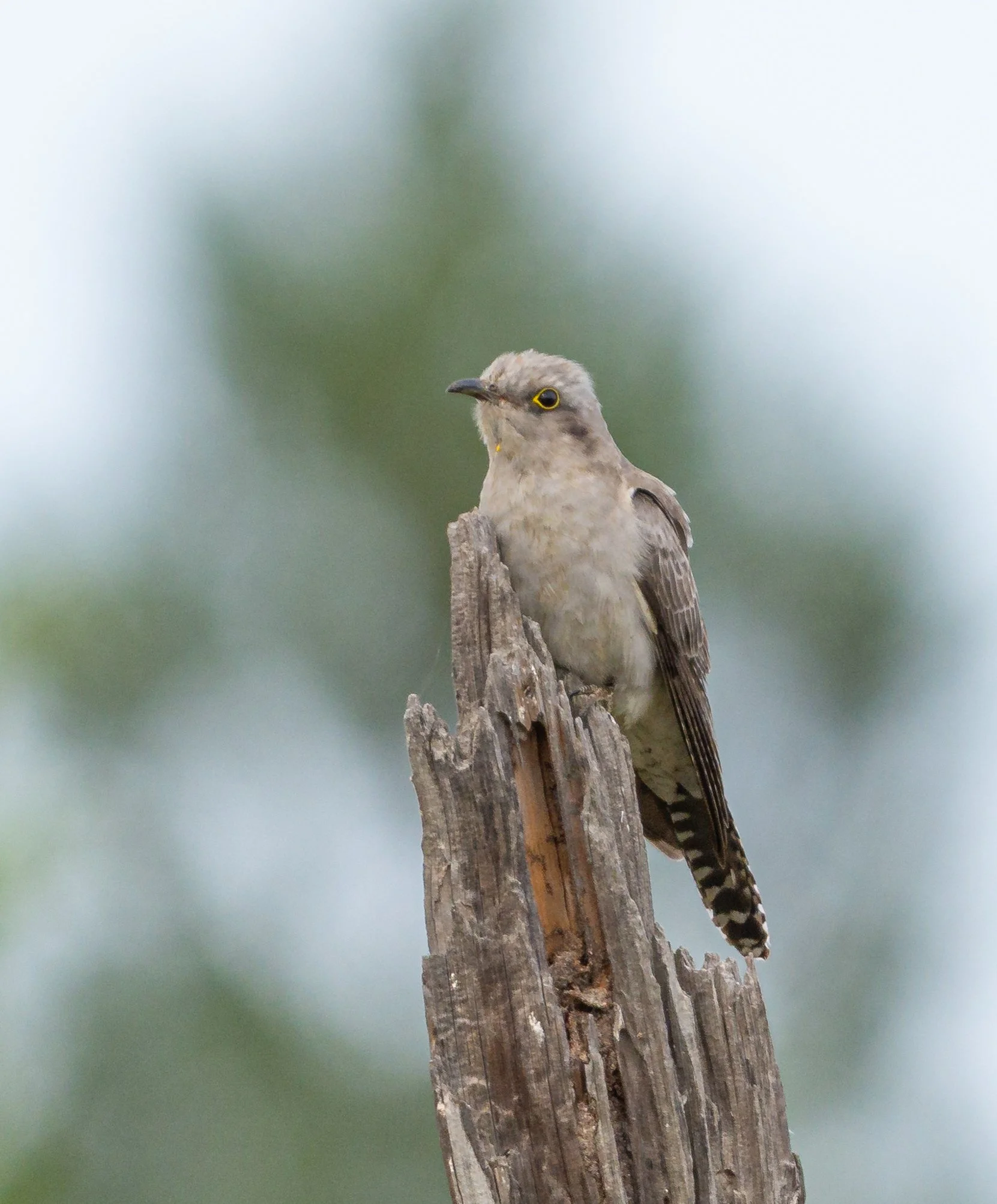
Pallid Cuckoo Heteroscenes pallidus
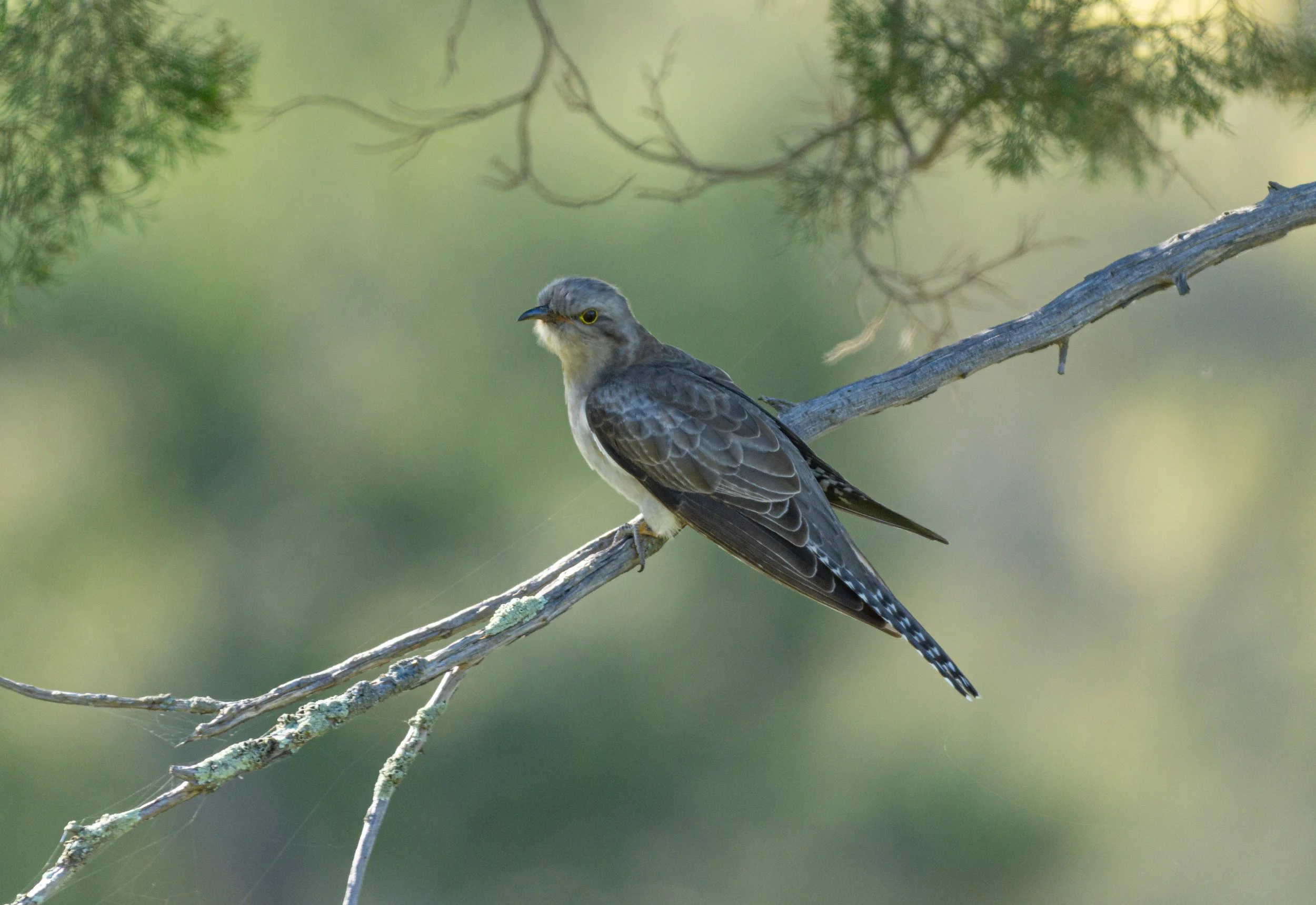
Pallid Cuckoo Heteroscenes pallidus
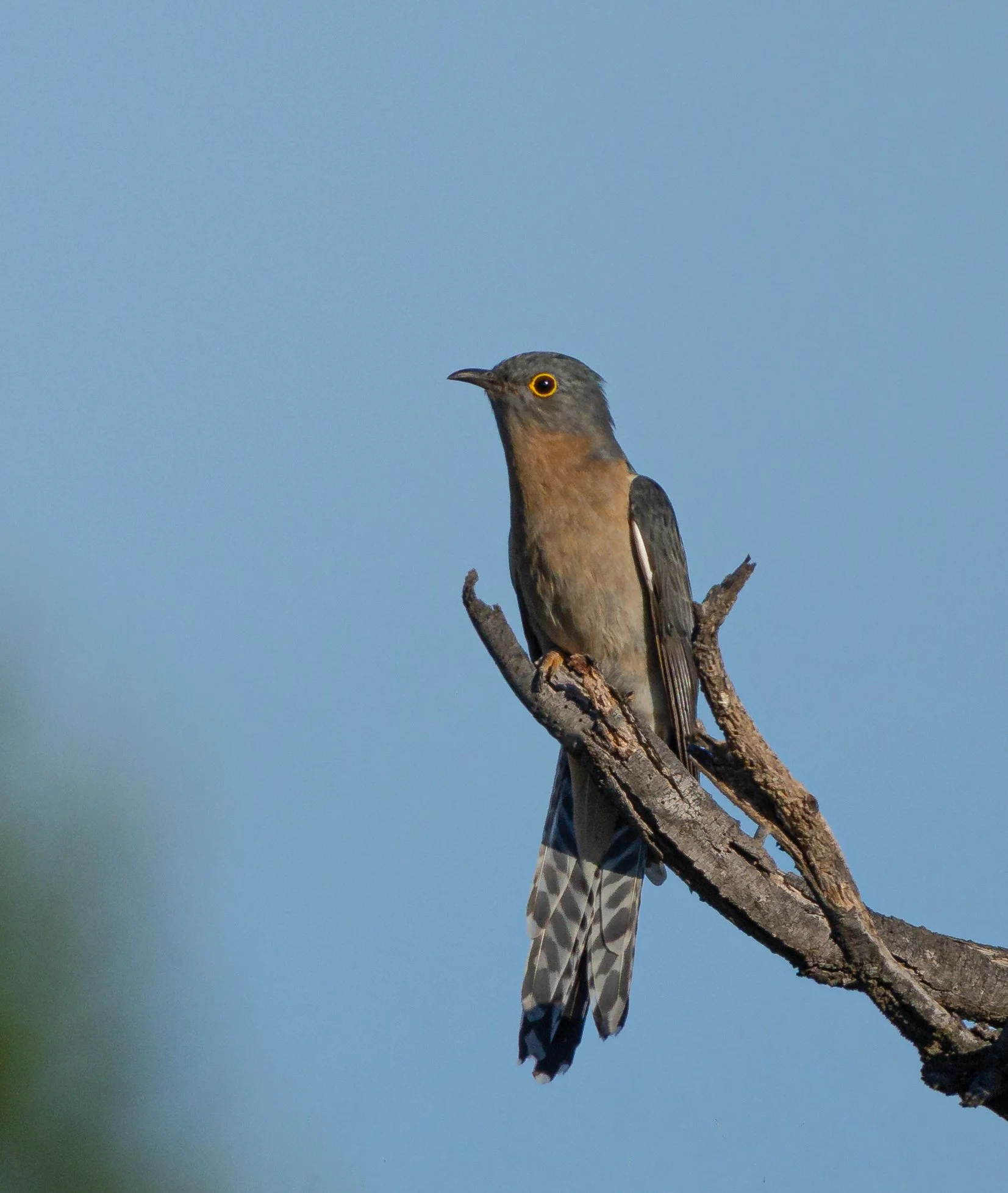
Fan-tailed Cuckoo Cacomantis flabelliformis - A medium-sized cuckoo, with a warm buff colored chest and belly. Bright yellow eyering and heavily barred tail. Take care to identify from Brush Cuckoo (which has a gray eyering), and from Pallid Cuckoo (which is paler and lacks the warm breast tones). Often detected by sound since this species calls frequently with a descending trill. Perches in the midstory on exposed branches, and flushes easily to a nearby perch.
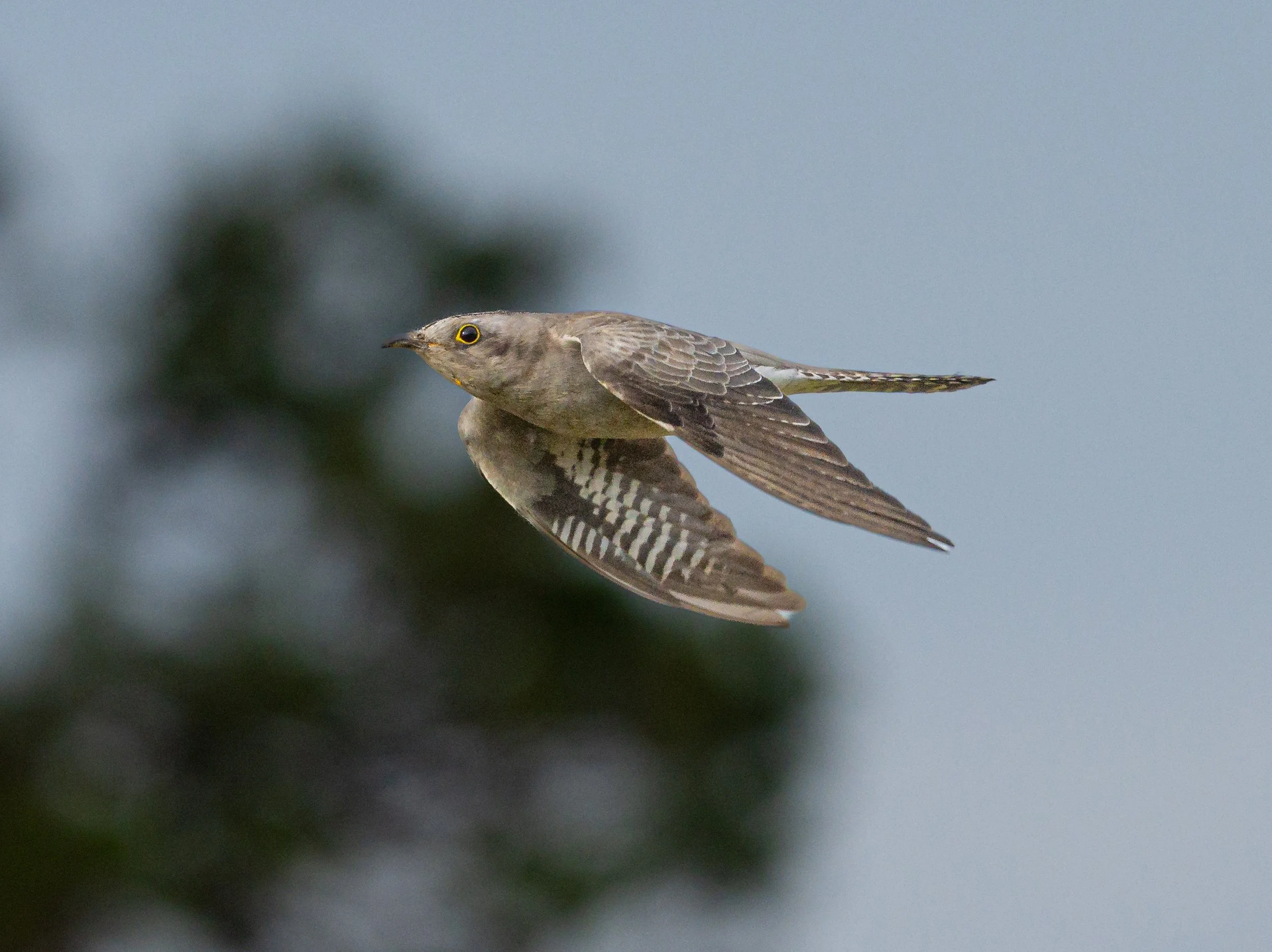
Pallid Cuckoo Heteroscenes pallidus
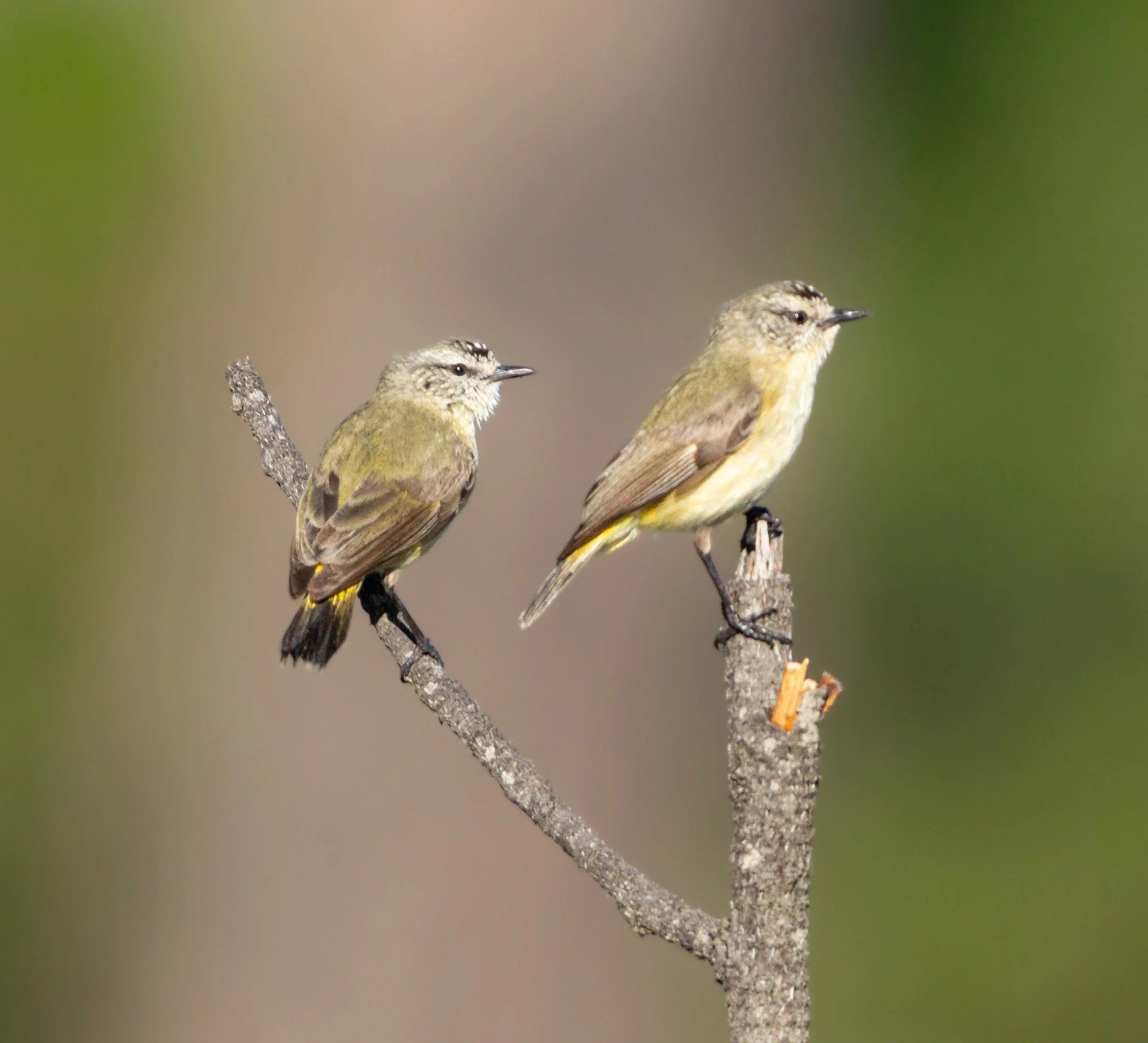
Yellow-rumped Thornbill Acanthiza chrysorrhoa - Small bird with thin pointed bill. Noticeably larger than other Australian thornbills. Blackish tail and bright yellow rump distinctive. Some variation in plumage occurs across range. Inhabits a wide variety of habitats, including agricultural areas. Usually seen in small flocks and feeds mostly on the ground.
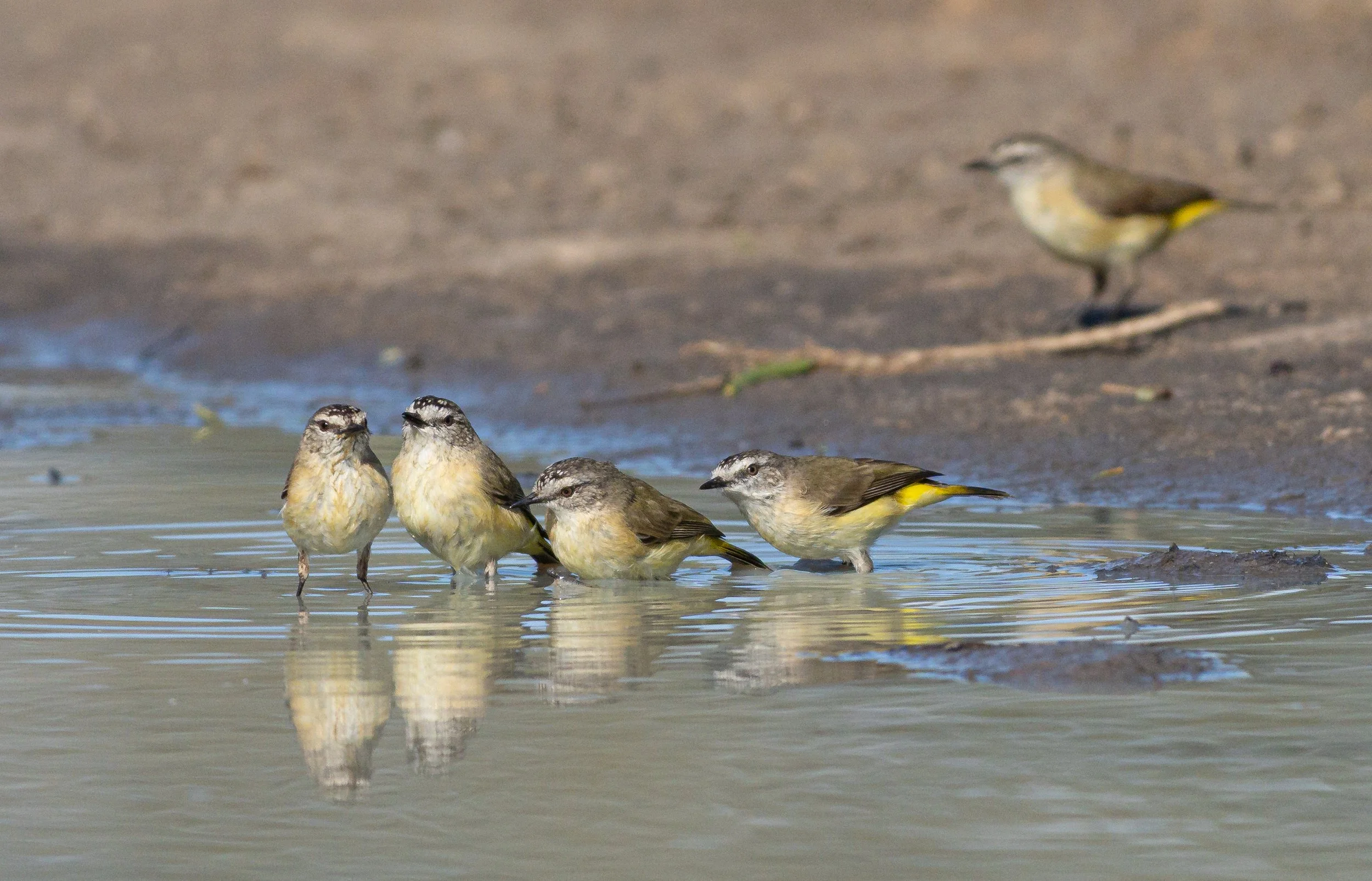
Yellow-rumped Thornbill Acanthiza chrysorrhoa
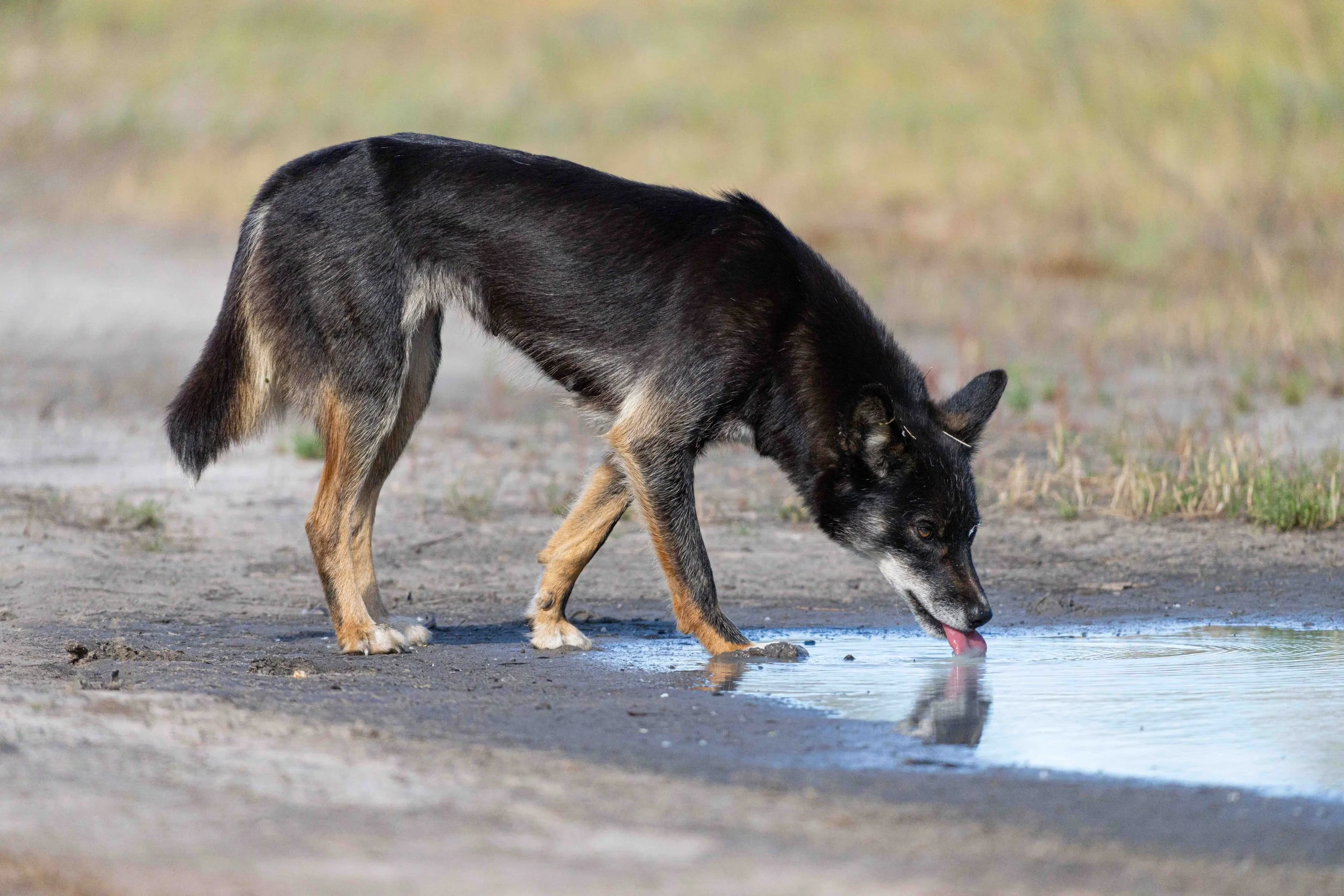
Wyperfeld National Park—together with the adjacent Big Desert Wilderness Park and State Forest—is home to the Wilkerr, a genetically distinct and critically endangered population of dingoe
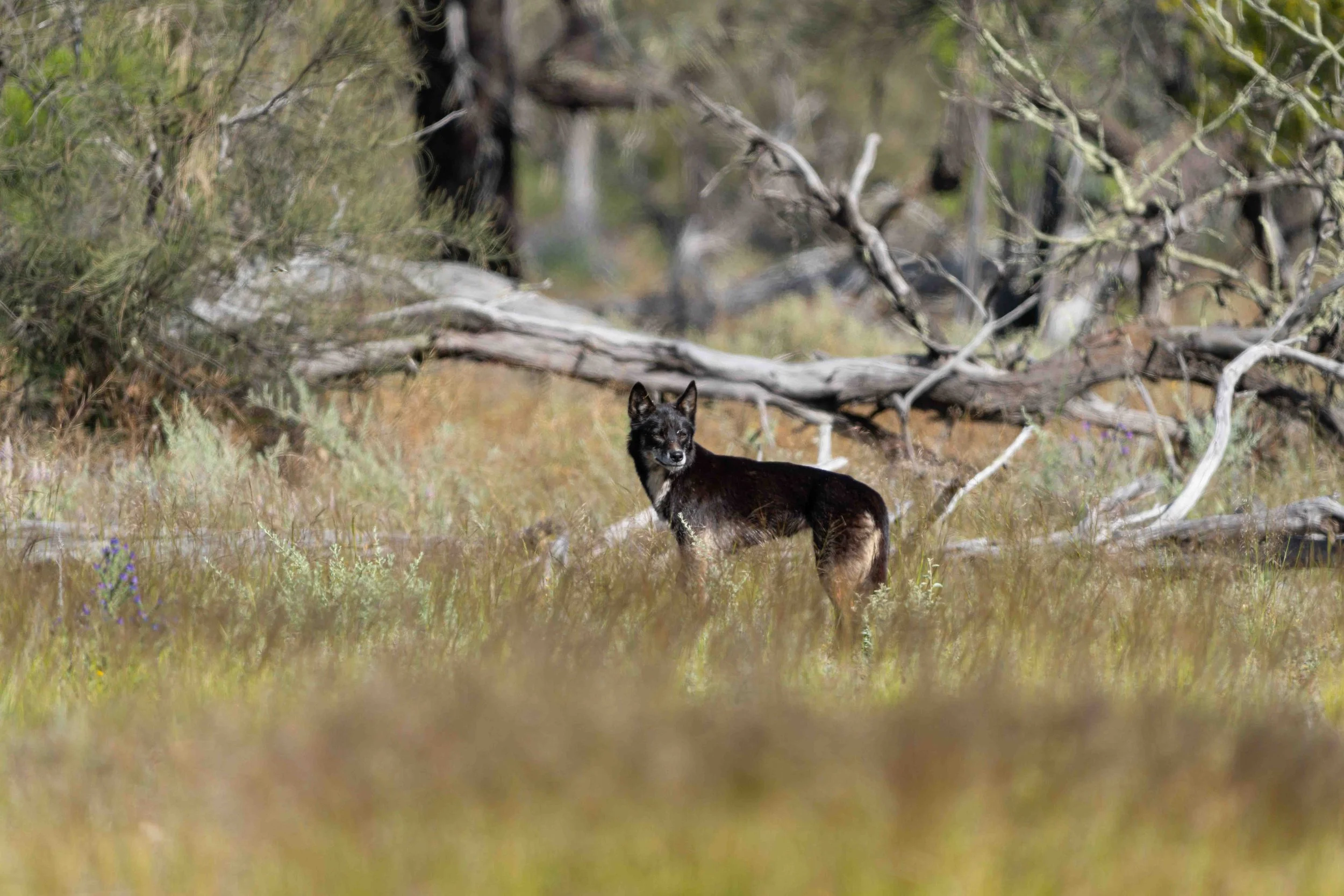
Wilkerr
Many more images and information to come…soon
Cant wait for another adventure around this beautiful part of Victoria and the Mallee.
Please click the buttons bellow for information about Explore The Mallee and Wyperfeld National Park
If you are ever interested in doing a trip to this part of the Mallee I would highly recommend getting in touch with Michael & Louise at Explore the Mallee, you can organise a tour, or even better book a stay in their adorable little cottage, they are lovely people with a wealth of information and are so helpful to understanding this incredible environment which is full of life, could never rate them high enough, we will certainly be back…please click their link bellow to learn more.
Please click the buttons to learn more